Eating Out in Morocco: How to Spot Good Food at Fair Prices
Eating out in Morocco can cost a few dirhams or a few hundred, and the difference rarely reflects the quality of the food. A bowl of soup from a market stall, a tagine in a family-run café and a three-course dinner on a rooftop terrace can all be excellent, but they are priced for very different customers. Learning to read those signals is the easiest way to eat well without overspending.
This guide explains what meals cost in dirhams, how to recognize a restaurant that offers good value, how to spot a tourist trap and what to expect for popular dishes and in popular cities. Prices come from recent 2026 travel-budget sources and are given as ranges, because prices differ by city, neighbourhood and season. For how food fits into a whole trip budget, see our Morocco Daily Budget guide, and for the dishes themselves, our Food in Morocco page.
Understanding Morocco Restaurant Prices
Morocco restaurant prices fall into four broad bands. The table gives indicative costs per person in Moroccan dirhams, with approximate US dollar equivalents at roughly 9.3 dirhams to the dollar. They are guides, not menus, and tourist-heavy areas usually sit at the top of each band.
| Type of place | Typical cost per person | Approx. USD | What you usually get |
|---|---|---|---|
| Street food and small local eateries | 10–70 MAD | $1–8 | A snack, a sandwich, soup or a simple tagine or couscous |
| Traditional Moroccan restaurants | 80–180 MAD | $9–19 | A full tagine, couscous or grill with bread and a drink |
| Mid-range restaurants | 150–300 MAD | $16–32 | Two or three courses in a comfortable setting |
| Upscale restaurants and fine dining | 300–800+ MAD | $32–86+ | A tasting menu or multi-course dinner with service |
Street Food and Small Local Eateries
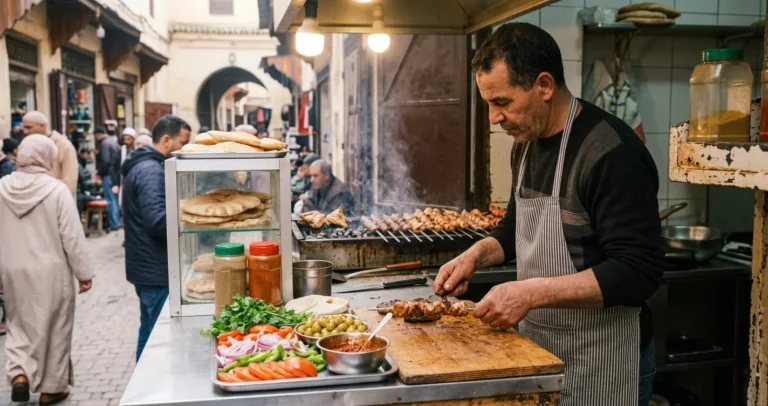
This is where eating on a budget in Morocco is easiest. Recent sources put a street food snack at about 10 to 20 dirhams and a street meal such as harira or a kebab plate at roughly 20 to 40. A small local café meal of tagine or couscous usually costs around 40 to 80. Many of the cheap restaurants in Morocco sit in this band, and they are often where locals eat. Prices can differ by a few dirhams depending on the vendor and the ingredients, but the pattern holds across most cities.
Traditional Moroccan Restaurants
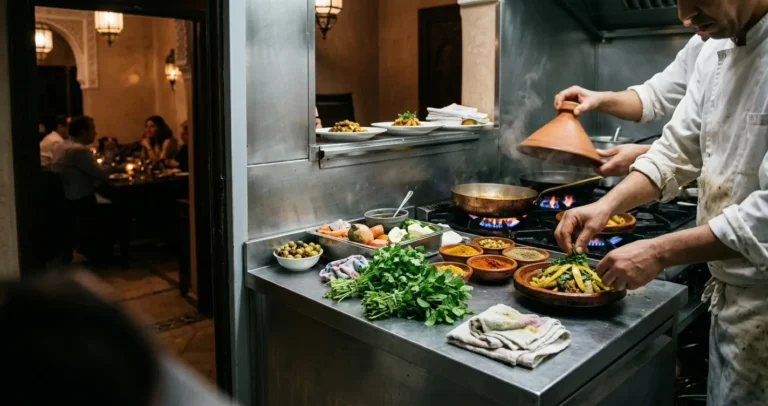
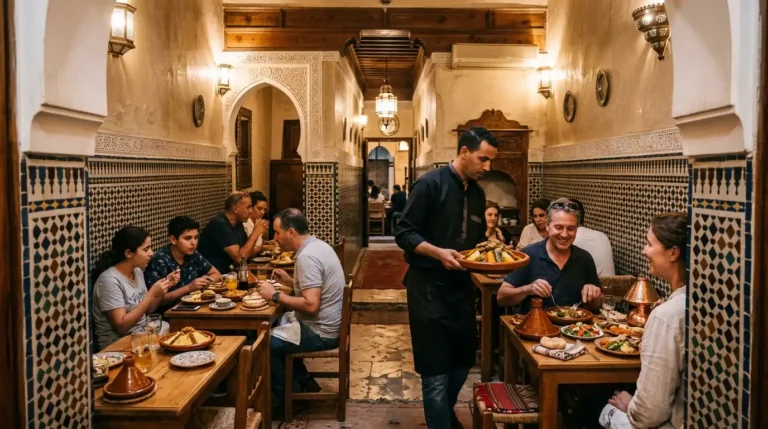
Sit-down restaurants that serve classic dishes in a traditional setting usually charge roughly 80 to 180 dirhams per person. Set menus with a starter, main, dessert and tea at tourist-oriented restaurants are listed at about 120 to 200 dirhams. These places suit travelers who want a table, a pleasant room and a relaxed meal. The price usually reflects the setting, such as a tiled courtyard, as much as the dish itself, so compare what you actually receive.
Mid-Range Restaurants
Mid-range restaurants offer comfortable seating, a wider menu and sometimes a terrace or rooftop. Sources put a main course at about 80 to 180 dirhams and a full meal around 150 to 300. Quality varies, so reviews and a quick look at the dining room matter more than the price alone. A mid-range meal often includes a starter or dessert, so it can be good value if you are hungry.
Upscale Restaurants and Fine Dining
Fine dining in Morocco typically costs from about 300 dirhams per person and can rise past 800 at the most refined restaurants and hotels. You are paying for setting, service and creativity as much as the food. It is a good choice for one memorable evening, not for every night. Book ahead for popular places, and check whether service is included and whether alcohol is served.
7 Signs You’ve Found Good Value When Eating Out in Morocco
Good value is not the same as cheap. These seven signs help you recognize a restaurant that serves honest food at a fair price.
A Menu With Clear and Reasonable Prices
A menu with prices shown beside each dish lets you decide before you sit down. Reasonable prices are consistent with nearby places of the same kind. If the numbers are far above or below what neighbours charge, ask yourself why. A printed or chalked menu shows a restaurant has nothing to hide.
A Busy Dining Room With Local Customers
A room full of local customers, especially at lunch, usually signals good food at a fair price. Locals know what is fresh and what is overpriced. An empty restaurant at peak hours is a warning. Visit at the usual lunch hour, around midday to two in the afternoon, to see the real crowd.
Freshly Prepared Food
Look for food cooked to order, bread that is warm and ingredients that look fresh. In a market-style restaurant you can often see the grill or the pots. Fresh food tastes different, and it rarely sits in a display for hours. Grills sizzling in view and soups bubbling on the stove are reassuring signs.
A Focused Menu With Local Specialties
A short menu built around a few local dishes suggests a kitchen that does those dishes well. A restaurant that does tagine, couscous and grills with care is a better bet than one offering everything. Some of the best small restaurants serve only two or three dishes each day.
Transparent Portions and Ingredients
Good restaurants are clear about what a dish includes, such as whether bread, salad or a drink come with it. Ask about portions if you are unsure. A fair price comes with clear expectations. This is especially useful for travelers with dietary needs, who should ask about ingredients before ordering.
Consistent Recent Customer Reviews
Recent reviews are more useful than old ones. Look for steady comments on food, service and the final bill, and be cautious about a handful of perfect reviews that sound alike. Reviews that mention the bill and the portion size are especially helpful.
Prices That Match the Location and Experience
A rooftop with views or a restored riad naturally costs more than a street-level café. The price should match what you receive. A fair price for a lovely setting is fine, as long as the food and service are also good. Ask yourself whether the extra cost buys something you value, such as a view or a quiet room.
How to Recognize Tourist-Trap Restaurants
Tourist traps depend on visitors who do not know local prices. A few habits give them away.
Staff Pressuring You to Enter
Staff who step into your path, wave menus or follow you down the street are a red flag. Good restaurants rarely need to chase customers. A polite refusal is perfectly acceptable. If a menu promises a bargain that sounds too good, check what the price includes.
Menus Without Visible Prices
If a restaurant will not show prices, or the menu has none, ask before you order. Many restaurants display prices clearly, and a refusal to do so is reason enough to walk away. Keep in mind that the price you are quoted verbally should match the price on the bill.
Inflated Prices Near Major Attractions
Restaurants beside the busiest squares and monuments often charge more than those a few streets away. Recent sources describe the tourist restaurants around Jemaa el-Fna in Marrakech as the most expensive food in the country, and rarely the best. Walking even five minutes away often cuts the price noticeably.
Overly Broad Menus With Limited Local Character
A very long menu that mixes pizza, burgers, pasta and tagine usually means frozen or reheated food. Look for places that specialize in local dishes and do them well. Photographs of every dish and menus in six languages are other clues.
Unexpected Charges on the Bill
Check the bill for items you did not order, such as bread, olives, starters or water that appeared on the table, as well as service or cover charges. Ask politely about anything unclear before paying. Small extras are not always dishonest, but they should be explained.
Where to Find Good-Value Local Restaurants in Morocco
Good local restaurants in Morocco are rarely hard to find once you know where to look.
Local Neighborhoods Away From Main Tourist Streets
Walk a few streets away from the main square or the main medina route and prices drop quickly. The food is often the same, and the clientele is more local. Residential areas near the medina edge or in the modern city often have excellent grills and cafés.
Traditional Markets and Food Areas
Markets and food streets offer inexpensive, freshly cooked meals. In Marrakech, a street such as Derb Dabachi is known for sandwiches at around 15 dirhams, according to recent travel blogs. Go at lunchtime, when stalls are busiest and food is freshest.
Small Family-Run Restaurants
Small family-run places often serve home-style food at fair prices, with a short menu and attentive service. They are well worth seeking out for lunch, which is the main meal of the day. These places often serve the dish of the day, so ask what is cooking.
Local Cafés for Affordable Meals
Local cafés serve simple, filling meals, plus coffee and mint tea, at prices that suit eating on a budget in Morocco. Mint tea often costs just 5 to 15 dirhams, and coffee roughly 15 to 25 in busier areas.
Asking Residents for Recommendations
Ask your riad host, a shopkeeper or a guide where they eat. A recommendation from someone who lives nearby is worth more than a ranking on an app. Be a little cautious if the recommendation comes with a commission, and check with a second source. Ask what a normal meal costs, so you know what to expect before you arrive.
Moroccan Food Costs: What Should You Expect to Pay for Popular Dishes?
These figures come from recent travel-budget sources and are ranges, so expect some variation by city and venue.
Tagine and Couscous
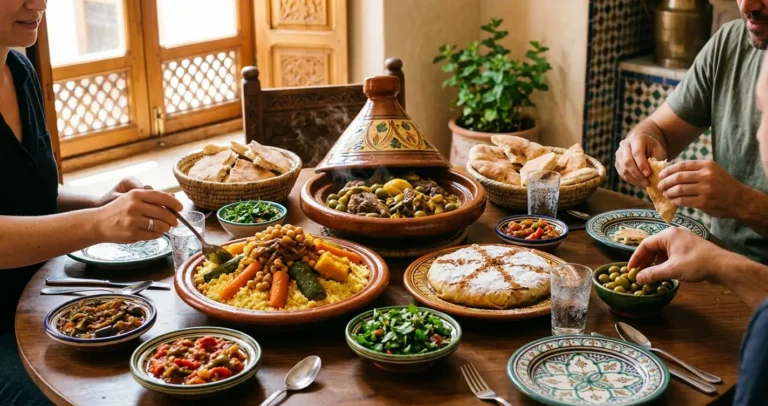
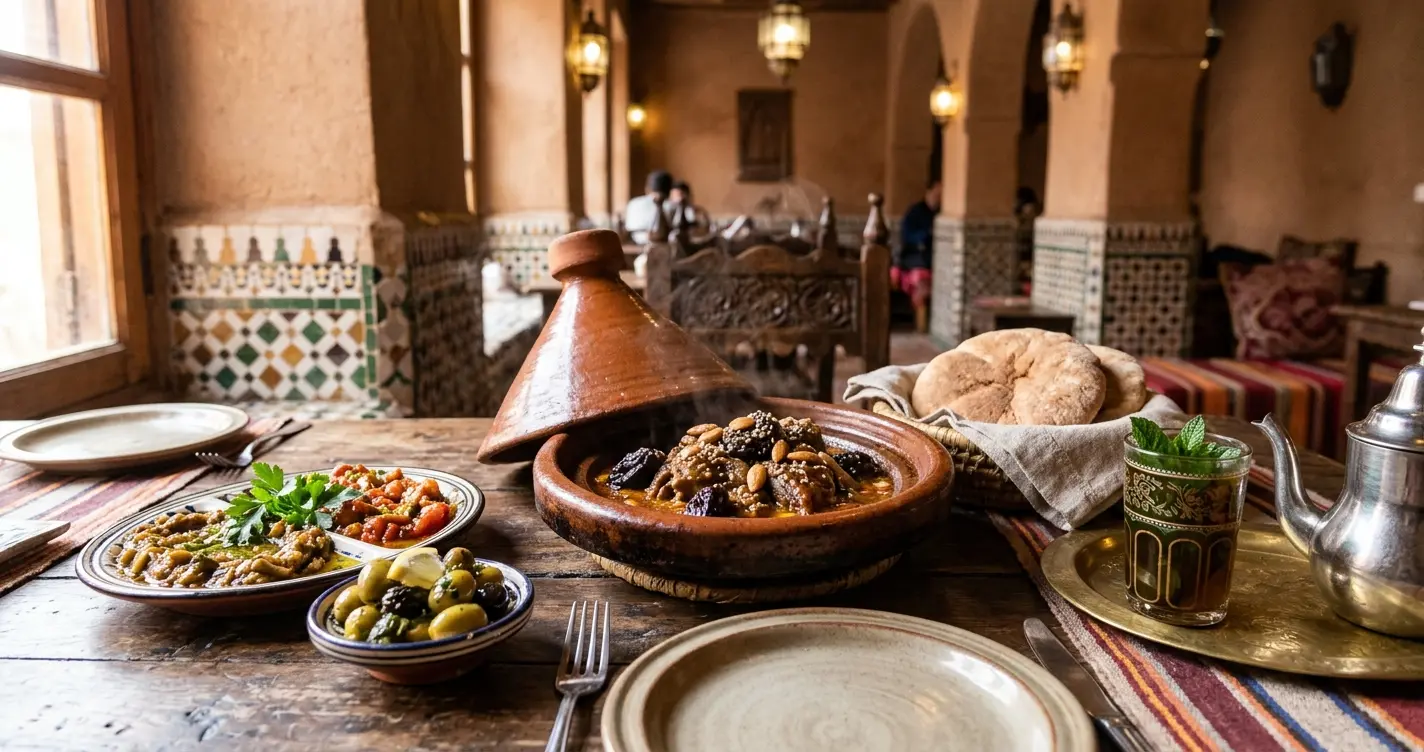
At a small local restaurant, a tagine or couscous usually costs about 40 to 80 dirhams. In tourist-oriented restaurants, the same dish can cost noticeably more. Compare a few nearby menus to see the local level. Couscous is traditionally a Friday lunch dish in many households, so some restaurants serve it best on that day.
Harira and Traditional Soups
Harira from a street vendor costs only a few dirhams, with sources suggesting roughly 3 to 7 per serving. In a sit-down restaurant it is often a starter and costs more. It is one of the best-value dishes in the country. During Ramadan it is eaten to break the fast, and stalls and restaurants may be busier at sunset.
Grilled Meat and Brochettes
Grilled merguez sausages at stalls in Jemaa el-Fna are listed at about 10 to 15 dirhams, while a street kebab plate runs roughly 20 to 40. Brochettes in a sit-down restaurant cost more but usually come with bread and salad. Ask whether the price is per skewer or per plate, since this is a common source of confusion.
Moroccan Sandwiches
Sandwiches filled with grilled meat, kefta or fish are among the best bargains, typically about 15 to 25 dirhams. Fried fish sandwiches at Essaouira’s port are listed in the same range. A sandwich is often a full lunch, especially with fries and salad inside.
Pastilla and Traditional Specialties
Pastilla and other slow-cooked specialties usually cost more than a simple tagine, because they take longer to prepare and are often served in sit-down restaurants. Check the menu price before ordering, and share a dish if portions are generous.
Moroccan Breakfast and Fresh Juice
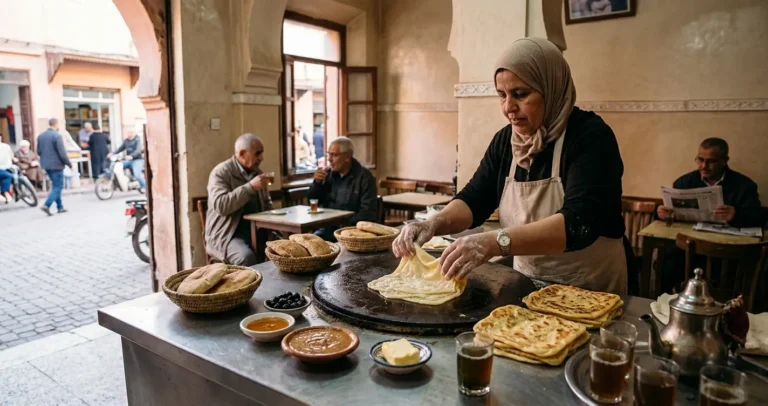
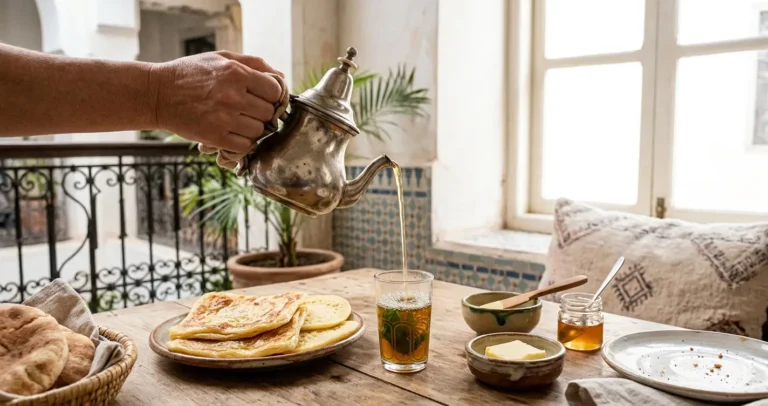
A café breakfast of msemen, bread, jam and tea often costs around 20 to 50 dirhams. Individual msemen or baghrir from a stall can cost just a few dirhams, and fresh orange juice at a stall is listed at roughly 4 dirhams. If your riad includes breakfast, our Morocco Riads guide explains what to check. Fresh juice is a daily bargain, but ask the price first if the stall has no sign.
Food Prices in Morocco Across Popular Destinations
Food prices in Morocco are not fixed by city. Within each place, local eateries and tourist-oriented restaurants can differ by a factor of two or three.
Marrakech
Marrakech is the most expensive city for food, and the tourist restaurants around the main square cost the most. Street food and local cafés a few streets away are far cheaper. See our Marrakech destination guide for areas to explore. Prices at the tourist restaurants are noticeably higher than at the sandwich stalls on nearby streets.
Fes
Fes offers a large supply of small local restaurants inside the medina, and prices are often lower than in Marrakech for similar food. Tourist-oriented restaurants near the main gates charge more. Our Fes destination guide has more. Look for lunch spots favoured by students and shopkeepers, since they tend to offer the fairest prices.
Casablanca
Casablanca is a modern, business-oriented city with a strong café culture. Mid-range dining and café meals can cost more than in smaller towns, while local grills and sandwich shops remain affordable. Seafood restaurants near the port and coast can be good value at lunch.
Chefchaouen
Chefchaouen is small, and its restaurants around the main square cater heavily to visitors. Walking a little farther often brings lower prices. See our Chefchaouen destination guide. Breakfast terraces and lunch cafés on side streets often cost less than the main square.
Essaouira
Essaouira is famous for fresh fish, and the port stalls offer grilled seafood and sandwiches at modest prices. One recent blog lists two shawarma takeaways at 128 dirhams, which shows how prices vary by venue. See our Essaouira destination guide. Choose busy stalls and check how the fish is priced, per kilogram or per portion.
Agadir and Tangier
Both are larger coastal cities with a wide range of restaurants. In Agadir, one recent blog lists a tagine and couscous with drinks at about 109 dirhams. Prices in tourist zones are higher in both cities, so compare menus along the seafront and in local neighbourhoods. Both also have local cafés where prices are modest and the clientele is mostly residents.
6 Smart Ways to Avoid Overpaying When Eating Out in Morocco
A few habits keep the bill fair without spoiling the meal.
Check the Menu Before Sitting Down
Read the prices at the door. If they are not displayed, ask. Deciding before you sit down avoids awkward surprises later. Take a photo of the menu if you want to compare prices later.
Compare Nearby Restaurants
Spend two minutes comparing three places on the same street. Differences in price and crowd quickly become obvious. A short walk and a quick look can save as much as an hour of research online.
Ask About Portions and Set Menus
Ask whether a dish is meant for one or two and what a set menu includes. Sharing a tagine and ordering extra sides can be cheaper than separate mains. Set menus can be good value for a big appetite, but not for a light lunch.
Understand What Is Included in the Price
Find out whether bread, salad, tea or water are included, and whether there is a service charge. A clear answer at the start prevents confusion at the end. This matters most with set menus, where drinks and desserts may or may not be included.
Check the Bill Before Paying
Read the bill line by line, and compare it with the menu. Mistakes happen, and a polite question usually fixes them. Our Morocco Budget Guide offers more on managing costs, and our Morocco Travel Cost for 7 Days article shows how food fits into a weekly budget.
Balance Tourist Experiences With Local Dining
Enjoy a rooftop dinner or a special restaurant once or twice, and eat locally for most other meals. That balance keeps the experience rich and the budget under control. Many travelers eat their main meal at lunch, when local restaurants are at their best and cheapest.
Restaurant Etiquette and Practical Tips for Visitors
A few local customs make dining easier.
Is Tipping Expected in Moroccan Restaurants?
Tipping is customary but modest. Recent sources suggest rounding up the bill at a café, roughly 5 to 10 dirhams, and leaving about 10 to 20 dirhams, or around 10 percent, at a sit-down restaurant for good service. Tips are appreciated rather than required, and small coins are welcome at cafés.
Can You Ask for Tap Water?
Many visitors prefer bottled or filtered water, which is cheap and widely sold. If you are unsure about tap water, follow the advice of your accommodation or official travel guidance, and check the bottle seal when it arrives at the table.
What to Know About Bread and Shared Dishes
Bread is served with most meals and is used to scoop food, often from a shared dish. It is usually part of the meal, but ask in tourist-oriented places if you are unsure. Eating with the right hand is the traditional custom. Wash your hands before the meal, which many restaurants make easy with a basin or a table-side pour.
Cash or Card: How Do Restaurants Usually Accept Payment?
Small eateries and cafés usually want cash, and small notes of 20, 50 and 100 dirhams are the most useful. Upscale and tourist-oriented restaurants more often accept cards, but ask before you order. Whatever the style, eating out in Morocco rewards a traveler who looks at the menu, the room and the bill with equal attention.
Frequently Asked Questions
Is eating out in Morocco expensive?
Not by international standards. Street food and local cafés are inexpensive, and a tagine at a small restaurant costs roughly 40 to 80 dirhams. Costs rise at tourist-oriented restaurants, rooftop terraces and fine dining, where a meal can pass 300 dirhams per person. Prices also vary by city, with Marrakech usually the highest. The best approach is to mix local meals with a few special dinners.
How much does an average restaurant meal cost in Morocco?
It depends on the type of place. A street meal costs about 20 to 40 dirhams, a local restaurant meal 40 to 80 or more, a traditional sit-down restaurant roughly 80 to 180 and a mid-range restaurant about 150 to 300 per person. Check the menu for your own city and neighbourhood, since these are ranges, not fixed prices.
How can tourists avoid overpriced restaurants?
Check the menu before sitting down, compare nearby places and look for restaurants with local customers. Be wary of staff who pressure you to enter, menus without prices and restaurants right beside major attractions. Ask what is included, and check the bill before you pay. Walking a few streets away from the main square usually lowers prices.
Are restaurants in the medinas more expensive?
Not always. Restaurants beside the busiest squares and gates are often more expensive, but small local eateries deeper inside the medina can be very affordable. Rooftop and riad restaurants charge for the setting. Compare menus, and judge each place on its own prices, not its location.
Is street food cheaper than restaurant food?
Generally, yes. Street food snacks and meals cost roughly 10 to 40 dirhams, which is well below most sit-down restaurants. Street food can also be excellent, particularly harira, grilled meat and sandwiches. Choose busy stalls with fresh food, and watch how the food is prepared before ordering.
How much should you tip in Moroccan restaurants?
Tipping is modest. At a café, rounding up or leaving 5 to 10 dirhams is usual. At a sit-down restaurant, about 10 to 20 dirhams or roughly 10 percent is common for good service. Check whether a service charge is already on the bill, and tip according to the service you received.
Do Moroccan restaurants display prices on their menus?
Many do, particularly restaurants used to visitors, but not all. If a menu has no prices or the restaurant will not show them, ask before you order, and be ready to walk away. Small local eateries sometimes have no printed menu, so ask for the price of each dish you want before the food is served.