Morocco Daily Budget: How Much Does a Trip Really Cost?
A realistic Morocco daily budget runs from roughly 350 to 600 dirhams per person for a budget trip, 800 to 1,500 for mid-range and 1,800 to 3,500 or more for luxury. Those figures cover the things you pay for every day, and they leave out the costs that arrive in lumps, such as flights, a Sahara tour and shopping. This guide breaks each category down so you can build a plan that fits your own trip.
How Much Does Morocco Cost Per Day? A Realistic Morocco Daily Budget
The short answer depends on how you travel. These ranges are per person per day, and they assume you share a double room with one other traveler. Conversions use roughly 9.3 dirhams to the US dollar, which is close to the mid-2026 rate. Exchange rates move, so check the current figure before you travel.
| Travel style | Estimated daily budget per person (MAD) | Approximate USD |
|---|---|---|
| Budget | 350–600 MAD | $40–65 |
| Mid-range | 800–1,500 MAD | $85–160 |
| Luxury | 1,800–3,500+ MAD | $195–375+ |
These estimates cover accommodation, food, local transport and sightseeing. They exclude international flights, shopping, intercity travel and major multi-day tours unless stated, because those costs do not behave like daily spending. Travel-budget sources broadly agree on similar ranges, though prices vary by city and season.
Accommodation assumptions matter more than any other variable. A 1,000 dirham riad room costs each person 500 dirhams if two people share it, and 1,000 if you travel alone. A solo traveler should expect the daily total to rise accordingly.
What Counts as a Budget Trip?
A budget trip means dorm beds or simple guesthouses, meals at local cafés and street stalls, shared or public transport and a few paid sights chosen carefully. It is entirely possible, and many travelers do it comfortably. It leaves little room for guided tours, rooftop dinners or private drivers, so every extra needs a trade-off.
What Can You Expect From a Mid-Range Budget?
A mid-range budget buys a comfortable riad or hotel with breakfast, a mix of local and sit-down restaurants, taxis when you want them and one paid activity most days. It is the level where most visitors find the best balance of comfort and value, and it covers a guided half-day tour now and then without strain.
When Does Morocco Become a Luxury Destination?
Morocco becomes a luxury destination when accommodation leaves the standard range. Premium riads, suites and resort hotels, private drivers, refined restaurants and private guides all push the daily total into the upper band. Accommodation alone can account for more than half the budget, which is why the luxury range is so wide.
1. Accommodation: How Much Should You Spend Per Night?
Where you sleep is usually the largest single cost, and it is also the one you control most. Prices vary by city, season and location inside the medina. They also rise around public holidays and peak months, so book early for busy periods. For help choosing when to go, see our Best Time to Visit Morocco guide.
Hostels and Budget Guesthouses
Dorm beds in hostels typically cost around 100 to 200 dirhams a night, depending on the city and the standard. A basic private room in a budget guesthouse often falls between 250 and 450 dirhams, which works out at 125 to 225 per person if two people share.
Sharing changes the total more than anything else. A solo traveler in a private room pays the full price, so a dorm bed is often the cheapest way to travel alone. Check what is included, since some guesthouses add breakfast and others charge extra.
Mid-Range Riads and Hotels
Mid-range riads and hotels generally run from roughly 700 to 1,300 dirhams per room per night, which is about 350 to 650 per person when shared. Recent listings put comfortable riad doubles with breakfast at around $60 to $130, depending on the city and season.
What you pay depends on three things: location, room quality and extras. A riad close to a main square costs more than one deeper in the medina, and a room with a courtyard view or air conditioning costs more than a basic one. Breakfast is usually included, which cuts your food spending.
Luxury Riads and Premium Hotels
Luxury properties start from around 1,800 dirhams per room and rise well beyond 4,000 for suites, private pools and resort stays. Recent sources put luxury riads at roughly $200 to $400 a night.
Luxury accommodation can dominate the daily budget. At 2,800 dirhams a room, each of two travelers spends 1,400 dirhams before they eat a meal, so the choice of hotel often decides which budget band you fall into.
2. Food and Drinks: What Does Eating in Morocco Cost?
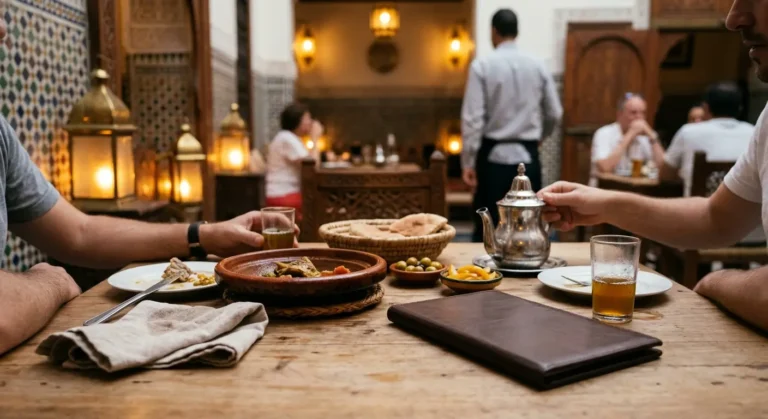
Food is where Morocco is most generous. You can eat very well on a small budget, and the gap between local and tourist-oriented restaurants is the main driver of what you spend.
Breakfast at a Café or Your Riad
Many riads include breakfast in the room rate. At a café, bread, eggs, jam and a coffee or juice usually cost somewhere between 20 and 50 dirhams. If your breakfast is included, you can count it as free in your daily total.
Street Food and Local Restaurants
Street food and local restaurants offer the best value. Recent sources put a bowl of harira under about $1, and a tagine at a local place at roughly $3 to $6, which is about 30 to 55 dirhams. A sandwich or grilled skewers from a stall often cost less.
A full meal in a simple local restaurant typically falls between 40 and 100 dirhams. These places are where most budget travelers eat, and the food is often better than in more polished venues.
Mid-Range Restaurants and Rooftop Dining
A meal at a mid-range restaurant, with a starter, main and drink, commonly costs 100 to 230 dirhams per person, according to recent listings of $10 to $25. Rooftop and tourist-oriented restaurants in busy squares often charge more for similar food, sometimes 150 to 350 dirhams.
Eating locally and choosing tourist-oriented restaurants can differ by a factor of two or three for a similar meal, so mix the two to control the budget.
Drinks, Coffee and Mint Tea
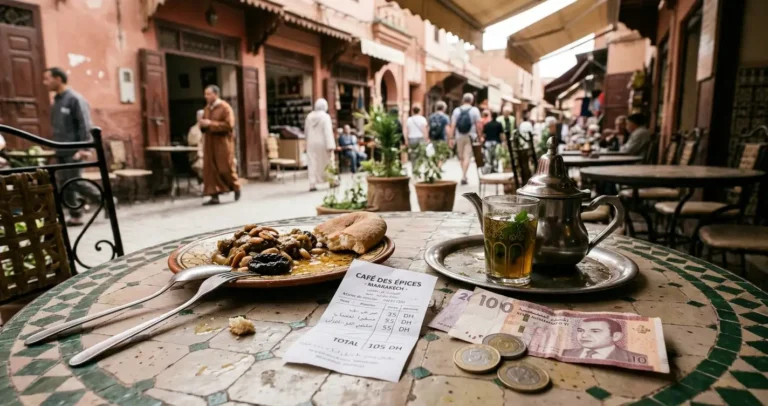
Mint tea and coffee in a neighbourhood café usually cost 10 to 25 dirhams, while terraces in tourist areas can charge noticeably more. Bottled water is cheap, and fresh orange juice from a stall is among the best-value treats in the country. Alcohol, where it is served, is expensive compared with food and is not available in every restaurant.
3. Transportation: How Much Does Getting Around Cost?
Local transport is cheap. Intercity travel is where costs climb, so it is worth separating the two when you plan.
Petit Taxis and City Buses
Petit taxis in cities usually cost from about 10 to 30 dirhams for short rides, and they are metered, though drivers do not always use the meter, so agree the price or insist on it. City buses and trams are cheaper still. Recent listings show a Casablanca tram ride at about 6 dirhams.
Trains Between Major Cities
ONCF trains connect the larger cities and are comfortable and reliable. Fares vary by route and class, so check the current price for your journey. As one example, listings have shown the Tangier to Fes trip at roughly 150 to 330 dirhams, depending on the service. Our Tangier to Fes guide compares the options on that route.
Intercity Buses and Grand Taxis
CTM and Supratours run the main long-distance buses, usually the cheapest way to cover distance. Listings suggest around 100 to 160 dirhams between Agadir and Marrakech and 100 to 200 between Rabat and Chefchaouen, though fares change. Shared grand taxis serve shorter intercity routes.
For route-specific prices and tips, see our guides to Agadir to Marrakech, Essaouira to Agadir and Rabat to Chefchaouen.
Private Transfers and Rental Cars
A private transfer is priced per vehicle, so it works best for groups. A rental car adds the daily rate, insurance, fuel, tolls and parking. Both cost far more than public transport, and they can dominate a daily budget on days when you travel.
Treat everyday local transport as a small daily cost and intercity travel as a separate expense. Our Getting Around Morocco guide covers the options across the country.
4. Sightseeing and Activities: What Should You Allow in Your Morocco Daily Budget?
Sightseeing varies more by traveler than any other category. A few paid sights each day are affordable, but several guided experiences add up fast.
Museums, Palaces and Historic Sites
Entrance fees are modest. Recent figures put the Bahia Palace in Marrakech at about 70 dirhams and Jardin Majorelle at around 150, though fees change and some sites charge more for combined tickets. Many other museums and monuments fall between 20 and 100 dirhams. Check the current price before you go.
Guided Medina Tours
Guided medina tours help in a maze such as Fes, and a half-day tour typically costs around $25 to $40, about 230 to 370 dirhams. Agree the price, duration and any shop stops in advance, and use a licensed guide.
Hammams, Cooking Classes and Cultural Experiences
A local public hammam is very cheap to enter, while a tourist-oriented hammam with a scrub and massage often costs several hundred dirhams. Cooking classes commonly run from about 350 to 700 dirhams, and they usually include a meal. These experiences are often the most memorable part of a trip, so they are worth planning for.
Free and Low-Cost Things to Do
Wandering medinas, watching sunset from a rooftop, walking along the Atlantic in Essaouira or Rabat, sitting in a public garden and browsing souks cost nothing. Mixing one or two paid activities with free days keeps the budget under control without hollowing out the experience. Our Marrakech destination guide and Essaouira destination guide suggest ways to do this.
5. The Sahara Desert: A Major Extra Cost to Plan For
A desert trip is why many people come to Morocco, and it is the item most likely to break a budget. It is one purchase, not a daily cost, so treating its price as an ordinary daily expense distorts the whole picture. Budget it separately.
Shared Group Tours vs Private Desert Trips
Shared three-day group tours from Marrakech to Merzouga are listed from roughly $100 to $400 per person, depending on the operator and camp standard. Private tours with your own vehicle and driver cost several times more, and some listings run above $1,000 for the vehicle.
The difference buys flexibility and privacy, not a different desert. A group tour is perfectly good for most travelers.
Standard Camps vs Luxury Desert Camps
Standard camps usually offer a private tent with shared bathrooms, while luxury desert camps provide private bathrooms, better beds and more refined dining. The step up often adds well over $100 per person, so decide how much comfort matters to you.
What Is Usually Included in the Price?
A typical package covers transport, one night in a camp, dinner, breakfast and a camel ride. Lunches, drinks, tips and local guide fees, such as a small fee for a guide at Aït Ben Haddou, are often extra. Compare what each tour includes, not just the headline price.
How to Add a Desert Tour to Your Daily Budget
Add the tour’s full cost as a single line outside your daily budget, then spread nothing across the other days. If you travel independently, plan the transport using our Merzouga destination guide, Ouarzazate to Merzouga and Merzouga to Marrakech articles, and add the cost of a camp night.
How Does Your Morocco Daily Budget Change by Destination?
Spending differs by city, but no city is always the cheapest. Prices follow accommodation supply, tourist demand, transport links and the activities on offer, and these shift with the season.
Marrakech
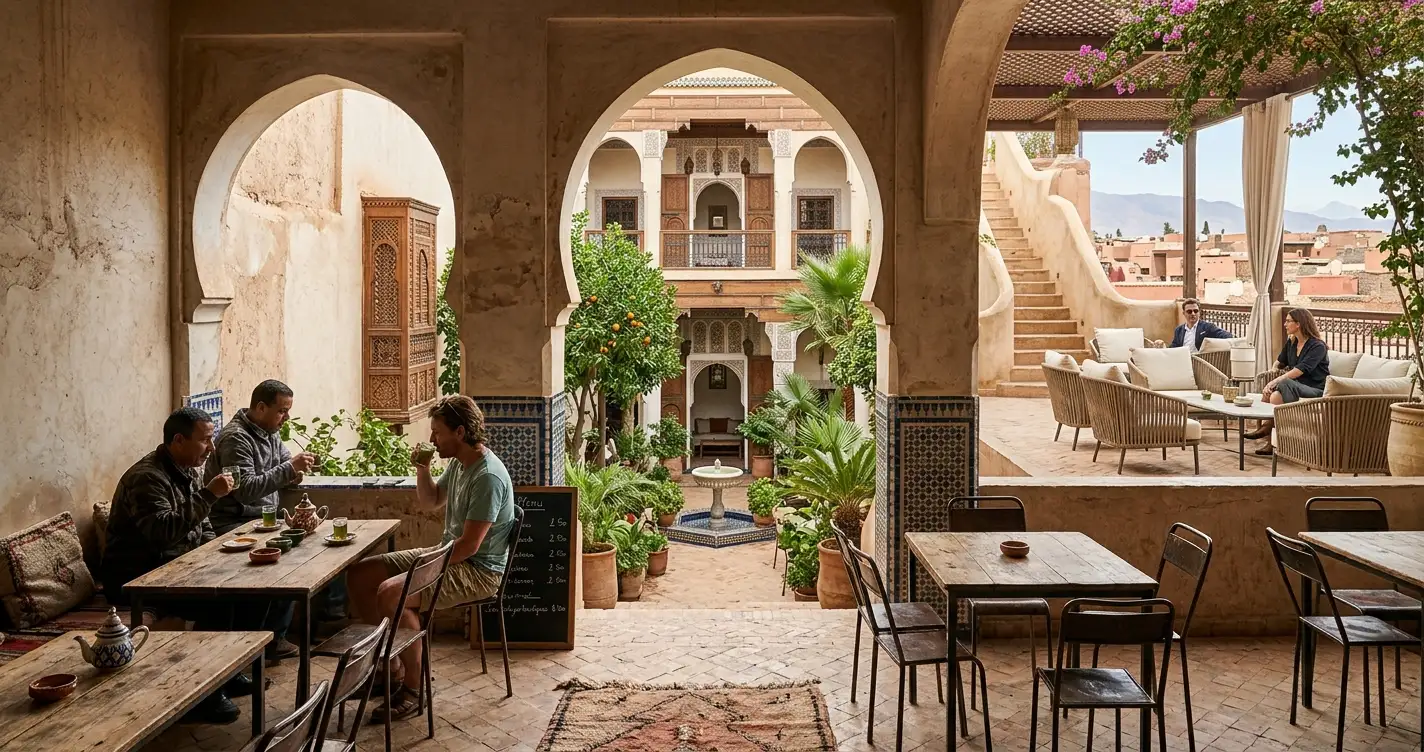
Marrakech has the widest range of accommodation, from hostels to luxury riads, and heavy tourist demand. Restaurants near the main square charge more than those a few streets away, and activities such as tours, hammams and day trips are plentiful. A flexible budget works well here.
Fes
Fes has a large medina with many riads and an extensive supply of local food. Guided tours are often useful in the labyrinth, which adds a cost. Many sights are modest in price.
Chefchaouen
Chefchaouen is small, so accommodation and activities are limited, and prices in peak periods can rise. Local food is inexpensive, and walking is free. Getting there adds an intercity transport cost.
Casablanca and Rabat
Both are business-oriented cities with a different mix of hotels, and fewer traditional riads. Local transport such as trams is cheap, and sightseeing costs depend on whether you visit paid sites.
Essaouira and Agadir
Essaouira is compact and walkable, with relaxed prices for food, while Agadir is a resort city with beach-oriented hotels. Costs there depend heavily on the season and the type of accommodation.
Merzouga and the Sahara
Costs in Merzouga depend on the type of camp and whether meals and activities are included. Transport to reach it is the largest expense, and overnight options range widely.
What Makes a Morocco Trip More Expensive?
Several choices raise costs, often more than expected:
- Traveling during busy holiday periods, when accommodation prices rise
- Booking premium riads or hotels
- Hiring private drivers for long distances
- Taking several guided excursions
- Adding a Sahara tour
- Changing cities too frequently, which multiplies transport costs
- Traveling solo and paying the full room cost
- Booking at the last minute, when options are limited
How to Save Money Without Sacrificing Your Trip
Choose Accommodation for Location as Well as Price
A cheaper room far from the action may cost more in taxis and time. Choose a location that suits your plans, and check the arrival route, since medina streets can be hard with luggage.
Use Trains and Reputable Intercity Buses Where Practical
Trains and established bus operators offer predictable prices and comfort. Compare the total cost, including transfers, before you choose. Our Morocco Budget Guide offers additional context.
Mix Local Restaurants With Special Dining Experiences
Eat most meals at local restaurants and stalls, then choose one or two special dinners. This keeps food costs low and still gives you the memorable meals.
Balance Paid Attractions With Free Activities
Alternate days with entrance fees and days of wandering. You lose very little and save a lot.
Group Destinations to Reduce Unnecessary Travel
Plan a route that avoids backtracking. A logical sequence cuts transport costs and saves time. Our 10-Day Morocco Itinerary and 7-Day Morocco Itinerary show how to link destinations efficiently.
Compare Tour Inclusions, Not Just Headline Prices
A cheap tour may exclude meals, entrance fees or a decent camp. Always compare what is included.
Example Morocco Daily Budgets for Different Travelers
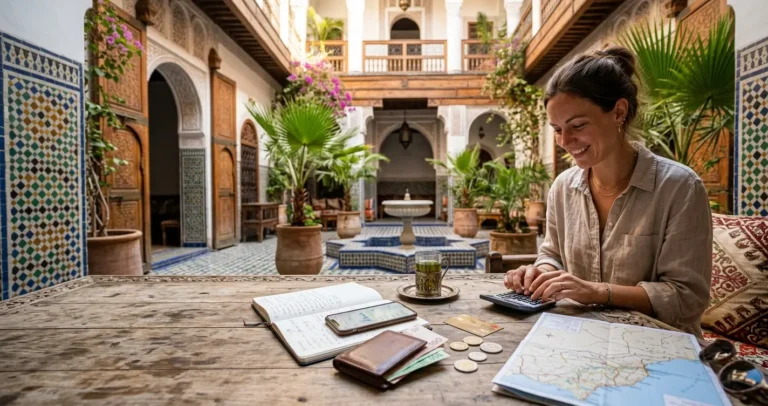
These samples show how the categories add up. All assume a shared double room, so the accommodation figure is each traveler’s half of the room. They exclude intercity transport and desert excursions, and each total is calculated from the lines shown.
Example 1 — Budget Traveler
A dorm bed or half of a 300 dirham guesthouse room.
| Item | MAD |
|---|---|
| Accommodation | 150 |
| Breakfast | 30 |
| Lunch (street food) | 50 |
| Dinner (local restaurant) | 70 |
| Drinks and water | 30 |
| Local transport | 40 |
| Sightseeing (one monument) | 70 |
| Total | 440 (about $47) |
Example 2 — Comfortable Mid-Range Traveler
Half of a 1,000 dirham riad room, breakfast included.
| Item | MAD |
|---|---|
| Accommodation | 500 |
| Lunch | 90 |
| Dinner | 200 |
| Drinks | 50 |
| Local transport | 80 |
| Activities (entrances and part of a guided tour) | 250 |
| Total | 1,170 (about $126) |
A solo traveler paying the full 1,000 dirham room would spend about 1,670 dirhams.
Example 3 — Luxury Traveler
Half of a 2,800 dirham room, breakfast included.
| Item | MAD |
|---|---|
| Accommodation | 1,400 |
| Lunch | 250 |
| Dinner | 500 |
| Drinks | 150 |
| Local transport and private driver | 300 |
| Activities (private guide and entrances) | 600 |
| Total | 3,200 (about $344) |
For a trip total, multiply by the number of days and add flights, intercity travel and any desert tour. Our Morocco Budget Guide shows how this fits into a full trip.
Frequently Asked Questions
Is Morocco expensive to visit?
Morocco is good value compared with many destinations, but costs vary widely. Local food, public transport and mid-range accommodation are affordable, while luxury riads, private drivers and guided excursions can be expensive. Your travel style matters more than the country. Flights, a Sahara tour and shopping sit outside the daily budget and often account for a large share of the total. Compare costs by category, and choose where to spend and where to save.
Can you travel around Morocco on 300 MAD a day?
It is possible but very tight, which is why the budget range above starts higher. At 300 dirhams you would need a dorm bed, street food and public transport, with almost nothing left for sights or tours. Any intercity journey would exceed the day’s allowance. If you do try it, plan carefully, avoid paid attractions on most days and keep a small reserve for surprises.
Is 1,000 MAD a day enough for Morocco?
For most travelers, yes. About 1,000 dirhams a day covers a comfortable shared riad room, restaurant meals, local transport and some activities, which sits in the mid-range band. A solo traveler paying a full room may find it tighter, and it does not cover intercity travel or a desert tour. Adjust it for your season and destination.
How much spending money do you need for a week in Morocco?
Using the daily ranges, a week costs roughly 2,450 to 4,200 dirhams on a budget, 5,600 to 10,500 mid-range and 12,600 to 24,500 or more for luxury, per person. These exclude flights, intercity transport, a Sahara tour and shopping. Add those separately, and our 7-Day Morocco Itinerary helps you plan the route.
Is Morocco cheaper for couples than solo travelers?
Usually, yes, per person. Two people share the room cost, which is the biggest daily expense, and they can split private transfers. A solo traveler pays the full price for a double room, so dorm beds and guesthouses with single rooms are more economical. Food and activities cost about the same per person either way.
Should you budget for the Sahara tour separately?
Yes. A desert trip is a single, large purchase, so adding its full cost to one day’s budget would distort your estimate. Budget it as its own line, compare what each tour includes and remember extras such as lunches, drinks and tips. Our Merzouga destination guide covers what to expect.
How much cash should you carry in Morocco?
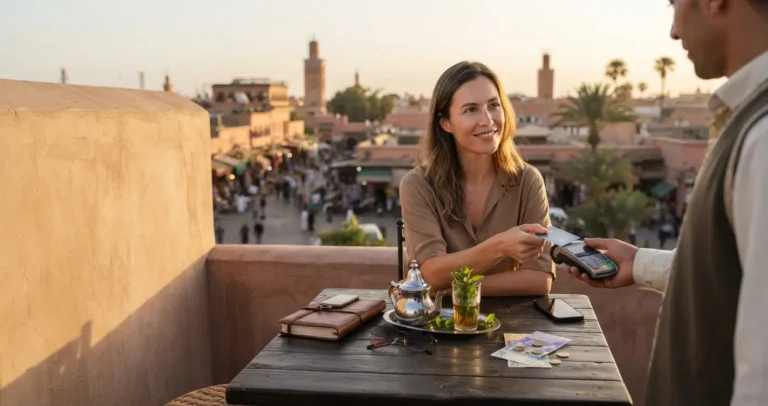
Cards are accepted in many hotels and larger restaurants, but small cafés, taxis, markets and tips usually require cash. ATMs are common in cities, so you can withdraw as you go instead of carrying a large amount. Keep small notes and coins for taxis and tips, and check current rules on exchanging or taking dirhams out of the country before you leave.
The best single step is to decide your accommodation level first, since it sets your daily budget more than anything else, then add the lumpy costs of flights, intercity travel and any desert tour as separate lines.