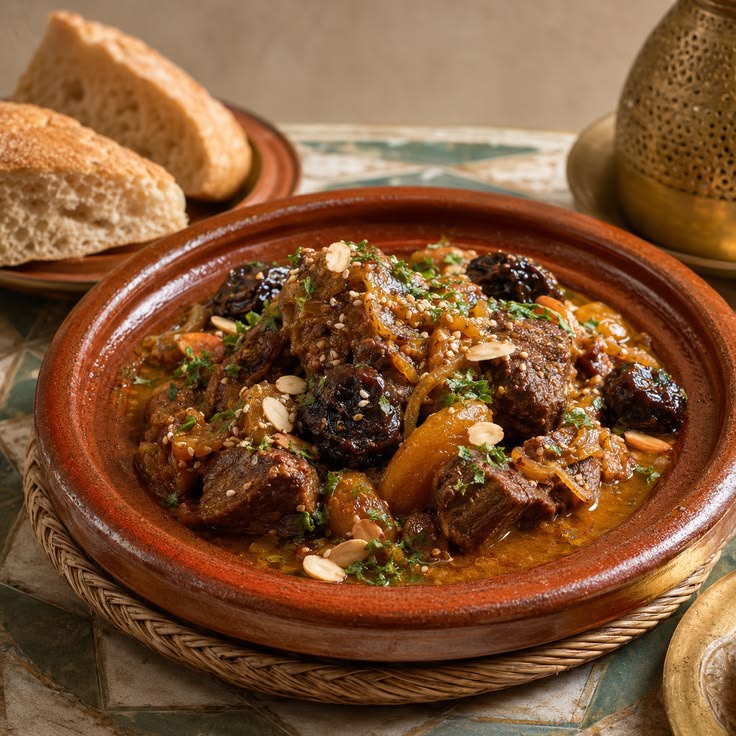
Traditional Moroccan Tagine: The Ultimate Guide
One of Morocco’s most iconic culinary experiences, the traditional tagine is far more than a dish—it is a centuries-old tradition of slow cooking, family gathering and legendary hospitality. This is the definitive guide to the traditional tagine for every traveller.
Discover TagineTagine at a Glance
Everything you need to know before your first authentic tagine experience.
Why tagine is the heart of Moroccan cuisine.
There is no dish more synonymous with Morocco than the traditional tagine. Named after the conical clay pot in which it is cooked, the traditional tagine is the centrepiece of Moroccan dining—a slow-simmered stew of meat, vegetables, fruit and spices that has been the foundation of family meals for centuries. To eat a traditional tagine in Morocco is to participate in one of the oldest and most meaningful culinary traditions recognised within North Africa’s living culinary heritage.
The origins of the traditional tagine are Amazigh (Berber). Long before the Arab conquests brought new spices and culinary techniques, the indigenous peoples of Morocco were cooking stews in clay pots over low fires. The conical lid of the traditional tagine is not decorative—it serves a precise function.
Steam rises, condenses on the cool cone, and drips back down into the dish, creating a self-basting cycle that keeps the food extraordinarily tender and flavourful. This ingenious design, perfected over centuries, means that even the toughest cuts of meat become meltingly soft after hours of gentle cooking in a traditional tagine.
As Morocco’s culture evolved through Arab, Andalusian and Ottoman influences, so too did the traditional tagine. New spices arrived—cumin, saffron, turmeric, ginger, cinnamon—and were incorporated into the cooking. Preserved lemons, olives, dried fruits and nuts transformed simple stews into dishes of remarkable complexity. The tagine became a canvas for the full range of Moroccan culinary artistry—sweet and savoury combined in ways that surprise and delight every first-time visitor.
What makes the traditional tagine truly special, however, is not the ingredients or the technique—it is the culture of sharing that surrounds it. A traditional tagine is never served to one person alone. It arrives at the centre of the table, still bubbling in its clay pot, and everyone gathers around.
You eat with your right hand, tearing pieces of khobz (Moroccan bread) and using them to scoop up the meat, vegetables and sauce. There are no individual plates, no formal courses—just a shared dish and the conversation that flows around it. This communal style of eating is at the very heart of Moroccan hospitality.
For the traveller, ordering a traditional tagine is one of the simplest and most rewarding things you can do in Morocco. Whether you are sitting in a modest café in the medina of Fes or a refined restaurant in Marrakech, the traditional tagine on your table will have been prepared using techniques that have not changed in hundreds of years. The spices will be freshly ground, the vegetables locally sourced, the clay pot seasoned by years of use. It is an experience that connects you directly to the culinary heritage of the country.
Every region of Morocco has its own variations of the traditional tagine. The coastal cities excel in fish tagines with chermoula. The Atlas Mountains favour hearty lamb and root vegetable tagines.
Fes is famous for its refined chicken with preserved lemons and olives. Marrakech offers everything from kefta tagine to lamb with prunes and almonds. The Sahara and the south favour simpler, heartier preparations of the traditional tagine with dried meats and dates.
Whether you are a seasoned traveller or visiting Morocco for the first time, the traditional tagine is an experience you should not miss. It is one of the world’s great dishes—simple in concept, extraordinary in execution, and always served with the warmth and generosity that define Moroccan culture. This guide covers everything you need to know about the traditional tagine: the best types, where to find them, how they are prepared, and how to enjoy them like a local.
Six classic tagines every traveller should know.
Each variety tells a different story about Morocco’s regions, ingredients and culinary traditions.
Traditional Tagine: Chicken with Preserved Lemon & Olives
The most iconic tagine of Fes. Tender chicken is slow-cooked with salty preserved lemons, tangy olives, saffron and ginger. The combination of citrus and savoury is pure Morocco—refined, fragrant and deeply satisfying.
Traditional Tagine: Lamb with Prunes & Almonds
A celebration dish found throughout Morocco. Lamb is braised with sweet prunes, toasted almonds, honey and warm spices. The marriage of sweet and savoury is a hallmark of Moroccan cooking and a flavour that stays with you long after you leave.
Beef with Vegetables
A hearty everyday tagine. Beef is cooked with seasonal vegetables—carrots, potatoes, courgettes, tomatoes—in a rich sauce of cumin, paprika and tomato. This is the tagine you will find in homes and neighbourhood cafés across the country.
Fish Tagine
Coastal Morocco’s contribution to the tradition. Fresh fish—sea bass, swordfish or sardines—is marinated in chermoula (a vibrant paste of herbs, spices and lemon) and baked with peppers, tomatoes and olives. Best enjoyed in Essaouira and Essaouira.
Vegetable Tagine
Vegetarian cooking in Morocco is extraordinary. Chickpeas, courgettes, aubergines, carrots, potatoes and tomatoes are slow-cooked with ras el hanout, cumin and saffron. A vegetable tagine is not a compromise—it is a celebration of the country’s remarkable produce.
Kefta Tagine
Spiced minced meat balls simmered in a rich tomato and onion sauce, often with eggs cracked on top just before serving. Kefta tagine is street food, comfort food and family food—found everywhere from roadside cafés to fine restaurants.
The best cities for authentic tagine.
Every Moroccan city has its own relationship with the tagine. These destinations offer the most memorable experiences.
Fes
The culinary capital of Morocco. Fes is home to the most refined tagine traditions—especially chicken with preserved lemons and olives. The medina’s hidden restaurants serve some of the finest food in the country.
Marrakech
The Red City offers the widest variety of tagines in Morocco. From the bustling stalls of Jemaa el-Fnaa to refined riad restaurants, Marrakech is a tagine paradise.
Chefchaouen
The Blue Pearl offers simple, mountain-style tagines in a stunning setting. The local cuisine reflects strong Amazigh traditions with hearty, comforting flavours.
Rabat
The capital’s refined dining scene includes some of Morocco’s most elegant tagine presentations. The restaurants near the Kasbah des Oudaias are particularly recommended.
Casablanca
Morocco’s largest city offers both traditional and modern takes on the tagine. The Corniche restaurants serve excellent seafood tagines with views of the Atlantic.
Essaouira
Coastal Essaouira excels in fish tagines. The harbour restaurants serve the morning catch cooked in chermoula, right beside the boats that caught it.
The art of cooking a traditional tagine.
The clay tagine pot is one of the oldest cooking vessels still in regular use anywhere in the world. Made from unglazed earthenware, it absorbs moisture during cooking and releases it slowly, creating an environment of gentle, even heat that no modern pot can replicate. It is the vessel that gives the traditional tagine its unmistakable character.
The process begins with layering. Onions form the base, followed by meat, then vegetables, then spices and liquid. The conical lid is placed on top and the traditional tagine is set over a low flame or charcoal.
The cooking is deliberately slow—two to three hours for most tagines. There is no stirring, no rushing. The heat does the work, and the result is meat so tender it falls apart at a touch—the hallmark of a traditional tagine.
Spices are the soul of the traditional tagine. Saffron from Taliouine gives the golden colour. Cumin, ginger, turmeric and paprika form the backbone.
Cinnamon and ras el hanout (a complex blend of up to thirty spices) add warmth and depth. Every family has its own proportions for its traditional tagine, passed down through generations. The spice blends you find in Morocco’s souks—freshly ground, intensely fragrant—are nothing like the pre-packaged versions found abroad.
Seasonal ingredients determine the character of the traditional tagine. In spring, fresh artichokes and broad beans appear. Summer brings tomatoes, courgettes and peppers.
Autumn sees root vegetables and pumpkins. Winter calls for dried fruits, preserved lemons and hearty cuts of meat. A good traditional tagine is always in conversation with the seasons.
Family recipes are sacred. The way a grandmother in Fes makes her traditional tagine may differ subtly from how a cook in Marrakech prepares the same dish. These variations are a source of pride and identity. Asking a Moroccan about their family’s traditional tagine recipe is one of the best conversations you can have.
How the traditional tagine changes across Morocco.
The tagine is a single dish with countless expressions. Each region of Morocco brings its own ingredients, techniques and traditions to the table.
In the Imperial Cities—Fes, Marrakech, Meknes and Rabat—tagine reaches its most refined. The recipes are elaborate, the presentations elegant, and the ingredients sourced from the best markets in the country.
The Atlas Mountains produce heartier, simpler tagines. Lamb with root vegetables, dried meats with onions, and slow-cooked stews designed to warm after a cold mountain night. The Amazigh cooking traditions here are among the oldest in the country.
The Sahara and the south favour tagines made with dried ingredients—dried meats (khlii), dates, dried onions and preserved butter. These are the provisions of nomadic life, adapted over centuries to the desert environment.
The Atlantic Coast excels in fish tagines. From Essaouira to Agadir, the coastal towns prepare the morning’s catch with chermoula, tomatoes and olives. The result is lighter, brighter and more Mediterranean in character.
Northern Morocco—around Tetouan and Tangier—shows strong Andalusian and Spanish influence. Tagines here sometimes incorporate ingredients like peppers, tomatoes and olives in ways that reflect the Mediterranean heritage of the region.
How to enjoy a traditional tagine like a local.
Understanding the rituals around tagine transforms a meal into a cultural experience.
Served in the Pot
The tagine arrives at the table in the same clay pot it was cooked in, still bubbling. The lid is lifted with ceremony, releasing a cloud of fragrant steam. This is part of the experience—the anticipation, the aroma, the reveal.
Bread, Not Cutlery
Moroccans eat tagine with khobz (round flatbread), not with forks and knives. Tear a piece of bread, use it to pinch meat and vegetables, and dip it in the sauce. This is the traditional and most enjoyable way to eat.
Family Sharing
A tagine is a communal dish. Everyone eats from the same pot, starting from the section closest to them. In a group, you take your portion without reaching across. It is a gesture of respect and togetherness.
Tea Afterwards
No Moroccan meal is complete without mint tea. After the tagine, tea is served to aid digestion and to extend the pleasure of the meal. It is the ritual closing of every dining experience.
In Morocco, a meal is never hurried. The tagine arrives at the centre of the table, still steaming in its clay pot, and the family gathers around. There is no rush, no formal course structure—just a shared dish and the conversation that flows around it.
The tagine is served with khobz, the round Moroccan bread that accompanies every meal. You tear pieces of bread with your right hand and use them to scoop up the meat, vegetables and sauce. There are no individual plates—everyone eats from the communal dish. This is one of the most important social rituals in Moroccan life.
Etiquette matters. Eat with your right hand. Take food from the section of the tagine closest to you—do not reach across.
Accept the first piece of bread offered to you. If you are a guest, you may be given the best pieces of meat—this is a sign of honour and hospitality.
Restaurant etiquette is relaxed but respectful. In traditional restaurants, the tagine is often served without menus—you ask what is available and take what is offered. In more modern restaurants, menus will list the varieties. Tipping 10–15% is customary.
The atmosphere of a Moroccan meal is part of the pleasure. Whether you are eating in a bustling medina café, a quiet family home or a rooftop restaurant overlooking Marrakech, the experience engages all your senses—the aroma of spices, the warmth of the clay pot, the sound of conversation, the taste of something that has been cooking for hours.
Everything you need to know before ordering.
Common questions about the traditional tagine.
What is a traditional tagine?
A tagine is both a clay cooking pot with a conical lid and the slow-cooked stew prepared in it. The traditional tagine typically features meat, vegetables, fruits and spices, cooked slowly over low heat for two to three hours.
Is tagine spicy?
Tagines are aromatic rather than hot. They use spices like saffron, cumin, ginger and cinnamon for flavour and warmth. Most tagines are mild to moderately spiced. You can request less spice if you prefer.
What is the most popular tagine?
Chicken with preserved lemons and olives is widely considered the most iconic tagine. Lamb with prunes and almonds is a close second, especially for celebrations.
Is tagine healthy?
Yes. Tagine is a slow-cooked dish rich in protein, vegetables and spices. The cooking method retains nutrients and requires minimal oil. Many tagines are naturally gluten-free and low in fat.
Can vegetarians eat tagine?
Absolutely. Vegetable tagines, chickpea tagines and lentil tagines are widely available throughout Morocco. Moroccan vegetarian cooking is among the most flavourful in the world.
Where should I try tagine?
Fes and Marrakech offer the widest variety and highest quality. Every city has excellent tagine, but these two are the culinary capitals.
What is the difference between a tagine and a stew?
While similar in concept, a tagine is distinct in its cooking vessel (the conical clay pot), its spice profile (Moroccan spices), its slow cooking method and its communal serving tradition.
Do Moroccans eat tagine every day?
Tagine is a frequent feature of Moroccan family meals, but it is not eaten every day. Couscous is traditionally the Friday meal, and many families rotate between tagine, soup, grills and other dishes throughout the week.
Is tagine served with couscous?
Typically not. Tagine and couscous are both main dishes and are usually served on different days. Tagine is served with bread (khobz), while couscous is its own course.
Can tourists easily find authentic tagine?
Yes. Tagine is served everywhere in Morocco, from humble roadside cafés to five-star restaurants. For the most authentic experience, look for local restaurants in the medina away from tourist hotspots.
What is khlii?
Khlii is a Moroccan preserved meat, similar to confit, made from beef or lamb cooked in fat and dried. It is used in some tagines, particularly in the south and during winter months.
How long does a tagine take to cook?
Most tagines cook for two to three hours over low heat. The slow cooking is essential—it breaks down the connective tissue in the meat and allows the flavours to develop fully.
Experience Morocco One Tagine at a Time.
Every traditional tagine tells a story of centuries-old tradition, regional pride and family heritage. From the refined kitchens of Fes to the mountain villages of the Atlas, the tagine connects you to the soul of Morocco. Begin your culinary journey today.