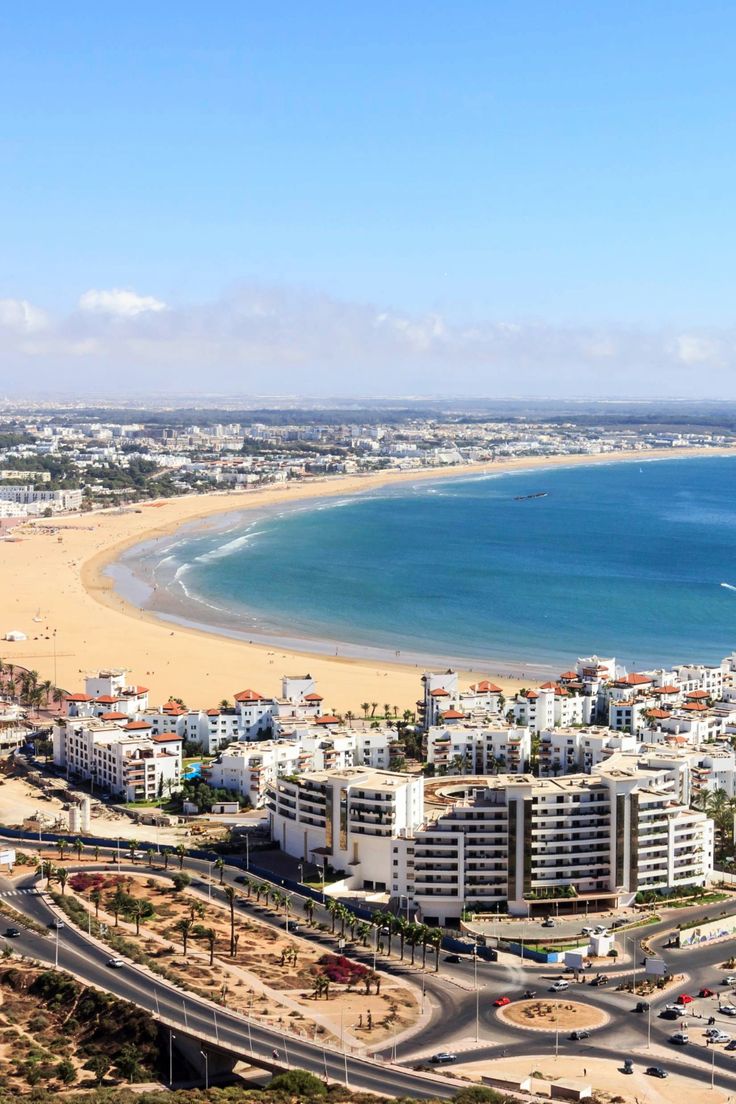
Agadir, Morocco
Stretching along 10 kilometres of pristine Atlantic coastline, Agadir is Morocco's premier beach destination — a modern resort city where golden sand meets warm ocean water beneath an almost perpetual canopy of sunshine. Unlike the ancient medinas of Marrakech and Fes, Agadir tells a different story: one of reinvention, resilience, and a lifestyle shaped by the sea.
Rebuilt entirely after the devastating 1960 earthquake, the city rose from rubble to become the country's most cosmopolitan coastal escape, blending international-standard resorts, a thriving surf culture, and the easy warmth of southern Morocco into a destination that rewards every type of traveller. Whether you come to surf the Atlantic waves, explore the dramatic hilltop Kasbah, or simply lounge beneath a parasol with the sound of the tide as your only company, Agadir delivers a side of Morocco that few expect and everyone enjoys.
Why Visit Agadir?
Sun-soaked beaches, world-class surf, a hilltop Kasbah with sweeping ocean views — Agadir is where Morocco's Atlantic coast reveals its most relaxed and inviting side.
Golden Sand Beach
One of the longest and most pristine urban beaches in North Africa, stretching 10 kilometres along the Atlantic with fine golden sand, gentle waves, and a waterfront promenade that hums with life from sunrise to sunset.
Modern Resort City
Rebuilt after the 1960 earthquake with purpose and ambition, Agadir offers international-standard hotels, a vibrant marina, and a cosmopolitan infrastructure that feels distinctly modern while remaining unmistakably Moroccan.
Surfing Capital
With Taghazout just 20 minutes north and consistent Atlantic swells year-round, Agadir and its surrounding coastline have earned a reputation as one of the finest surf destinations in Africa, with breaks for every skill level.
Agadir Oufella
The dramatic hilltop Kasbah ruins overlooking the city and the bay offer panoramic views that frame the coastline, the medina, and the Souss Valley in a single breathtaking sweep — especially stunning at golden hour.
Atlantic Sunsets
Agadir faces west over the open Atlantic, which means the sunsets are spectacular — long, drawn-out affairs where the sky turns amber and rose over the ocean, best witnessed from the beach or a waterfront restaurant.
Gateway to the South
Sitting at the edge of the Anti-Atlas and within easy reach of the Sahara, Agadir is the natural starting point for road trips into southern Morocco's most dramatic landscapes, from the Taroudant valleys to the Tizi n'Test pass.
Agadir at a Glance
The essentials for planning your Atlantic coast escape.
Top Things to Do in Agadir
Ten experiences that capture the coast, the culture, and the relaxed spirit of Morocco's Atlantic jewel.
Agadir Beach Walk
The soul of the city. Ten kilometres of fine golden sand stretch along the waterfront, backed by a palm-lined promenade lined with cafés, restaurants, and the low hum of daily life. Swimming, sunbathing, and long morning walks are the rhythm here.
Agadir Oufella (Kasbah)
The dramatic hilltop ruins of the old Kasbah, destroyed in the 1960 earthquake, now serve as a panoramic viewpoint overlooking the entire bay. The restored walls, memorial museum, and sweeping views make this Agadir's single most rewarding visit.
Souk El Had
One of the largest souks in Morocco, sprawling across several city blocks with thousands of stalls selling everything from spices, leather, and ceramics to clothing, electronics, and household goods. The energy, the colours, and the scent of cumin and saffron are intoxicating.
Crocoparc
Home to over 300 Nile crocodiles in a landscaped botanical garden setting, Crocoparc offers a surprisingly engaging experience — especially for families. The giant crocodiles, tortoise enclosure, and exotic plants make for an unusual and memorable visit.
Marina d'Agadir
The modern marina complex blends yacht harbour, waterfront dining, and boutique shopping into a polished social hub. The terraced restaurants overlooking the boats are the city's most popular evening destination, and the atmosphere is lively without being overwhelming.
Taghazout Surfing
Just 20 minutes north of Agadir, the village of Taghazout sits on one of Morocco's most celebrated surf breaks. With consistent swells from October to April and a laid-back surf culture that has drawn wave riders for decades, this is the beating heart of Moroccan surfing.
Paradise Valley
A lush river canyon hidden in the Anti-Atlas foothills about 50 minutes northeast of Agadir. Natural rock pools, cascading waterfalls, and towering palm trees create an oasis that feels genuinely remote despite being within easy reach of the coast.
Bird Valley (Vallée des Oiseaux)
A peaceful botanical park in the heart of the city, home to over 100 species of birds in landscaped gardens with ponds, aviaries, and shaded walking paths. It is a surprisingly tranquil escape from the beachfront bustle and a favourite with families.
Golf
Agadir is one of Morocco's premier golfing destinations, with several championship courses set against the backdrop of the Anti-Atlas mountains and the Atlantic coast. The mild year-round climate makes it a reliable destination for golf at any season.
Sunset at the Beach
Agadir faces due west over the Atlantic, which means the sunsets are among the most dramatic in Morocco. As the sky turns amber and rose, the silhouette of the Anti-Atlas mountains frames the horizon in a spectacle best witnessed with feet in the sand.
Agadir Beach
There are beaches in Morocco that feel wild and remote, and then there is Agadir Beach — a sweep of golden sand so vast, so perfectly positioned, and so effortlessly inviting that it has become the defining image of the entire city. Stretching for 10 kilometres along the Atlantic waterfront, the beach is the reason most visitors come to Agadir and the reason many return.
The sand is fine and warm underfoot, the water is a deep, shimmering blue-green that stays refreshing even in the height of summer, and the gentle slope of the seabed makes it one of the safest urban beaches in North Africa for swimming.
What sets Agadir apart from other Moroccan coastal destinations is the completeness of the experience. The palm-lined promenade that runs the length of the beach is lined with cafés, restaurants, and hotels, yet the beach itself is wide enough that it never feels crowded. In the mornings, joggers and dog-walkers share the firm sand at the waterline; by midday, families spread parasols and build sandcastles while surfers catch the gentle shore break further south.
As evening approaches, the beach transforms once more — the light softens, the crowds thin, and the sound of the Atlantic becomes the dominant presence. It is, quite simply, one of the finest urban beaches in Africa.
- Swimming — the beach slopes gently into the Atlantic, making it safe and enjoyable for swimmers of all ages; the water is clean and well-monitored, with lifeguards on duty during peak season
- Sunbathing — the beach is wide enough that finding a quiet spot is rarely difficult, even in high season; hotels set up parasols and loungers along the central stretch
- Beach sports — volleyball nets, football goals, and camel rides are available along the promenade, and the firm sand at the waterline is perfect for morning jogging or walking
- The promenade — a palm-lined walkway runs the full length of the beach, connecting the marina in the north to the residential areas in the south, with cafés and restaurants at regular intervals
- Morning ritual — the best time on the beach is early morning, when the sand is cool, the light is golden, and the city has not yet woken up around you
- Evening atmosphere — as sunset approaches, the waterfront restaurants fill and the sound of music drifts from the cafés — a relaxed, convivial atmosphere that captures Agadir's easygoing character
Agadir Oufella (Kasbah)
Perched on a steep hilltop overlooking the entire bay, the ruins of the Kasbah d'Agadir Oufella are the city's most poignant and visually striking landmark — a place where history, loss, and beauty converge in a way that lingers in the memory long after you descend.
The original fortress dated to the 16th century and served as the administrative heart of the region for centuries, its walls protecting a dense medina of homes, shops, and public buildings. In February 1960, a catastrophic earthquake reduced almost the entire city to rubble in minutes, killing an estimated 12,000 people and leaving Agadir virtually destroyed.
The Kasbah was among the few structures to retain its walls, and today its partially restored ruins stand as both a memorial to what was lost and a symbol of the city's remarkable resilience. The site is genuinely moving.
Walking through the preserved archways and along the ramparts, you find yourself at the highest point in Agadir, with panoramic views that sweep across the entire bay, the modern city below, the harbour, and the hazy silhouette of the Anti-Atlas mountains to the southeast.
The small earthquake memorial museum inside the walls tells the story of the disaster and the rebuilding that followed, with photographs and personal accounts that bring the history to life.
But it is the light that makes the Kasbah unforgettable. As the afternoon progresses and the sun drops toward the Atlantic, the sandstone walls turn from pale gold to deep amber, the shadows lengthen across the hilltop, and the view below transforms into something almost impossibly beautiful. It is, without question, the most rewarding sunset viewpoint in Agadir.
- Earthquake memorial — the museum inside the Kasbah walls tells the story of the 1960 disaster through photographs, personal accounts, and recovered artefacts, offering essential context for understanding modern Agadir
- Panoramic views — from the ramparts, the entire bay unfolds below — the marina, the beach, the modern city, and the mountains beyond in a single sweeping panorama
- Architecture — the restored sections of the Kasbah walls display the traditional southern Moroccan building style, with pisé and stone construction that blends into the hillside
- Sunset point — the Kasbah faces due west over the ocean, making it the premier sunset viewpoint in the city; the last hour of daylight transforms the sandstone into warm gold
- The new medina — the reconstructed medina at the base of the Kasbah hill replicates the traditional layout of the old city, with narrow streets, artisan workshops, and small cafés
- Access — a steady uphill walk or a short taxi ride from the beachfront; the climb is steep but well-paved, and the views provide ample reward for the effort
Marina & Waterfront
If Agadir Beach is the city's daytime heart, the Marina is where it comes alive in the evening. Developed as part of the city's ambitious post-earthquake modernisation, the Marina d'Agadir is a purpose-built waterfront complex that blends yacht harbour, dining destination, and social gathering place into a polished whole that feels distinctly cosmopolitan.
The terraced architecture cascades gently toward the water, with restaurants, cafés, and boutique shops lining the walkways between the boat-filled basins. It is the kind of place where you come for a coffee and stay for dinner, drawn in by the warmth of the evening light on the water and the easy rhythm of people strolling along the quayside.
The dining here is Agadir's best — a concentration of seafood restaurants serving the morning's catch alongside Moroccan and international menus, all with waterfront tables that command views of the harbour and the ocean beyond.
Beyond the Marina itself, the waterfront promenade extends in both directions along the coast, connecting the harbour to the beach, the beach clubs, and the residential areas to the south. This is a city that was built for walking, and the promenade is its most rewarding artery — a place where joggers, families, couples, and fishermen all share the same sunlit path with the Atlantic as their constant companion.
- Dining — the Marina restaurants offer the finest seafood in the city, with fish grilled to order and Moroccan specialities prepared with coastal flair; come for sunset and stay for dinner
- Yacht harbour — the boat-filled basins create a Mediterranean atmosphere that is unique in Morocco; sailing excursions and fishing trips can be arranged from the quayside
- Shopping — the Marina complex houses a curated selection of boutiques, galleries, and design shops alongside more traditional Moroccan outlets selling leather, textiles, and ceramics
- Evening atmosphere — as the sun drops, the waterfront cafés fill and the Marina takes on a convivial, unhurried energy that captures Agadir at its most appealing
- Promenade — the palm-lined walkway extends in both directions from the Marina, connecting the harbour to the beach and offering a flat, scenic route for walking, jogging, or cycling
- Events — the Marina hosts regular cultural events, live music, and seasonal markets that add an extra layer of activity to an already lively waterfront
Best Time to Visit
Agadir enjoys one of the mildest climates in Morocco, with warm temperatures year-round and over 300 days of sunshine annually. But each season brings a different character to the city and the coast.
Spring & Autumn
- March–May — the sweet spot. Temperatures are warm (20–26 degrees) without the intensity of summer, the beach is uncrowded, and the surrounding countryside is green and in bloom. Perfect for walking, sightseeing, and day trips to Paradise Valley and the Anti-Atlas
- September–November — equally pleasant, with warm sea temperatures ideal for swimming, fewer package tourists, and some of the year's best surf swells beginning to arrive. The light is golden and the atmosphere unhurried
Summer & Winter
- June–August — hot but moderated by ocean breezes (28–35 degrees). The beach is at its busiest and the water at its warmest. European holiday-makers arrive in numbers, but the sheer size of the beach means it never feels overcrowded. Surfing is gentler in summer — ideal for beginners
- December–February — mild by any standard (16–20 degrees) with occasional rain, but still sunny enough for beach walks and outdoor dining. This is peak surf season, with powerful Atlantic swells drawing experienced surfers from around the world
Where to Stay
From beachfront resorts with infinity pools to surf lodges in Taghazout — Agadir's accommodation scene spans every style and budget with a distinctly coastal character.
Luxury Resorts
Beachfront properties with private beach access, infinity pools overlooking the Atlantic, full-service spas, and the polished service that defines Morocco's premium coastal hospitality. Many are set within landscaped gardens that blend into the beachfront promenade.
Boutique Hotels
Smaller, design-conscious properties in the city centre and near the marina, offering individually styled rooms, rooftop terraces, and the intimate, locally rooted atmosphere that larger resorts cannot replicate. Many occupy restored pre-earthquake buildings with original architectural details.
Mid-Range Hotels
Comfortable, well-maintained options near the beach and the promenade, offering pools, sea-view balconies, and easy access to the city's main attractions at reasonable prices. Ideal for families and independent travellers.
Apartments & Surf Lodges
Self-catering apartments in the residential areas south of the marina and surf-oriented lodges in Taghazout and Tamraght, offering budget-friendly bases with kitchen facilities, rooftop hangouts, and easy access to the breaks.
Food & Local Culture
Coastal Agadir eats differently from the rest of Morocco. The city's food culture is defined by the sea — fresh fish grilled over charcoal, aromatic seafood tagines, and the relaxed outdoor dining that warm Atlantic evenings make possible.
- Seafood — the morning catch arrives at the port restaurants by mid-morning; grilled sardines, sea bass, and octopus are Agadir's signature dishes, served simply with chermoula, cumin, and lemon
- Local restaurants — family-run establishments along the promenade and near the souk serve generous portions of traditional Moroccan cuisine at modest prices; the best are the ones filled with local families at mealtimes
- Moroccan cuisine — lamb and vegetable tagine, couscous with seven vegetables, pastilla, and harira are all readily available, prepared with the southern Moroccan warmth that distinguishes this region's cooking
- Beachfront dining — the restaurants along the promenade offer the unique pleasure of eating fresh seafood with your feet practically in the sand, the sound of the Atlantic as your soundtrack
- Mint tea — the ritual of Moroccan mint tea is observed with particular devotion in Agadir, served in every café and restaurant with the traditional high pour and generous sugar
- Street food — freshly baked msemen, grilled kefta, corn on the cob from beach vendors, and seasonal fruit offer an affordable and delicious way to eat like a local between beach and sightseeing
Getting to Agadir
Sitting at the foot of the Anti-Atlas where the mountains meet the Atlantic, Agadir is well connected by air and road, making it one of the most accessible destinations in southern Morocco.
- From Marrakech — the drive south through the mountains takes approximately 5–6 hours (560 km) via the N10 through Taroudant, or a more direct route via the A7 motorway in roughly 4.5 hours
- From Essaouira — the coastal road south takes approximately 3.5–4 hours (250 km), passing through the Arganeraie Biosphere Reserve with opportunities to spot wild argan trees and free-roaming goats
- Flight — Agadir Al Massira Airport receives direct flights from major European cities and domestic services from Casablanca and Marrakech; the airport sits 25 minutes northeast of the city centre
- Bus — CTM and Supratours operate regular services connecting Agadir with Marrakech, Casablanca, Essaouira, and other major cities; the CTM station is centrally located near the beachfront
- Rental car — the most flexible way to reach Agadir and explore the surrounding coast and Anti-Atlas. The roads are well-maintained, and a car opens up day trips to Paradise Valley, Taroudant, and Taghazout
- Grand taxis — shared grand taxis connect Agadir with Taroudant, Tiznit, and other southern towns; a more adventurous and affordable option for independent travellers
Getting Around
Agadir is a modern, well-planned city that is easy to navigate on foot along the beachfront, with taxis and rental cars opening up the wider region.
- Walking — the beachfront promenade connects the marina, the beach, the Kasbah, and the souk in a flat, walkable corridor; most of the city's main attractions are accessible on foot from the waterfront hotels
- Taxi — petit taxis are plentiful and affordable for getting to the Kasbah, the souk, Crocoparc, and other attractions beyond walking distance; agree on the fare or insist on the meter
- Rental car — essential for day trips to Taghazout, Paradise Valley, Taroudant, and the Anti-Atlas passes; parking is available at most hotels and along the promenade
- Day trips — Taghazout surfing, Paradise Valley, Taroudant's walled medina, the Tizi n'Test mountain pass, and the Arganeraie Biosphere Reserve are all within easy driving distance and pair naturally with a beach-based Agadir stay
Suggested Itineraries
Whether you are stopping through on the Atlantic coast or settling in for a proper beach holiday, here is how to make the most of your time in Agadir.
Half Day
- Morning beach walk along the promenade
- Visit the Kasbah for panoramic views
- Browse Souk El Had
- Sunset drinks at the Marina
1 Day
- Morning: beach time and swimming
- Lunch at a waterfront seafood restaurant
- Afternoon: Kasbah and new medina visit
- Evening: Marina dining and sunset
Agadir + Taghazout
- Day 1: Agadir Beach, Kasbah, Souk El Had
- Day 2: drive to Taghazout for surfing
- Day 2 afternoon: Anchor Point viewpoint
- Day 2 evening: Taghazout beach sunset
- Day 3: Crocoparc and Bird Valley
Coastal Road Trip
- Day 1: Agadir — beach and marina
- Day 2: Taghazout — surfing and coastal walk
- Day 3: Paradise Valley — hiking and rock pools
- Day 4: Taroudant — walled medina and ramparts
- Day 5: Tizi n'Test pass & return to Agadir
Destinations Across Morocco
From imperial cities to desert dunes and Atlantic coast — discover more of what Morocco has to offer.
Practical Tips for Visiting
Beach holidays demand a different kind of preparation. A few essential tips to help you enjoy Agadir's coast, souks, and day trips with confidence and comfort.
- Clothing — lightweight, breathable fabrics for the beach and the city; a light jacket for air-conditioned restaurants and cool Atlantic evenings; modest clothing is appreciated when visiting the souk and residential areas
- Sun protection — the UV in Agadir is intense year-round, intensified by reflection off the sand and water. SPF 50+, a wide-brimmed hat, sunglasses, and regular reapplication are essential regardless of the season
- Cash — larger hotels and Marina restaurants accept cards, but the souk, beach vendors, and most local restaurants are cash-only. Withdraw dirhams from the ATMs near the promenade before heading out
- Photography — the best light is in the first and last two hours of daylight; the Kasbah at sunset and the beach at sunrise offer the most striking compositions. Always ask permission before photographing people in the souk
- Beach safety — swim between the flags and heed local advice about currents; the Atlantic can be powerful, especially in winter. Surfing should be attempted with proper instruction or equipment
- Guided vs independent — Agadir is easy to explore independently, with the beach, the marina, and the souk all straightforward to navigate. Day trips to Paradise Valley and Taghazout benefit from a rental car or organised tour
- Family travel — Agadir is one of Morocco's most family-friendly destinations. Bird Valley, the beach, Crocoparc, and the calm waters make it ideal for travelling with children of all ages
Related Travel Guides
Practical planning resources to help you navigate Morocco with confidence.
Frequently Asked Questions
Is Agadir worth visiting?
Absolutely. Agadir offers a side of Morocco that few visitors expect — a modern, sun-soaked coastal city with one of the finest beaches in North Africa, a thriving surf culture, and easy access to the Anti-Atlas mountains and the Sahara. It is the perfect complement to the medinas and mountains of the rest of the country.
How many days should I spend in Agadir?
3–5 days is ideal. Two to three days cover the beach, the Kasbah, the souk, and the Marina at a relaxed pace. Adding a day each for Taghazout surfing and a Paradise Valley or Taroudant day trip creates a well-rounded coastal holiday.
What is Agadir famous for?
Its 10-kilometre golden sand beach, its position as Morocco's premier surf destination, the hilltop Kasbah ruins with panoramic ocean views, the Marina dining complex, and its role as the gateway to southern Morocco's Anti-Atlas mountains and the Sahara.
Is Agadir safe?
Yes. Agadir is one of Morocco's safest and most tourist-friendly cities, with a modern infrastructure and a well-policed beachfront. Exercise standard precautions — keep valuables secure on the beach, use licensed taxis, and be cautious with vendors in the souk.
What is the best time to visit Agadir?
Spring (March–May) and autumn (September–November) offer the most pleasant weather for beach and sightseeing. Summer is hot but enjoyable with ocean breezes; winter is mild and the best season for surfing. Agadir enjoys over 300 days of sunshine per year.
Can I visit Agadir as a day trip from Marrakech?
Technically possible but not recommended. The drive is approximately 4.5–6 hours each way depending on the route. Agadir rewards at least 2–3 days to enjoy the beach, explore the city, and take a day trip or two.
Is Agadir family friendly?
Excellent for families. The beach is safe and well-patrolled, the water is calm enough for children, and attractions like Bird Valley, Crocoparc, and the Aquarium provide engaging activities for younger visitors. The modern infrastructure makes it easy to navigate with children.
Do I need a guide for Agadir?
Not for the beach, marina, or general city exploration. A guide can add value for a guided souk visit, a Taghazout surf lesson, or a day trip to Paradise Valley and the Anti-Atlas if you are not driving independently.
Can I combine Agadir with Essaouira?
Perfectly. The two cities sit on the same Atlantic coast roughly 3.5–4 hours apart by car. Both offer beach culture, water sports, and a relaxed atmosphere, but with distinct characters — Essaouira's windswept medina and Agadir's modern resort energy complement each other beautifully.
Do I need a rental car in Agadir?
For the city itself, no — walking, taxis, and the tramway cover the main attractions. For day trips to Taghazout, Paradise Valley, Taroudant, or the mountain passes, a rental car is highly recommended and opens up the best of the region.
Is surfing good in Agadir?
Excellent. The coast from Agadir north to Taghazout and Imsouane offers consistent Atlantic swells year-round, with breaks suited to every skill level. October to April brings the best waves for experienced surfers; summer offers gentler conditions perfect for beginners.
How far is Agadir from the Sahara?
The Sahara gateway at M'Hamid El Ghizlane is approximately 8–9 hours by car, but the more accessible desert experience at the Agafay stone desert is about 5–6 hours north. Many visitors combine Agadir with a stop in Taroudant, Ouarzazate, or the Dades Valley en route to the dunes.
Ready to Discover Agadir?
From the 10-kilometre golden sand beach and the hilltop Kasbah ruins to the surf breaks of Taghazout and the hidden oases of the Anti-Atlas — Agadir is Morocco's Atlantic coast at its most inviting. Let MoroccOdyssey help you plan the rest.