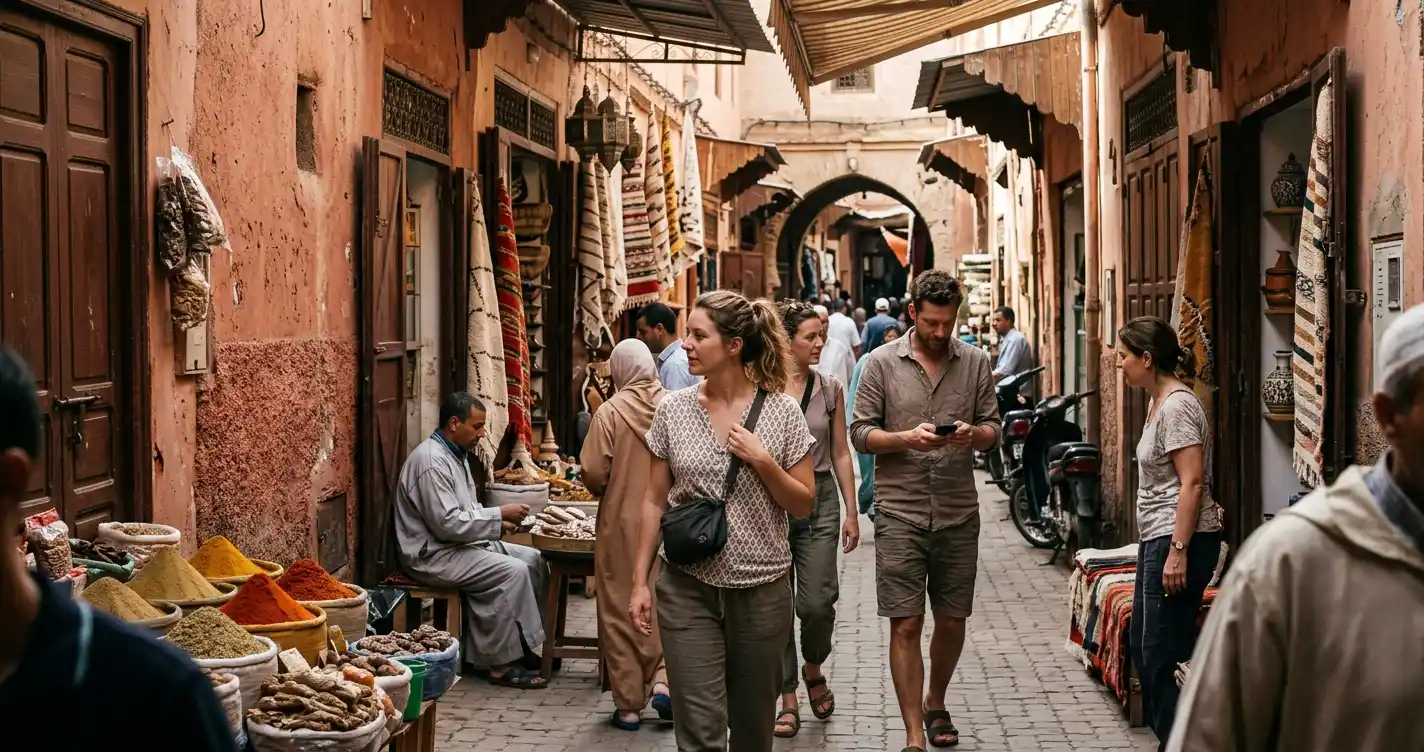
Is Marrakech Safe? (2026): What Tourists Need to Know Before Visiting
Marrakech welcomes millions of visitors a year, and the overwhelming majority leave with nothing worse to report than a hard bargaining session in the souks. But “is Marrakech safe” isn’t really a yes-or-no question it depends on which risk you mean. Violent crime against tourists is genuinely rare. Petty theft and scams are common enough to plan around, in roughly the same way they are in any major tourist city.
This guide walks through what the official travel advisories actually say, the specific risks worth knowing about, which neighborhoods and situations call for more caution, and practical steps to take if something does go wrong the goal is a realistic picture, not reassurance for its own sake or unnecessary alarm.
Is Marrakech Safe for Tourists?
Broadly, yes. Both the US State Department and the UK Foreign, Commonwealth & Development Office rate Morocco at a caution level comparable to much of Western Europe “exercise increased caution” from the US, and no advisory against travel to Marrakech or Morocco’s other main tourist destinations from the UK. Neither government discourages travel to the city, and Canada and Australia issue broadly similar assessments.
The realistic risks for most visitors are petty theft, pressure-selling, and a handful of well-documented scams, not violent crime and the vast majority of trips pass without any incident at all. It’s worth treating these advisory levels as background context rather than a reason to cancel plans, since they apply the same tier to several of Europe’s most popular capital cities.
What Are the Main Safety Risks in Marrakech?
None of the following typically involve physical danger; they’re mostly financial friction, hassle, or unwanted persistence rather than genuine threats to safety.
Pickpocketing and Petty Theft
Pickpocketing is the most commonly reported issue affecting tourists, concentrated in crowded spots Jemaa el-Fnaa, the busiest souk alleys, and airport arrivals halls. It’s comparable in scale to what you’d encounter in Barcelona, Rome, or Paris, and largely avoidable with a crossbody bag, zipped pockets, and basic awareness in dense crowds. The risk rises noticeably in the evening, when Jemaa el-Fnaa fills with both performers and its largest crowds of the day, and again during major public holidays when the square is even busier than usual.
Tourist Scams
Inflated prices, fake “free” gifts that come with a sudden demand for payment, and overly persuasive shop invitations are common in tourist-heavy areas. Most are non-violent and easy to defuse once you recognize the pattern a firm decline and continuing to walk usually ends it. The classic version involves a stranger offering to show you something “for free,” then insisting on payment once you’ve accepted; simply declining any unsolicited offer before it starts avoids the whole scenario. A related version involves someone claiming a well-known landmark or street is closed, steering you instead toward a shop they’re connected to.
Unofficial Guides
Self-appointed “guides” who latch onto visitors near medina entrances, offering directions or a shop recommendation, often expect payment afterward or lead you toward a shop paying them commission. Politely declining any unsolicited offer of help is the simplest way to avoid this entirely, and hiring a licensed guide through your riad in advance covers anyone who genuinely wants a guided medina tour. A firm “no, thank you” delivered without breaking stride is usually enough to end the approach before it goes any further.
Taxi Overcharging
Petit taxis without a working meter, or drivers who quote an inflated flat rate to tourists, are a routine annoyance rather than a safety risk. Insisting on the meter, agreeing a price before getting in, or using a ride-hailing app largely removes the friction. Rates from the airport are especially prone to inflation, so confirming a price before the ride, or arranging pre-booked transport through your riad, avoids most disputes on arrival. A fixed official rate typically applies for the airport-to-medina route, and asking your riad for that figure in advance gives you a useful benchmark.
Bag Snatching and Motorbikes
Bag snatching from passing scooters has been reported in narrow medina alleys, though it isn’t the norm. Carrying bags on the side away from the road, rather than dangling from one shoulder, reduces the risk in the busiest lanes, and this applies equally to phones held loosely while taking photos near traffic. Keeping to the inside of narrow lanes, away from where scooters pass closest, is a simple additional habit worth adopting.
Aggressive Touting and Street Harassment
Persistent vendors and, less commonly, street harassment directed at women are realities of a major tourist hub. Neither typically escalates beyond verbal persistence, and a firm, disinterested response usually ends the interaction quickly. Engaging or arguing tends to prolong the encounter more than a simple “no, thank you” and continuing to walk.
Is the Marrakech Medina Safe?
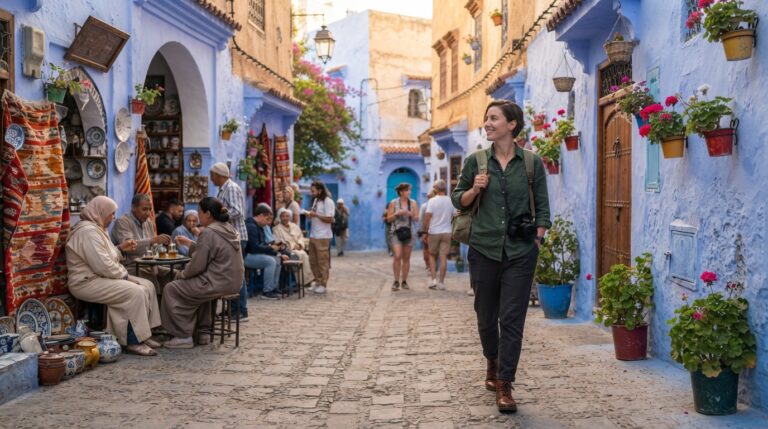
Yes, in the sense that violent incidents are rare, but it’s also where nearly all of the petty theft and scam activity concentrates, simply because that’s where the crowds and tourists are. The medina is dense, narrow, and easy to get lost in, which can feel disorienting more than dangerous most wrong turns lead to another shop or courtyard rather than anywhere genuinely unsafe. Staying alert in the busiest stretches and keeping valuables secure covers most of the real risk, and asking a shopkeeper for directions is generally a safer bet than following a stranger who’s approached you unprompted.
Is Marrakech Safe at Night?
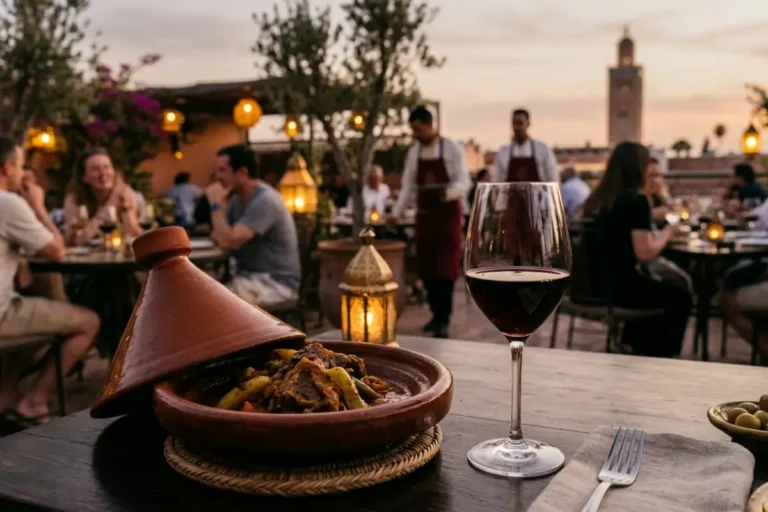
Generally yes in the main tourist areas Jemaa el-Fnaa stays lively and well-populated well into the evening but the medina’s quieter side streets can feel considerably more isolated after dark. Sticking to well-lit, busier routes, or taking a taxi back to your riad late at night, is a sensible default rather than a sign of excessive caution. Most riads are also happy to arrange a driver for a late return if asked in advance.
Is Jemaa el-Fnaa Safe?
Yes, and it’s also one of the most heavily watched spots in the city, with a visible tourist police presence given how central it is to Marrakech’s tourism economy. Pickpocketing risk is at its highest here simply due to crowd density, particularly in the evening when the square is busiest with food stalls, performers, and spectators.
Is Marrakech Safe for Solo Travelers?
Solo travel is one of the more common ways people experience the city, and it rarely presents specific problems beyond ordinary city awareness.
Yes solo travel in Marrakech is common and generally trouble-free, particularly for those who take the same precautions they would in any major city: staying aware in crowds, avoiding isolated streets late at night, and not accepting unsolicited “help.” Riads in particular tend to be well set up for solo guests, often with communal breakfast tables and staff happy to offer local advice, and many solo travelers report meeting other guests naturally over breakfast or during a shared taxi to a day trip.
Is Marrakech Safe for Solo Female Travelers?
Generally yes, though many solo female travelers report more frequent unwanted attention comments, persistent invitations than male travelers experience. It rarely escalates beyond verbal harassment, and dressing modestly, walking with confidence, and ignoring rather than engaging with unwanted attention tend to reduce it considerably. Riad staff are usually a good source of specific, current local advice on top of general precautions, and many solo female travelers find that joining a group activity or day trip for at least part of the stay helps ease the adjustment to the city’s more persistent street culture.
Is Marrakech Safe for Families and Children?
Family travel to Marrakech has grown steadily as riads and hotels have adapted to accommodate it.
Yes, and Marrakech is a popular family destination the main risks (crowds, traffic, pickpocketing) are manageable with the same awareness you’d apply in any busy city center. Keeping a close hand on children in the most crowded souk stretches and around Jemaa el-Fnaa’s traffic is the main practical precaution, and many riads offer family rooms or interconnected suites that make navigating the maze-like medina layout easier with young children in tow.
Are Marrakech’s Taxis Safe?
Taxis are a normal, everyday part of getting around the city, and the overwhelming majority of rides pass without any real issue.
Yes, in terms of physical safety; the main issue is overcharging rather than danger. Petit taxis (for in-city trips) and grand taxis (for intercity travel) are both standard and widely used. Insisting on the meter, agreeing a fare in advance, or using a ride-hailing app where available sidesteps most disputes, and drivers recommended directly by your riad tend to be more consistently reliable than ones hailed at random near tourist sites.
Is It Safe to Walk Around Marrakech?
Yes, during the day and in the main tourist zones at night. Walking is in fact the best way to experience the medina, since much of its character the workshops, the smells from food stalls, the sudden change from a quiet lane into a bustling souk only really comes across on foot. As with any city, judgment matters more the later it gets and the further you stray from well-populated streets, and it’s worth noting exactly which gate or landmark your riad sits near before setting out, since street names aren’t always clearly marked inside the medina.
What Areas of Marrakech Are Safest for Tourists?
Safety varies less by neighborhood in Marrakech than by crowd density and time of day, but each district does have a distinct character worth knowing before you book accommodation.
Medina
The historic core, including Jemaa el-Fnaa and the souks, sees the heaviest tourist police presence and the most foot traffic, which cuts both ways: lots of eyes on the street, but also the highest concentration of pickpocketing and scam attempts. Most riads sit within this district, so a certain level of navigating crowds and vendors is simply part of staying here.
Gueliz
Marrakech’s modern district feels calmer and more spread out, with wide boulevards, boutiques, and cafés. It generally sees fewer petty-crime reports than the busiest medina stretches, simply due to lower crowd density, and its fixed-price boutiques mean far less of the persistent selling common in the souks.
Hivernage
A quieter, more residential and hotel-heavy district near Gueliz, Hivernage is generally considered relaxed and low-hassle, popular with travelers staying in larger hotels rather than medina riads. Its wider streets and lower foot traffic make it a comfortable choice for anyone who wants easy evening walks without medina-level crowds.
Palmeraie
The palm grove district on the city’s outskirts, home to resorts and villas, is spread out and low-density, with car travel more practical than walking between locations. Its remove from the city center means less of the everyday hassle of the medina, though also less within easy walking distance.
How to Avoid Common Marrakech Scams
A short list of habits covers the overwhelming majority of scam scenarios you’re likely to encounter.
Agreeing on a price before any service a taxi ride, a photo with a performer, a camel ride avoids the majority of disputes. Declining unsolicited offers of help or directions, even when politely made, sidesteps most unofficial-guide situations. Comparing prices across a couple of shops before buying anything significant, and treating overly persuasive sales pitches with a healthy skepticism, covers most of what’s left. It’s also worth remembering that photographing street performers or henna artists in Jemaa el-Fnaa often comes with an expected payment, so it’s best to ask or agree a price before taking the photo rather than after.
What to Do If Something Goes Wrong
Most incidents are minor and resolve quickly once you know the right steps to take.
Report theft or a scam to the tourist police first if possible, since they’re used to handling visitor incidents and often speak English or French. Ask for an official police report (a procès-verbal) if you’ll need one for a travel insurance claim it’s free and typically takes 30 to 60 minutes, and you’ll usually need your passport or a copy of it to file one. For anything more serious, contact your embassy or consulate as soon as practical; most maintain 24-hour emergency lines for exactly this kind of situation.
Emergency Numbers and Useful Contacts
Police: 19 (cities) or 177 (Gendarmerie, for highways and rural areas). Fire and ambulance: 15. From a mobile phone, 112 also reaches emergency services. The Marrakech tourist police brigade, based near Jemaa el-Fnaa, is available around the clock and specifically set up to assist visitors with theft, scams, or harassment. It’s worth saving these numbers in your phone before you arrive, along with your embassy’s contact details, rather than searching for them in the moment something goes wrong.
Marrakech Safety Tips for First-Time Visitors
A handful of simple habits cover most of the realistic risk for anyone visiting Marrakech for the first time.
Keep valuables in a hotel safe rather than carrying everything with you, use a crossbody bag rather than an open tote in crowded areas, agree on prices before services rather than after, and download an offline map, since GPS can drift inside the covered medina. None of this requires special vigilance beyond what you’d apply in any major tourist city. It’s also worth carrying a printed or photographed copy of your passport rather than the original when out for the day, keeping the real document secured at your riad, and saving your riad’s address and phone number in case you need to show it to a taxi driver or ask a stranger for directions.
Is Marrakech Safe Compared With Other Moroccan Cities?
Marrakech sees the highest volume of documented tourist scams in Morocco simply because it’s the most visited city, not because it’s disproportionately riskier per visitor. Fes has a comparable reputation for unofficial guides in its medina; Casablanca and Tangier see more urban petty crime outside their central tourist zones. Overall risk levels across Morocco’s main destinations remain broadly similar, and none of the country’s popular tourist circuits Marrakech, Fes, Chefchaouen, Essaouira, the Atlas Mountains, or the Sahara routes currently carry a specific advisory warning from either the US or UK governments.
Is Marrakech Safe in 2026? The Final Verdict
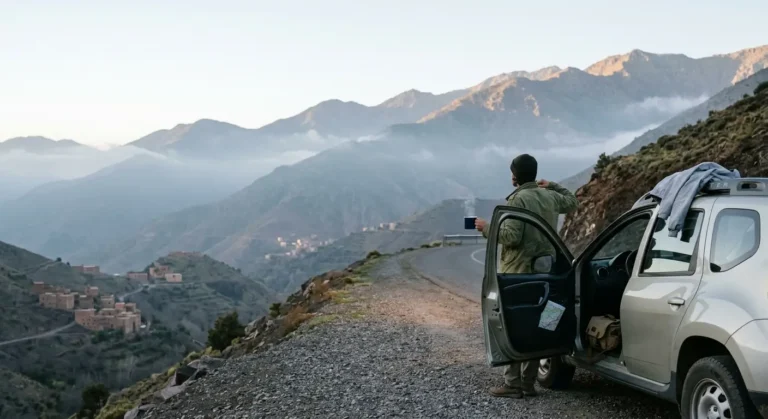
Yes, with the same realistic caveats that apply to any major international city: petty theft and scams are common enough to plan around, violent crime against tourists is rare, and official advisories place Morocco at a caution level similar to much of Western Europe. It’s also worth noting that parts of the wider Marrakech-Safi region are still recovering from the 2023 Al Haouz earthquake this doesn’t affect the city itself, but it’s worth checking current conditions if your trip includes High Atlas villages.
Travel advisories change, so checking your government’s latest guidance shortly before departure is worth the five minutes it takes. Beyond that, the honest answer is that most visitors who prepare for ordinary big-city precautions not extraordinary ones have a completely trouble-free trip.
Is Marrakech Safe? FAQs
Is Marrakech safe for tourists?
Yes violent crime against tourists is rare, and the main realistic risks are petty theft and common scams, both manageable with standard precautions. Millions of visitors travel to Marrakech each year without any safety issues at all.
Is Marrakech safe at night?
Yes in the main tourist areas like Jemaa el-Fnaa, though quieter medina side streets can feel more isolated after dark, so sticking to busier routes or taking a taxi late at night is sensible. The square itself often stays lively and well-lit well past midnight.
Is Marrakech safe for solo female travelers?
Generally yes, though unwanted attention is more commonly reported than outright danger; dressing modestly and confidently declining unwanted interactions tends to reduce it. Many solo female travelers find the experience entirely positive once they’ve adjusted to the more persistent street culture.
Is the Marrakech Medina safe?
Yes, with petty theft and scams being the main concern rather than violent crime, concentrated in the busiest, most crowded stretches. The dense layout can feel disorienting at first, but this is a navigation challenge rather than a safety one.
Is Jemaa el-Fnaa safe at night?
Yes, and it remains one of the most watched, well-populated spots in the city after dark, though pickpocketing risk rises with crowd density in the evening. It’s genuinely one of the liveliest and safest places to be after sunset, provided you keep an eye on your belongings.
Are taxis safe in Marrakech?
Yes physically; the main issue is price rather than danger, easily avoided by insisting on the meter or agreeing a fare before the ride. Both petit and grand taxis are a normal, widely used part of daily life in the city.
Is Marrakech safe for families?
Yes, and it’s a popular family destination, with crowd awareness and basic traffic caution covering most of the practical risk. Many riads and hotels are well set up to accommodate children of all ages.
What are the most common scams in Marrakech?
Unofficial guides, inflated taxi fares, “free gift” setups that demand payment afterward, and overly persuasive shop invitations are the most frequently reported. None of these typically involve any physical risk, mainly financial friction and hassle.
Is it safe to walk around Marrakech alone?
Yes, particularly during the day and in well-populated areas after dark; the same street-smart habits that apply in any major city apply here too. Solo walking is in fact one of the best ways to get a feel for the medina’s character.
What should tourists avoid in Marrakech?
Accepting unsolicited help or directions from strangers, agreeing to a price after a service rather than before, and carrying large amounts of cash or displaying valuables openly in crowded areas. Avoiding these few specific habits removes the vast majority of realistic risk.