Moroccan Street Food: The Ultimate Guide for Travelers
Discover Morocco’s bustling food stalls, lively markets and authentic local flavours. This is the definitive guide to experiencing the country’s extraordinary street food culture.
Explore Street FoodStreet Food at a Glance
Essential information for exploring Morocco’s vibrant street food scene.
Why street food is the heart of Moroccan culinary culture.
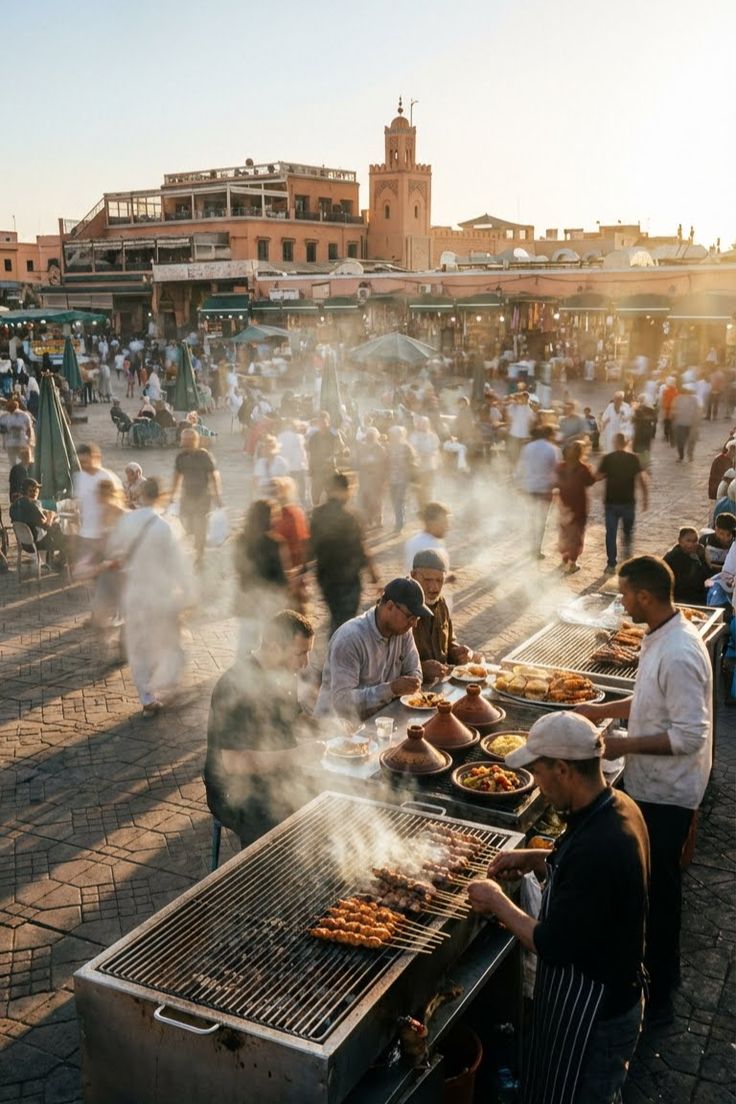
There is a moment in every Moroccan city when the sun begins to set and the streets come alive. The scent of charcoal grills fills the air. Vendors call out their specials. Families gather around steaming pots. The colours, sounds and flavours of Moroccan street food converge into something that is not merely a meal but an experience—one that connects you directly to the soul of the country.
Unlike restaurant dining, which can feel curated and distant, street food in Morocco is immediate, intimate and unfiltered. You stand where the locals stand. You eat what they eat. You watch as a vendor shapes maakouda by hand, drops sfenj into bubbling oil, or grills brochettes over open coals. The preparation is part of the performance, and the result is food that is honest, flavourful and deeply satisfying. UNESCO recognises this living culinary tradition as intangible cultural heritage.
The atmosphere of Moroccan street food is unlike anything else in the world. In Marrakech, the nightly transformation of Jemaa el-Fnaa into a vast open-air restaurant is one of the most iconic food experiences on the planet. In Fes, the narrow alleys of the medina are lined with vendors serving dishes that have been perfected over generations. In Casablanca, the Corniche buzzes with seafood stalls and juice bars that cater to a diverse, cosmopolitan crowd.
Affordability is one of the great pleasures of Moroccan street food. A filling meal can cost as little as 20–50 MAD (€2–5), making it accessible to every traveller. This is not diluted tourist food—it is the same food that Moroccans eat every day, prepared with the same ingredients and the same care. The value for money is extraordinary, and the quality is consistently high.
The regional diversity of Moroccan street food is remarkable. Each city and each region brings its own specialities, its own ingredients and its own traditions. The Atlantic coast offers grilled sardines and seafood; the Atlas Mountains provide hearty, warming snacks; the Saharan south offers unique desert flavours. For the traveller, this means that every city, every region and every season brings new discoveries.
To miss Moroccan street food is to miss the most authentic expression of Moroccan culinary culture. Restaurants are wonderful, but the street is where the real magic happens. This guide will help you navigate that world with confidence, ensuring that every bite is as memorable as the journey itself.
Eight essential dishes every traveller should taste.
These are the flavours that define Morocco’s street food culture.
Maakouda
Golden, crispy potato cakes, deep-fried to perfection. Served in a sandwich with harissa and olives, maakouda is the quintessential Moroccan street snack. Found on virtually every corner, especially in Marrakech.
Sfenj
Morocco’s answer to the doughnut. Light, airy rings of fried dough, golden and warm. Sfenj is eaten for breakfast or as a snack, plain or drizzled with honey. The sfenj makers of Fes are legendary.
Brochettes
Skewers of marinated lamb, chicken or kefta (spiced minced meat), grilled over charcoal. The aroma of brochettes being grilled is one of the defining scents of Moroccan evenings. Served with bread and harissa.
Msemen
Thin, flaky flatbread, folded and grilled until crispy. Served plain, with honey, or filled with spiced meat and vegetables. Msemen is the foundation of many Moroccan street food experiences and a beloved breakfast item.
Bissara
A thick, creamy soup made from dried fava beans, seasoned with cumin, olive oil and garlic. Bissara is the ultimate Moroccan comfort food—warming, nourishing and deeply satisfying, especially on cool mornings.
Snail Soup (Babbouche)
A uniquely Moroccan delicacy. Snails simmered in a fragrant broth of herbs and spices, served from large steaming pots. Eaten with a toothpick to extract the meat. Found especially in Marrakech’s Jemaa el-Fnaa.
Grilled Sardines
Fresh sardines, grilled whole over charcoal and seasoned with salt and cumin. A specialty of coastal cities like Essaouira and Casablanca, where the catch is freshest.
Fresh Juices
Morocco’s juice stalls offer an explosion of colour and flavour. Orange, avocado, banana, mango and pomegranate juices are freshly squeezed to order. The orange juice of Jemaa el-Fnaa is legendary.
The ultimate street food destinations.
Every Moroccan city offers a distinct street food experience.
Marrakech
The undisputed capital of Moroccan street food. Jemaa el-Fnaa transforms nightly into a vast open-air restaurant with dozens of food stalls, grills and juice bars. The variety is unmatched.
Fes
The culinary capital offers the most refined street food. The medina alleys are lined with vendors serving dishes perfected over generations. Fes is where tradition meets quality.
Casablanca
Morocco’s largest city offers diverse street food reflecting its cosmopolitan character. From the Corniche seafood stalls to the old medina cafés, Casablanca caters to every taste.
Tangier
The gateway to Africa brings Mediterranean influences to Moroccan street food. The Grand Socco and the Petit Socco are lively hubs of culinary activity with Andalusian flavours.
Rabat
The capital’s street food scene is elegant and refined. The vendors near the Kasbah and the medina serve polished versions of classic Moroccan street snacks.
Essaouira
Coastal Essaouira excels at seafood street food. Grilled sardines, fish sandwiches and fresh shellfish are served from stalls near the harbour, with the Atlantic as a backdrop.
The theatres of Moroccan culinary life.
Night markets are the beating heart of Moroccan street food culture. As the sun sets, cities across Morocco transform. Stalls appear, grills are lit, pots begin to simmer, and the streets fill with the aroma of charcoal, spices and freshly baked bread. The nightly spectacle of Jemaa el-Fnaa in Marrakech is the most famous example—a UNESCO-recognised cultural space where storytellers, musicians and food vendors create an atmosphere that has existed for nearly a thousand years.
Local bakeries (known as fernatchan) are another cornerstone of street food culture. These neighbourhood bakeries produce the bread, pastries and msemen that form the foundation of Moroccan daily eating. Watching the bakers at work—sliding loaves into wood-fired ovens with long wooden paddles—is a sight that connects you to centuries of tradition.
Traditional vendors are the true artists of Moroccan street food. Many families have been selling the same dish for generations, perfecting their recipes over decades. The snail sellers of Marrakech, the sfenj makers of Fes, the juice vendors of Casablanca—each has their own story, their own technique and their own loyal following. These vendors are not just sellers of food; they are custodians of culinary tradition.
The community atmosphere of Moroccan street food is one of its most appealing qualities. Strangers stand side by side at food stalls, sharing the experience of watching food being prepared. Locals offer recommendations. Families gather for their evening meal. The street becomes a democratic space where everyone is equal before the grill.
Moroccan hospitality extends to the street. Vendors take pride in their food and their service. They will explain what they are making, recommend their best dishes, and ensure you leave satisfied. This generosity of spirit is one of the defining characteristics of Moroccan street food culture and one of the reasons travellers return to Morocco again and again.
How street food changes across Morocco.
Every region of Morocco brings its own ingredients, traditions and flavours to the street food table.
The Imperial Cities—Marrakech, Fes, Meknes and Rabat—offer the widest variety. From maakouda to brochettes to snail soup, the imperial cities are the epicentre of Moroccan street food diversity.
The Atlantic Coast brings seafood to the forefront. Essaouira, Casablanca and Agadir serve grilled sardines, fish sandwiches, seafood brochettes and fresh shellfish. The catch is landed daily, and the street food reflects this freshness.
Northern Morocco—around Tangier and Tetouan—shows Andalusian influence in its street food, with more refined preparations and Mediterranean flavours. The pastries and sweets of the north are particularly celebrated.
The Atlas Mountains offer heartier, simpler street food. Bissara (fava bean soup), harcha (semolina bread) and warming broths are staples of the mountain villages, reflecting the need for sustaining food in cooler climates.
Southern Morocco—the regions bordering the Sahara—brings unique desert flavours. Dates, dried meats and spiced preparations reflect the nomadic traditions of the south, creating a street food culture that is distinct from the rest of the country.
Enjoy street food with confidence.
Moroccan street food is overwhelmingly safe. A few simple guidelines ensure a worry-free experience.
Choose Busy Vendors
High turnover means fresh food. The busiest stalls in any market are busy for a reason—locals know where the best food is. Follow the crowds.
Freshly Prepared
Moroccan street food is cooked to order or prepared in small batches throughout the day. The food is almost always fresh, served within minutes of preparation.
Drinking Water
Stick to bottled water or freshly squeezed juices. Avoid ice in drinks unless you are confident it is made from purified water. This is a standard travel precaution.
Common Sense
Use the same common sense you would apply anywhere. If a stall looks clean and well-maintained, and the food looks fresh, you are almost certainly fine.
Moroccan street food has an excellent reputation for safety, and millions of travellers enjoy it every year without incident. The key to a worry-free experience is simple: use common sense.
Choosing busy vendors is the single most important thing you can do. High turnover means food is prepared fresh and does not sit for long periods. The busiest stalls in any market are busy because locals trust them. Watch where Moroccans eat, and follow their lead.
Freshly prepared food is the norm in Morocco. Most street food is cooked to order or prepared in small batches throughout the day. The maakouda is fried when you order it. The brochettes are grilled in front of you. The juice is squeezed to order. This freshness is both a quality guarantee and a safety measure.
Drinking water is a standard travel precaution. Stick to bottled water or freshly squeezed juices. Avoid ice in drinks unless you are confident it is made from purified water. Most restaurants and cafes use purified ice, but street stalls may not.
Hygiene in Moroccan street food is generally good. Vendors take pride in their stalls and their food. Many traditional vendors have been operating for decades, and their reputation depends on the quality and safety of their food. If a stall looks clean and well-maintained, you can eat with confidence.
The most important thing is to enjoy the experience. Moroccan street food is one of the great pleasures of travel, and allowing unnecessary worry to prevent you from trying it would be a missed opportunity of the highest order.
Everything you need to know before eating on the street.
Common questions about Moroccan street food.
Is Moroccan street food safe?
Yes. Moroccan street food is overwhelmingly safe. Choose busy vendors, eat freshly prepared food, and use the same common sense you would apply anywhere. Millions of travellers enjoy it without incident.
What should I try first?
Start with maakouda (potato cakes) or sfenj (doughnuts)—they are universally loved and widely available. Then progress to brochettes and fresh juices.
How much does street food cost?
Most items cost between 5–30 MAD (€0.50–3). A full day of street food eating can be done for 50–100 MAD (€5–10), making it one of the best travel bargains in the world.
Is vegetarian street food available?
Yes. Maakouda, msemen, bissara, fresh juices and many salads are naturally vegetarian. Morocco is excellent for vegetarian street food options.
Which city has the best street food?
Marrakech is the undisputed capital, but Fes, Casablanca and Tangier all offer exceptional experiences.
Can tourists eat at local stalls?
Absolutely. Moroccan street food vendors welcome tourists. Most are happy to explain their dishes and recommend their best items. The experience is open to everyone.
What is Babbouche?
Babbouche is snail soup, a uniquely Moroccan delicacy. Snails are simmered in a fragrant broth of herbs and spices, then served from large steaming pots. Eaten with a toothpick to extract the meat.
Are food markets open every day?
Yes. Most Moroccan markets and food stalls operate daily, though they are especially vibrant in the evenings. During Ramadan, the night market atmosphere is at its most spectacular.
Should I carry cash?
Yes. Street food vendors almost always accept cash only. Carry small bills and coins. ATMs are widely available in all Moroccan cities.
Is street food family-friendly?
Absolutely. Moroccan street food is enjoyed by families of all ages. Children love maakouda, sfenj and fresh juices, making it an excellent way to introduce young travellers to Moroccan culture.
What is the most famous street food spot?
Jemaa el-Fnaa in Marrakech is the most famous street food destination in Morocco and one of the most iconic food experiences in the world. It transforms nightly into a vast open-air restaurant.
Taste Morocco Like a Local.
Every street stall, every market, every bite tells a story of Moroccan culinary tradition, community and hospitality. From the night markets of Marrakech to the coastal grills of Essaouira, Morocco’s street food is the most authentic way to experience the country’s soul. Begin your culinary journey today.