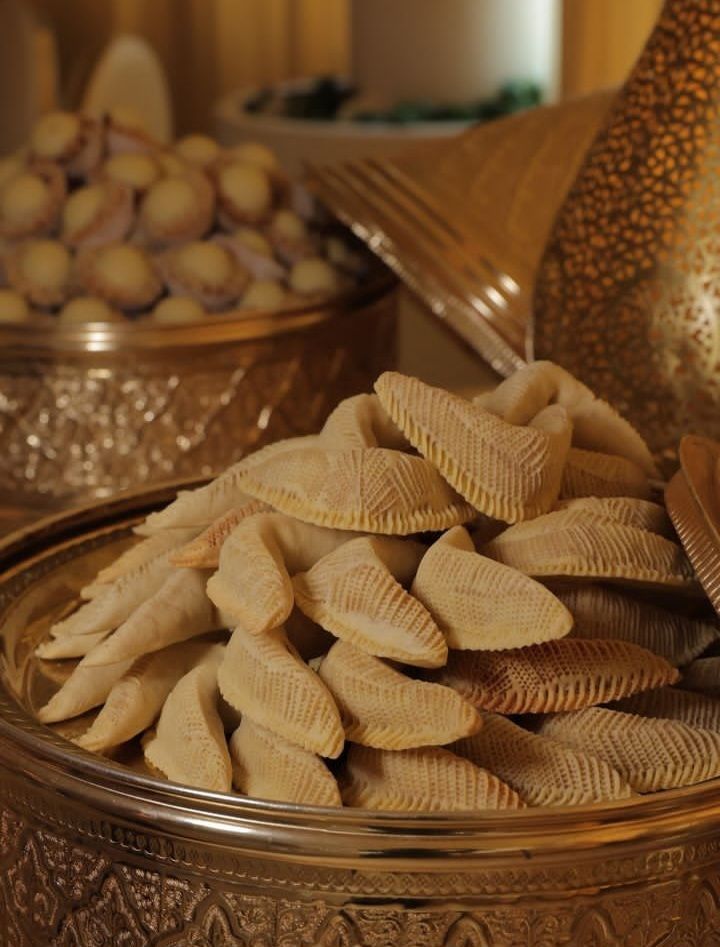
Kaab el Ghazal: Morocco’s Most Elegant Almond Pastry
One of Morocco’s finest traditional pastries, famous for its delicate almond filling, fragrant orange blossom aroma and centuries-old craftsmanship. This is the definitive guide to experiencing it.
Discover Kaab el GhazalKaab el Ghazal at a Glance
Essential information for experiencing one of Morocco’s most prestigious pastries.
Why Kaab el Ghazal is the crown jewel of Moroccan pastry.
In the world of Moroccan pastries, one creation stands above all others in elegance, prestige and cultural significance. It is not merely a sweet. It is a masterpiece of artisan skill, a symbol of celebration, and one of the most refined expressions of Moroccan food culture.
At its heart, Kaab el Ghazal is a crescent-shaped pastry filled with a fragrant paste of ground almonds, sugar, butter and orange blossom water. The exterior is a thin, crisp shell—so delicate that it shatters at the touch—while the interior is a smooth, aromatic almond cream that melts on the tongue. The pastry is traditionally finished with a light coating of icing sugar or a drizzle of honey, and its crescent shape is said to resemble the curved horn of a gazelle—an animal that holds a special place in Moroccan folklore and desert culture.
The meaning behind the name is deeply rooted in Moroccan heritage. The gazelle is a symbol of grace, beauty and the wild beauty of the Sahara. To shape a pastry like a gazelle horn is to pay homage to this elegant creature, and to serve it is to offer guests something worthy of the occasion. The name itself carries poetry and meaning, reflecting the Moroccan tendency to infuse even the simplest acts of daily life with beauty and significance.
Kaab el Ghazal is inseparable from hospitality and celebration. It is the pastry that appears at Eid festivities, at weddings, at family gatherings and at the most important moments in Moroccan family life. To serve it is to honour your guests. To receive it is to be welcomed with warmth and generosity. In many families, the preparation of these pastries is a communal act—women gathering in the kitchen, rolling, shaping and filling together, passing down techniques that have been perfected over generations.
The traditional bakeries that produce Kaab el Ghazal are institutions in their own right. In the medinas of Fes, Marrakech and Rabat, family-run pastry shops have been perfecting their recipes for centuries. The master pastry makers—known as maallems—guard their techniques carefully, and the knowledge is transmitted from parent to child with the same reverence reserved for other sacred Moroccan traditions.
For the traveller, Kaab el Ghazal offers an experience that few tourists ever encounter. To sit in a traditional Mint Tea café, with a plate of freshly made Kaab el Ghazal and a glass of sweet, fragrant tea, is one of the most authentic and memorable experiences Morocco has to offer. It is a moment of pure Moroccan elegance—simple, refined and deeply satisfying.
Six reasons this pastry holds a unique place in Moroccan culture.
Kaab el Ghazal is more than a sweet. It is a craft, a tradition and a gesture of love.
Handmade Craftsmanship
Every pastry is shaped by hand. The thin, crisp shell requires extraordinary skill, and the crescent shape demands precision. Master pastry makers spend years perfecting their technique.
Almond Filling
The heart of the pastry is a fragrant almond paste—a smooth, aromatic blend of ground almonds, sugar, butter and orange blossom water that melts on the tongue.
Orange Blossom Water
The distinctive fragrance of orange blossom water defines Kaab el Ghazal. This delicate, floral essence is uniquely Moroccan and connects the pastry to the orange groves of the Atlas region.
Traditional Bakeries
Family-run pastry shops in the medinas have been producing Kaab el Ghazal for centuries. The master pastry makers guard their recipes with reverence, passing techniques from generation to generation.
Festive Celebrations
Kaab el Ghazal is the centrepiece of Moroccan celebrations—Eid, weddings, family gatherings and religious holidays. To serve it is to honour guests and mark the importance of the occasion.
Tea Pairing
Kaab el Ghazal is the perfect companion to Moroccan Mint Tea. The sweetness of the pastry and the freshness of the tea create a pairing that is quintessentially Moroccan.
The best cities for authentic Kaab el Ghazal.
Every Moroccan city offers its own interpretation of this iconic pastry.
Fes
The spiritual home of Moroccan pastry. Fes is renowned for the most refined and traditional Kaab el Ghazal, where family recipes dating back centuries are still faithfully followed.
Marrakech
The Red City offers Kaab el Ghazal in settings ranging from humble medina bakeries to luxurious palace dining rooms. Marrakech versions tend to be slightly richer and more honeyed.
Rabat
The capital’s pastry tradition is elegant and refined. The traditional bakeries near the Kasbah serve beautifully crafted versions with careful attention to balance and presentation.
Casablanca
Morocco’s largest city offers both traditional and contemporary interpretations. The patisseries along the Corniche serve excellent versions alongside innovative modern pastries.
Chefchaouen
The Blue Pearl offers rustic, mountain-style Kaab el Ghazal reflecting strong Amazigh traditions. The portions are generous and the flavours are earthy and deeply satisfying.
Essaouira
Coastal Essaouira brings a lighter touch to Kaab el Ghazal. The pastries here are delicate and airy, reflecting the relaxed, Mediterranean spirit of this charming port city.
A tradition of artistry and celebration.
Traditional bakeries are the guardians of Moroccan pastry culture. In the narrow alleys of the medina, family-run pastry shops have been producing Kaab el Ghazal and other traditional sweets for centuries. The master pastry makers—the maallems—work with techniques that have changed little over generations. Their hands shape each pastry with precision, care and pride, transforming simple ingredients into edible art.
Family celebrations are the natural habitat of Kaab el Ghazal. At Eid festivities, tables groan under the weight of plates piled high with pastries. At weddings, Kaab el Ghazal is served alongside Pastilla and couscous as part of the celebration feast. At family gatherings, a plate of Kaab el Ghazal appears alongside mint tea, signalling welcome and generosity.
The Eid festivities are perhaps the most important occasion for Kaab el Ghazal. During Eid al-Fitr and Eid al-Adha, families prepare or purchase large quantities of pastries to share with neighbours, friends and family. The pastry tray becomes a symbol of the holiday itself—a gesture of goodwill, community and shared joy. In the days leading up to Eid, the traditional bakeries work at full capacity, producing thousands of pastries to meet the demand.
Weddings elevate Kaab el Ghazal to its highest expression. At Moroccan weddings, the pastry is served as part of an elaborate display of sweets that can include dozens of different varieties. The Kaab el Ghazal, with its elegant crescent shape and refined flavour, is always the centrepiece—a symbol of the sweetness and grace that the families wish for the newlyweds.
Hospitality customs make Kaab el Ghazal a social currency. Offering pastries to guests is a fundamental expression of Moroccan hospitality. The quality and quantity of the pastries offered reflects the host’s respect for their guests. Kaab el Ghazal, as the most prestigious of Moroccan pastries, is reserved for the most honoured occasions and the most valued guests.
The artisan techniques that define Kaab el Ghazal are passed through generations with extraordinary care. A young apprentice begins by watching, then assisting, then gradually taking on more complex tasks. The rolling of the thin shell, the shaping of the crescent, the preparation of the almond filling—each skill requires years of practice to master. This generational knowledge is one of Morocco’s greatest cultural treasures.
How Kaab el Ghazal differs across Morocco.
Like every Moroccan dish, the pastry changes from region to region, reflecting local traditions, ingredients and tastes.
The Imperial Cities—Fes, Marrakech, Meknes and Rabat—produce the most refined versions. The Kaab el Ghazal of Fes is considered the gold standard—a pastry of extraordinary delicacy, with a paper-thin shell and a perfectly balanced almond filling. Marrakech’s versions tend to be slightly richer, with more honey and a more pronounced orange blossom fragrance.
Northern Morocco—around Tangier, Tetouan and Chefchaouen—shows strong Andalusian influence. The pastries here are often lighter and more refined, with delicate spice notes that reflect the region’s multicultural heritage. The Alhambra-influenced pastry traditions of Granada have left a lasting mark on northern Moroccan sweets.
The Atlantic Coast brings a lighter, more airy quality to Kaab el Ghazal. In Essaouira and Casablanca, the pastries reflect the relaxed, Mediterranean spirit of the coast—delicate, fragrant and perfect with a glass of tea on a sunny afternoon.
The Atlas region produces heartier, more rustic versions. Amazigh families prepare Kaab el Ghazal with locally grown almonds, wild honey and generous amounts of orange blossom water. These mountain pastries are less refined but deeply flavourful, reflecting the abundance of the land and the warmth of Amazigh hospitality.
The perfect pairing: Kaab el Ghazal and Moroccan Mint Tea.
Understanding the ritual of tea and pastry deepens your appreciation of Moroccan culinary culture.
Serving with Mint Tea
Kaab el Ghazal is the natural companion to Moroccan Mint Tea. The sweetness of the pastry and the freshness of the tea create a pairing that is quintessentially Moroccan.
Afternoon Tea Traditions
In Morocco, the afternoon tea ritual is a daily practice. Pastries like Kaab el Ghazal are served alongside tea as a gesture of hospitality and a moment of pause in the day.
Traditional Cafés
The traditional cafés of the medina are the natural setting for tea and pastries. Sitting in a rooftop café in Fes or Marrakech, with a plate of pastries and a glass of tea, is a quintessential Moroccan experience.
Sharing with Guests
Sharing pastries with guests is a fundamental expression of Moroccan hospitality. The host prepares tea with ceremony, serves the pastries and ensures that every guest feels welcomed and honoured.
The tea and pastry ritual is one of the most iconic experiences in Moroccan culture. It is not merely a snack or a refreshment—it is a ceremony, a gesture of welcome and a moment of connection. To understand this ritual is to understand the soul of Moroccan hospitality.
Moroccan Mint Tea is prepared with ceremony and skill. The tea is poured from a height, creating a frothy surface that is both beautiful and functional. The first glass is offered to the most honoured guest, the second to the next most valued, and so on. The tea is sweet, fragrant with fresh mint and slightly bitter from the Chinese gunpowder tea that forms its base. It is served in small, ornate glasses, often on a silver tray.
The pastries that accompany the tea are chosen with care. Kaab el Ghazal, with its delicate almond filling and floral aroma, is the most prestigious choice. It is often accompanied by other traditional pastries—chebakia (honey-coated sesame pastries), gazelle horns, feuilles (crispy almond parcels)—creating a display that is both visually stunning and delicious.
The afternoon tea tradition in Morocco is a daily practice, especially among families and in traditional neighbourhoods. The afternoon tea—served between 3 and 5 pm—is a moment when the household pauses, gathers and reconnects. Pastries and tea are served, conversation flows, and the pressures of the day are temporarily set aside. This ritual is one of the defining rhythms of Moroccan daily life.
Traditional cafés are the public expression of this ritual. In every Moroccan medina, cafés serve tea and pastries to locals and visitors alike. Sitting in a café, watching the world go by, sipping tea and nibbling on Kaab el Ghazal—this is one of the simplest and most rewarding experiences Morocco has to offer.
The act of sharing pastries with guests is a fundamental expression of Moroccan hospitality. When a guest arrives, the first thing offered is tea and pastries. The quality of the pastries reflects the host’s respect for their guest, and Kaab el Ghazal—as the most prestigious of Moroccan sweets—is reserved for the most honoured visitors.
Everything you need to know before buying or tasting.
Common questions about Kaab el Ghazal.
What is Kaab el Ghazal?
Kaab el Ghazal, meaning “Gazelle Horns,” is a traditional Moroccan pastry shaped like a crescent and filled with a fragrant paste of ground almonds, sugar, butter and orange blossom water. It is one of Morocco’s finest and most prestigious pastries.
Why is it called Gazelle Horns?
The crescent shape of the pastry is said to resemble the curved horn of a gazelle—an animal that symbolises grace and beauty in Moroccan culture. The name carries poetry and meaning, reflecting the Moroccan tendency to infuse daily life with beauty.
What does it taste like?
Kaab el Ghazal has a sweet, floral and nutty flavour. The almond filling melts on the tongue, while the orange blossom water provides a delicate, fragrant aroma. The thin shell adds a satisfying crispness.
Is it always made with almonds?
Traditional Kaab el Ghazal is always made with almonds. The almond paste is the defining element of the pastry. Some variations may include walnuts or other nuts, but the classic version uses almonds exclusively.
Where should I try authentic Kaab el Ghazal?
Fes is considered the spiritual home of Kaab el Ghazal, but excellent versions are found in Marrakech, Rabat and Casablanca. Seek out traditional pastry shops in the medinas.
Is it served year-round?
Yes. Kaab el Ghazal is available year-round in traditional pastry shops, but it is especially abundant during Eid celebrations, weddings and festive occasions.
Does it pair with mint tea?
Absolutely. Moroccan Mint Tea is the traditional accompaniment to Kaab el Ghazal. The sweetness of the pastry and the freshness of the tea create a pairing that is quintessentially Moroccan.
Can I buy it as a souvenir?
Yes. Kaab el Ghazal makes an excellent gift or souvenir. Most traditional bakeries offer elegant packaging. They travel reasonably well if kept cool and consumed within a few days.
Is it suitable for vegetarians?
Yes. Kaab el Ghazal is naturally vegetarian, made with almonds, sugar, butter and orange blossom water. It contains no meat or animal products other than butter.
What makes Moroccan pastries unique?
Moroccan pastries are distinguished by their use of orange blossom water, almond-based fillings, honey and traditional shaping techniques. The combination of Andalusian, Amazigh and Arab influences creates a pastry tradition found nowhere else.
How is Kaab el Ghazal different from Pastilla?
Kaab el Ghazal is a sweet pastry filled with almonds. Pastilla is a savoury-sweet pie filled with meat, eggs and spices. They are entirely different dishes, though both are iconic Moroccan culinary creations.
What is the best time to enjoy Kaab el Ghazal?
Afternoon, with tea, is the traditional time. But Kaab el Ghazal is equally delightful as a morning treat, an after-dinner sweet, or as part of a festive celebration at any time of day.
Discover Morocco’s Sweet Traditions.
Every Kaab el Ghazal carries centuries of artisan craftsmanship, the warmth of Moroccan hospitality and the elegance of a tradition that has been perfected over generations. From the pastry shops of Fes to the cafés of Marrakech, Morocco’s sweet traditions await you. Begin your culinary journey today.