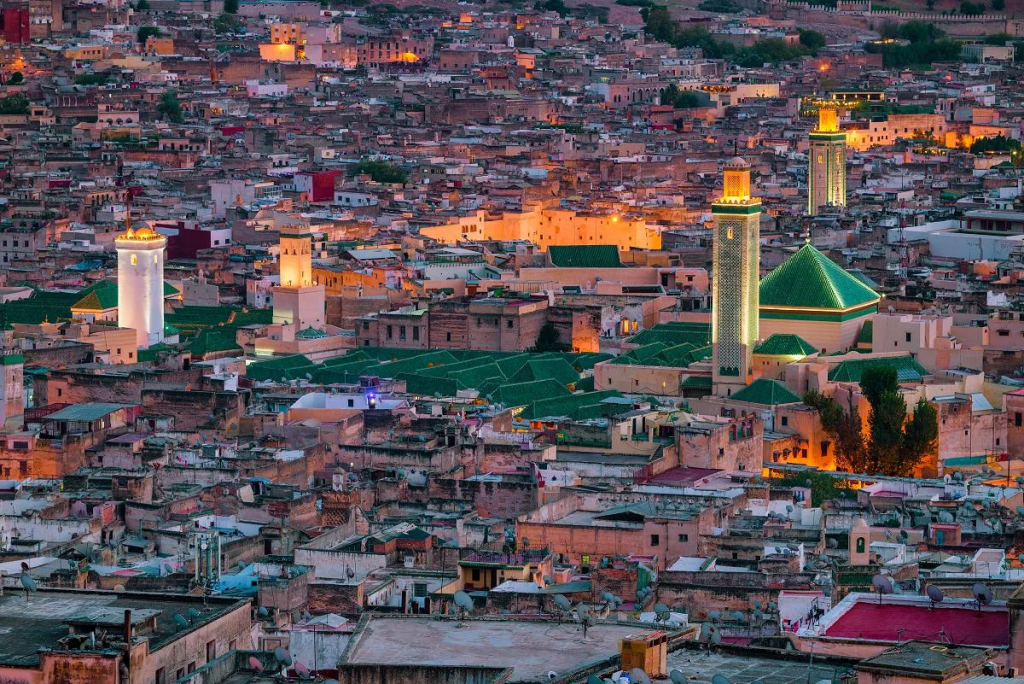
Meknes
One of Morocco's Four Imperial Cities, Meknes remains the country's most underrated — overshadowed by Fes to the east and Marrakech to the south, yet harboring Bab Mansour, one of the finest gateways in North Africa, vast royal granaries carved from stone, and a UNESCO-listed medina that feels genuinely untouched by mass tourism. This is where Sultan Moulay Ismail built a capital to rival Versailles, and where the echoes of that ambition still fill the streets.
Why Visit Meknes?
An imperial city that once rivaled Versailles in grandeur — Meknes is where Morocco's most ambitious sultan left his most enduring mark.
Imperial City Heritage
One of only four Imperial Cities in Morocco, Meknes served as the capital of the Moroccan Empire under Sultan Moulay Ismail in the late 17th century.
Bab Mansour Gateway
Widely considered the most beautiful gateway in all of North Africa — an immense triumphal arch of marble columns, zellige tilework, and carved calligraphy that has endured for three centuries.
UNESCO World Heritage
The Historic City of Meknes was inscribed as a UNESCO World Heritage Site in 1996, recognizing its remarkable collection of palaces, gates, and granaries.
Overlooked Gem
Unlike Marrakech or Fes, Meknes sees a fraction of the visitors — meaning authentic encounters, uncrowded monuments, and prices that haven't been inflated by tourism.
Proximity to Fes
Just 60 kilometers from Fes, the city pairs naturally with its larger neighbor. A rental car or quick taxi ride connects both cities in under an hour.
Authentic Medina
The medina here feels genuinely lived-in rather than curated for tourists — a working quarter of artisans, spice shops, and neighborhood cafés that move at their own pace.
Meknes at a Glance
What you need to know before exploring one of Morocco's great imperial cities.
Top Things to Do in Meknes
Ten experiences that reveal the scale, beauty, and quiet authenticity of Morocco's most overlooked imperial city.
Bab Mansour
The crown jewel of the imperial city — a colossal gateway of marble columns, green-tiled roofing, and intricate carved calligraphy. Completed in 1732 after Moulay Ismail's death, it remains one of the most photographed monuments in Morocco.
Place El Hedim
The grand square facing Bab Mansour — a vast open plaza lined with cafés, street performers, and the Société Générale building. It serves as the city's living room, where locals gather at dusk.
Heri es-Souani
Moulay Ismail's vast royal granaries and stables — a labyrinth of soaring stone vaults, massive pillars, and underground chambers that once stored food and sheltered thousands of horses.
Mausoleum of Moulay Ismail
The ornate resting place of the sultan who built this imperial city — a stunning complex of white marble, carved cedar ceilings, and intricate zellige tilework. One of the few religious sites in Morocco open to non-Muslims.
Royal Granaries
Beyond Heri es-Souani, the royal palace complex contains additional granaries, storehouses, and the famous Habs Qara — an underground prison repurposed as a cold storage facility, with vaulted ceilings dripping with stalactites.
Sahrij Swani
A massive 17th-century artificial basin that once served as the royal garden's water reservoir — a vast reflective pool framed by crumbling archways and old olive trees, quietly one of the city's most atmospheric spots.
Meknes Medina
Smaller and calmer than Fes, the medina here is a maze of covered alleys, neighborhood mosques, and artisan workshops. It moves at a gentler pace — ideal for wandering without the sensory overload.
Traditional Souks
The souks spread through the medina — leather workers, brass hammerers, weavers, and spice merchants maintain traditions that have remained largely unchanged. Prices here are more honest than in tourist-heavy cities.
Local Cafés
Neighborhood cafés spill onto the edges of Place El Hedim and through the medina — serving mint tea, espresso, and the kind of unhurried atmosphere that defines Moroccan café culture at its most genuine.
Imperial Architecture
Beyond Bab Mansour, the Meknes royal complex includes the monumental Agdal Basin, crumbling palace walls, and remnants of Moulay Ismail's grand vision — an imperial footprint that covers nearly the entire old city.
Historic Landmarks & Imperial Grandeur
Beneath the city's quiet exterior lies one of the most audacious building projects in North African history. In the late 17th century, Sultan Moulay Ismail — Morocco's longest-reigning ruler — set out to construct a capital that would rival anything in Europe. The results were staggering.
Bab Mansour stands as the most visible reminder of that ambition. Its three massive doorways, framed by marble columns salvaged from Volubilis and crowned with green-tiled pyramidal roofs, were designed to overwhelm. Even today, three centuries later, the scale and craftsmanship leave visitors speechless.
- Bab Mansour — the finest gateway in North Africa, completed in 1732 under Sultan Moulay Abdallah
- Place El Hedim — the grand plaza designed as the ceremonial heart of Ismail's imperial city
- Moulay Ismail's palace complex — a vast network of granaries, stables, and storehouses stretching across the old city
- Mausoleum of Moulay Ismail — one of Morocco's most beautifully decorated religious monuments
Medina & Local Experiences
While Fes gets the fame and Marrakech the crowds, the medina here has kept its rhythm remarkably intact. This is a working quarter of the city — not a museum. Artisans hammer brass, butchers hang their displays at dawn, and neighborhood café owners know every regular by name.
Wander the covered alleys and you'll pass spice stalls, leather workshops, and women selling fresh msemen from charcoal grills. The souks here feel intimate rather than overwhelming — a place where genuine conversations happen more easily than in Morocco's tourist-heavy medinas.
- Covered souks — narrow, shaded passages lined with spice merchants, brass workers, and fabric stalls
- Neighborhood cafés — unhurried spots serving mint tea, espresso, and bissara alongside the morning foot traffic
- Artisan workshops — leather, pottery, and metalwork artisans practicing trades passed down through generations
- Local pastries — fresh chebakia, kaab el ghazal, and baghrir from medina bakeries
- Evening strolls — Place El Hedim and the medina edges come alive at sunset with families, performers, and the golden-hour light on Bab Mansour
Best Time to Visit Meknes
Meknes enjoys a typical northern Moroccan climate — warm summers, mild winters, and two excellent shoulder seasons.
Spring & Autumn
- March–May — the ideal window. Temperatures sit around 18–25°C, the countryside turns green, and the medina feels alive without the summer heat
- September–November — warm days and cool evenings make this another excellent time, with thinner crowds and comfortable wandering conditions
Summer & Winter
- June–August — hot but manageable at 30–38°C. Early mornings and evenings are best for exploring; midday is for cafés and shaded medina alleys
- December–February — mild by European standards at 8–15°C. Occasional rain, but rarely cold enough to discourage sightseeing
Where to Stay
From traditional riads within the medina walls to modern hotels with views of the imperial skyline, the city offers genuine hospitality at prices that remain remarkably fair.
Luxury Hotels
Full-service properties with pools, spas, and refined dining. The Palais Mansour remains the city's most distinguished option, set within landscaped gardens with views of the medina.
Boutique Riads
Restored courtyard homes in the medina — intricately tiled, filled with plants, and run by hosts who know every corner of the city. Many feature rooftop terraces with panoramic old-city views.
Mid-Range Hotels
Comfortable, well-located options near Place El Hedim or the new city — clean rooms, modern amenities, and easy access to both the medina and the train station.
Budget Stays
Affordable guesthouses and family pensions throughout the medina and ville nouvelle — basic but clean, with warm Moroccan hospitality and central locations.
Food & Dining
The city sits at the crossroads of Morocco's agricultural heartland — the surrounding plains produce olives, grapes, and grains that feed the city's kitchens.
- Moroccan classics — lamb tagine with prunes and almonds, chicken with preserved lemons, and couscous with seven vegetables are served throughout the medina and new city
- Local specialties — the city is known for its olives and olive oil, and the surrounding countryside produces some of Morocco's finest. Seek out olive stalls in the medina for the freshest selection
- Grill houses — the medina edges are lined with simple grill restaurants serving brochettes, merguez, and kefta with harissa and fresh bread — dinner at its most satisfying
- Café culture — traditional cafés around Place El Hedim and through the medina serve mint tea, Moroccan coffee, and fresh orange juice — essential stops between sightseeing
- Medina bakeries — fresh msemen, baghrir, and kaab el ghazal (almond-filled pastries) baked daily at neighborhood bakeries throughout the old city
- Market dining — the small food stalls near Bab Jemaa serve some of the best-value meals in the city — grilled meats, harira soup, and seasonal salads
Getting to Meknes
Meknes sits at a natural crossroads in northern Morocco, well connected by road and rail to the country's major cities.
- From Fes — approximately 60 kilometers west, the drive takes about 1 hour via the N6 or the toll motorway. Grand taxis and regular buses also run the route frequently
- From Rabat or Casablanca — roughly 3–3.5 hours by car via the A2/A5 motorways, or direct trains via ONCF connecting both cities to Meknes station
- From Marrakech — approximately 5.5 hours by car, or overnight on the ONCF train. Best combined with Fes as part of a larger itinerary
- Train — Meknes has a central ONCF station with regular services from Fes (30–45 min), Rabat (2.5–3 hours), Casablanca (3.5 hours), and Tangier (5 hours)
- Bus — CTM and Supratours operate services from major cities. The CTM station is located in the new city, a short taxi ride from the medina
- Rental car — the most flexible option, especially if combining Meknes with day trips to Volubilis and Moulay Idriss
Getting Around Meknes
The city's compact size makes it one of the most walkable imperial cities — the medina, monuments, and new city all sit within easy reach.
- Walking — the medina and imperial monuments are best explored on foot. The main route from Bab Mansour through Place El Hedim and into the souks is flat and manageable
- Petit taxis — readily available for short trips between the medina, new city, and the train station. Metered and affordable; insist on the meter
- Rental car — ideal for day trips to Volubilis (30 km) and Moulay Idriss. Parking outside the medina walls is straightforward
- Day trips — Volubilis and the hilltop town of Moulay Idriss are within 30–40 minutes and are the most popular excursions from Meknes
Suggested Itineraries
Whether you have a few hours or a full weekend, here's how to experience Meknes at its best.
Half Day
- Bab Mansour & Place El Hedim
- Mausoleum of Moulay Ismail
- Quick stroll through the medina souks
- Mint tea at a café overlooking the square
1 Day
- Morning: Heri es-Souani & Royal Granaries
- Mausoleum of Moulay Ismail
- Lunch in the medina
- Afternoon: Medina walk & souks
- Sunset at Bab Mansour & Place El Hedim
Weekend
- Day 1: Imperial monuments & medina
- Day 1: Sahrij Swani at golden hour
- Day 2: Day trip to Volubilis ruins
- Day 2: Moulay Idriss hilltop village
- Day 2: Evening back in Place El Hedim
Fes + Meknes
- Day 1: Fes medina & tanneries
- Day 2: Drive to Meknes via N6
- Day 2: Bab Mansour, granaries & medina
- Day 3: Volubilis & Moulay Idriss
- Day 3: Return to Fes or continue west
Destinations Across Morocco
From imperial cities to desert dunes and Atlantic coast — discover more of what Morocco has to offer.
Practical Tips for Visiting Meknes
It is an easy city to visit — but a few practical details will help you make the most of your time.
- Clothing — modest dress is expected in the medina and near religious sites. Cover shoulders and knees; women may wish to carry a scarf for mosque-area visits
- Cash — carry enough dirhams for the medina, as most small shops and cafés don't accept cards. ATMs are available in the new city and near Place El Hedim
- Photography — Bab Mansour and Place El Hedim are endlessly photogenic. Early morning light on the medina alleys produces the most atmospheric images
- Guided tours — consider a licensed guide for the imperial monuments and medina. The storytelling adds depth that signage alone cannot provide
- Safety — this destination is among the safer cities in Morocco. Exercise normal precautions in the medina and keep valuables secure in crowded areas
- Weather — summers are hot; carry water and plan outdoor exploring for mornings and evenings. Spring and autumn require only light layers
- Family travel — this imperial city is excellent for families. The flat medina streets, manageable scale, and welcoming atmosphere make it comfortable with children
Related Travel Guides
Essential reading to help you plan every aspect of your Moroccan adventure.
Frequently Asked Questions
Is Meknes worth visiting?
Absolutely. Meknes offers a remarkable concentration of imperial monuments, an authentic medina, and a fraction of the tourists found in Marrakech or Fes. It is one of Morocco's most rewarding cities for history lovers.
How many days should I spend in Meknes?
1–2 days is ideal for most travelers. One full day covers the main imperial monuments and a medina walk. Adding a second day allows time for a Volubilis day trip and a more relaxed exploration of the city.
What is Meknes famous for?
Bab Mansour — considered the finest gateway in North Africa — the vast royal granaries of Heri es-Souani, the Mausoleum of Moulay Ismail, and its status as one of Morocco's four Imperial Cities and a UNESCO World Heritage Site.
Is Meknes safe?
Yes. Meknes is considered one of the safest cities in Morocco. It is a relatively small, calm city with a strong sense of community. Standard travel precautions are all that's needed.
What is the best time to visit Meknes?
Spring (March–May) and autumn (September–November) offer the most comfortable temperatures and pleasant conditions for walking the medina and exploring the imperial monuments.
How far is Meknes from Fes?
Approximately 60 kilometers, taking about 1 hour by car. Grand taxis, buses, and trains also connect the two cities regularly. The two cities pair naturally together on most Morocco itineraries.
Can I combine Meknes with Fes?
Yes — and it's highly recommended. The two cities are only an hour apart and offer very different experiences. Fes is larger and more complex; Meknes is calmer and more compact. Together they provide a rich northern Morocco experience.
What should I see in Meknes in one day?
Bab Mansour and Place El Hedim, the Mausoleum of Moulay Ismail, Heri es-Souani and the Royal Granaries, a walk through the medina and souks, and sunset back at the main square. That covers the essentials beautifully.
Is Volubilis worth a day trip from Meknes?
Highly recommended. The Roman ruins at Volubilis are remarkably well-preserved and set in a beautiful rural landscape. Combined with the hilltop town of Moulay Idriss, it makes for an outstanding half-day or full-day excursion.
Is Meknes family friendly?
Yes. The compact medina, flat walking terrain, and welcoming local culture make Meknes a comfortable city for families. Children tend to enjoy the scale of the imperial monuments and the liveliness of Place El Hedim.
Is the Meknes medina easy to navigate?
Easier than Fes, certainly. The medina is smaller and the main streets are more legible. A licensed guide for the first hour or two helps with orientation, after which independent wandering becomes straightforward.
What is Bab Mansour?
Bab Mansour is a monumental gateway completed in 1732, widely considered the most beautiful in North Africa. Built by Sultan Moulay Ismail and finished under his son Moulay Abdallah, it features marble columns, green-tiled roofing, and intricate carved zellige tilework.
Ready to Discover Meknes?
From Bab Mansour's marble grandeur to the quiet souks and ancient ruins on its doorstep, this imperial city is Morocco's most rewarding surprise. Let MoroccOdyssey help you plan the rest.