Train vs Bus in Morocco (2026): 11 Proven Differences That Will Save You Time & Money
If you’re planning a trip around Morocco, one of the biggest questions you’ll face is whether to travel by train or bus. The answer isn’t always straightforward. While Morocco has one of Africa’s best railway networks, trains don’t reach every destination. Meanwhile, long-distance buses connect almost every corner of the country, from blue mountain towns to the Sahara Desert.
So, Train vs Bus in Morocco, which is better?
For journeys between major cities like Tangier, Rabat, Casablanca, Marrakech, Meknes, and Fes, the train is usually the fastest, most comfortable, and most reliable option. However, if you’re heading to destinations such as Chefchaouen, Essaouira, Merzouga, Ouarzazate, or Agadir, a bus is often your only public transportation choice. Many experienced travelers actually combine both during the same trip to enjoy the advantages of each.
This guide compares Train vs Bus in Morocco across 11 important categories, including ticket prices, travel times, comfort, luggage, safety, booking, and the best routes. By the end, you’ll know exactly which option fits your itinerary.
Train vs Bus in Morocco: The Quick Answer
If you’re short on time, here’s the simple answer.
Choose the train if you are traveling between Morocco’s major rail-connected cities.
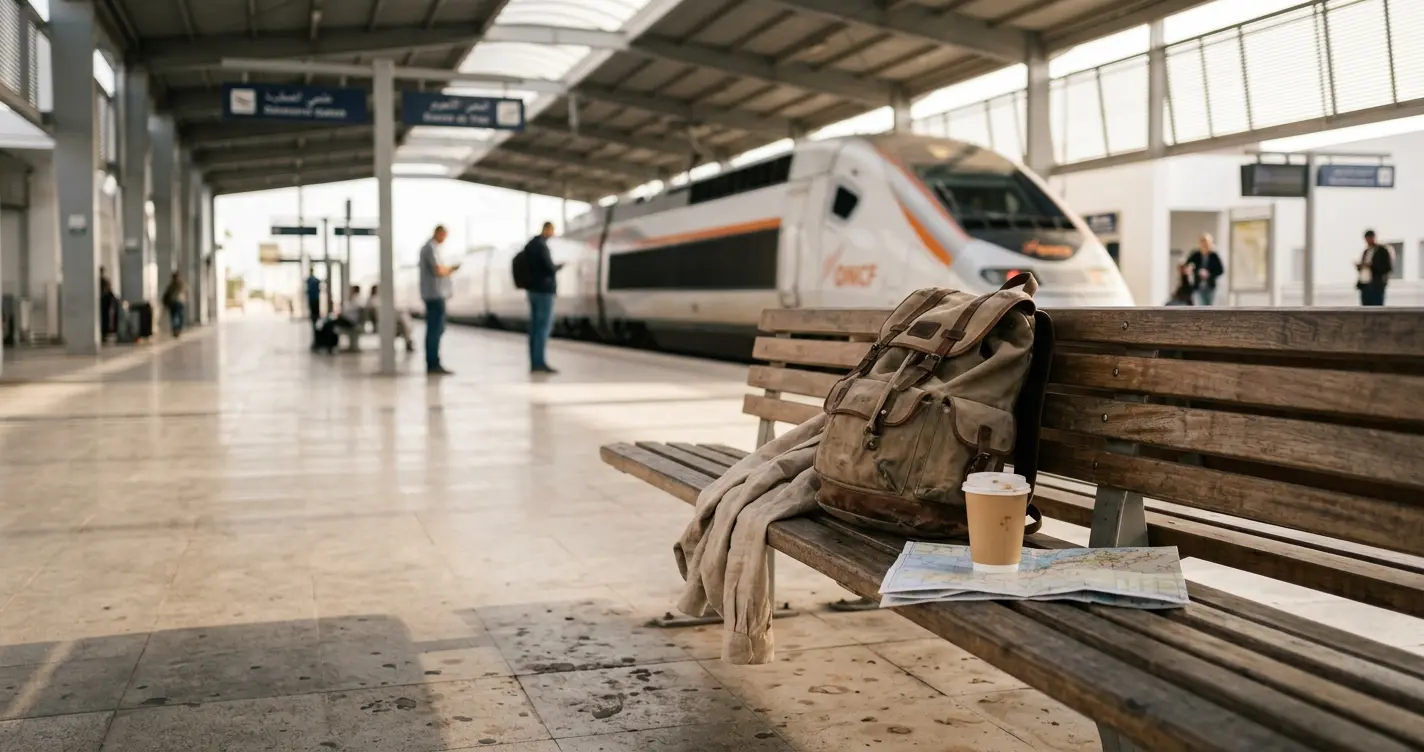
The ONCF railway network provides comfortable, air-conditioned trains connecting Tangier, Kenitra, Rabat, Casablanca, Meknes, Fes, Marrakech, and Oujda. The Al Boraq high-speed train makes travel between Tangier and Casablanca especially fast and efficient.
Choose the bus if your destination isn’t served by the railway.
Companies like CTM and Supratours operate modern coaches to destinations including:
- Chefchaouen
- Essaouira
- Agadir
- Merzouga
- Ouarzazate
- Zagora
- Dakhla
For many visitors, the smartest solution is combining both: taking the train between major cities and switching to a premium bus for destinations beyond the rail network.
Which Is Better Overall?
There isn’t a single winner.
The better option depends entirely on your route.
If both train and bus serve your destination, the train usually wins because it offers:
- Faster journeys
- More legroom
- Greater comfort
- Better punctuality
- Freedom to walk around during long trips
However, buses offer something trains cannot:
Nationwide coverage.
Without buses, reaching many of Morocco’s most beautiful destinations would simply be impossible using public transportation alone.
When Should You Choose the Train?
The train is the better option when:
- You’re traveling between major cities.
- You prefer comfort over flexibility.
- You want to avoid road traffic.
- You have luggage.
- You’re traveling during summer when air-conditioned coaches can become crowded.
Train stations are also generally located close to city centers, making onward travel easier in many cases.
When Is the Bus the Better Option?
The bus is usually the better choice when:
- The railway doesn’t serve your destination.
- You’re traveling to mountain villages.
- You’re visiting the Sahara Desert.
- You’re heading to coastal towns like Essaouira.
- You want direct service without changing transportation.
Premium companies such as CTM and Supratours provide comfortable coaches with air conditioning, assigned seating, and luggage storage, making them excellent alternatives when trains aren’t available.
Train vs Bus in Morocco: 11 Key Differences
Choosing between train and bus becomes much easier once you compare them side by side.
Let’s examine the eleven differences that matter most.
1. Network Coverage
Coverage is where buses clearly outperform trains.
Morocco’s railway network focuses mainly on the country’s northern and central corridor.
Cities connected by train include:
- Tangier
- Kenitra
- Rabat
- Casablanca
- Meknes
- Fes
- Marrakech
- Oujda
However, many famous tourist destinations aren’t connected by rail.
These include:
- Chefchaouen
- Essaouira
- Agadir
- Merzouga
- Ouarzazate
- Dades Valley
- Todra Gorge
If your itinerary includes these places, you’ll almost certainly need a bus or private transportation.
Winner: Bus
2. Popular Routes
For Morocco’s busiest travel corridors, trains dominate.
Examples include:
- Tangier → Casablanca
- Casablanca → Rabat
- Casablanca → Marrakech
- Fes → Meknes
These routes benefit from frequent departures and excellent infrastructure.
On the other hand, buses excel on routes like:
- Marrakech → Essaouira
- Fes → Chefchaouen
- Marrakech → Merzouga
- Agadir → Taghazout
Understanding which transport naturally serves your route is far more important than asking which mode is universally better.
3. Ticket Prices
Many travelers assume buses are always cheaper.
That’s not necessarily true.
Depending on the route and booking time, second-class ONCF train tickets can cost roughly the same, or even less, than premium CTM buses. Meanwhile, first-class train tickets typically cost more but provide extra comfort.
Generally speaking:
Train
- Excellent value
- Affordable first class
- Competitive pricing
Bus
- Usually inexpensive
- Great value for remote destinations
- Similar prices on popular routes
Budget differences are often smaller than travelers expect.
4. Travel Time
If both options exist for your journey, trains are usually faster.
Why?
Because trains avoid:
- Traffic congestion
- Highway accidents
- Road construction
- City traffic
The Al Boraq high-speed train dramatically reduces travel time between Tangier, Rabat, and Casablanca.
Buses remain efficient but naturally depend on road conditions.
For routes beyond the railway network, however, buses become the fastest public transport option simply because no train exists.
5. Comfort
Comfort is one of the biggest reasons travelers choose trains.
ONCF trains offer:
- Spacious seating
- Air conditioning
- Large windows
- Restrooms
- Room to stretch your legs
- Ability to walk through the train
Premium buses are comfortable as well, but passengers remain seated for the entire journey.
For trips lasting more than four hours, many travelers find trains noticeably more relaxing.
6. Luggage Policies
Both transportation options accommodate luggage well, but they do so differently.
Train
- Overhead luggage racks
- Storage at the end of some carriages
- Easy access during the journey
Bus
- Large suitcases stored underneath
- Small backpack kept with you
- Occasionally a small luggage fee depending on the operator
If you frequently need access to your belongings during the trip, trains provide greater convenience.
7. Reliability
Morocco’s railway system enjoys a strong reputation for punctuality.
While delays occasionally happen, trains generally follow published schedules closely.
Premium bus companies are also dependable, but road traffic, weather, and highway congestion can occasionally increase journey times.
If arriving on schedule is important, for example, when catching a flight or another trail, the railway often provides greater predictability.
8. Booking Tickets
Booking either option has become much easier in recent years.
Train tickets can be purchased:
- Online
- Through the ONCF mobile app
- At train stations
Bus tickets are available:
- Online
- At bus stations
- Through operator websites
- Via travel agencies
During holidays and peak tourist seasons, booking a few days in advance is recommended for both trains and premium buses, especially on popular routes.
9. Safety
Both trains and premium intercity buses are considered safe for tourists.
Train stations usually have security personnel, while established bus companies maintain modern fleets and professional drivers.
Basic travel precautions still apply:
- Keep valuables close.
- Label your luggage.
- Arrive early.
- Avoid unofficial transport operators.
For first-time visitors, both transport options are reliable choices.
10. Scenic Views
Morocco offers spectacular scenery regardless of your chosen transportation.
Train journeys provide beautiful views across:
- Agricultural plains
- Rolling countryside
- Atlantic coastline
- Northern landscapes
Buses often pass through even more dramatic scenery, including:
- Atlas Mountains
- Desert landscapes
- Coastal cliffs
- Remote villages
Photography lovers often appreciate bus journeys simply because they reach places trains never do.
11. Overall Value
Rather than asking whether trains or buses are better, experienced travelers ask a different question:
Which option makes today’s journey easier?
For rail-connected cities, trains usually offer the best combination of:
- Speed
- Comfort
- Reliability
- Value
For destinations outside the railway network, premium buses become the obvious winner.
That flexibility is exactly how most seasoned Morocco travelers plan their itineraries.
Best Routes by Train
When comparing Train vs Bus in Morocco, it’s important to understand that trains excel on Morocco’s busiest intercity routes. The country’s rail network, operated by ONCF, connects many of the destinations that first-time visitors include in their itinerary.
If your journey stays within the rail network, you’ll likely enjoy a faster and more comfortable trip than traveling by road.
Tangier to Casablanca
This is Morocco’s flagship rail route.
Thanks to the Al Boraq high-speed train, traveling between Tangier and Casablanca has never been easier. The journey is significantly quicker than traveling by bus and offers modern, comfortable carriages with Wi-Fi on many services, spacious seating, and power outlets.
For business travelers and tourists alike, this is one of the best train journeys in North Africa.
Recommended: Train
Casablanca to Rabat
Since Morocco’s two largest administrative cities are only about an hour apart by train, this route is one of the busiest in the country.
Trains depart frequently throughout the day, making it incredibly convenient for day trips or onward travel.
Although buses also operate this route, trains are generally faster and avoid city traffic.
Recommended: Train
Casablanca to Marrakech
One of Morocco’s most popular tourist routes connects Casablanca with Marrakech.
The train provides:
- Comfortable seating
- Air conditioning
- Reliable schedules
- Plenty of luggage space
Since this route is well served by the railway, there’s usually little reason to choose a bus unless you’re looking for the cheapest possible fare.
Recommended: Train
Fes to Meknes
These historic imperial cities sit relatively close together and are connected by regular train services.
The journey is short, affordable, and considerably more convenient than traveling by road.
Many travelers visiting Morocco’s imperial cities choose the train for this route.
Recommended: Train
Best Routes by Bus
While trains dominate Morocco’s major cities, buses become essential once you leave the railway network.
Fortunately, companies like CTM and Supratours operate modern coaches that are comfortable, reliable, and well suited for longer journeys.
Marrakech to Essaouira
Essaouira has no railway station, making buses the preferred public transportation option.
The journey passes through beautiful countryside before reaching Morocco’s Atlantic coast.
Multiple departures are available daily, especially during the tourist season.
Recommended: Bus
Fes to Chefchaouen
Chefchaouen is one of Morocco’s most photographed destinations, yet it isn’t connected by train.
Premium buses provide the easiest and most economical way to reach the famous Blue City.
Roads are generally in good condition, and the scenery through the Rif Mountains makes the trip enjoyable.
Recommended: Bus
Marrakech to Merzouga
Traveling to the Sahara Desert requires road transportation.
Although the journey is long, premium buses provide an affordable option for budget-conscious travelers.
Many visitors also choose organized tours or private transfers, but for independent travelers, buses remain the most practical public transport.
Recommended: Bus
Agadir to Taghazout
Surfers and beach lovers frequently travel between Agadir and Taghazout.
Buses operate regularly, making this a quick and inexpensive journey.
Because there’s no railway service along Morocco’s southern Atlantic coast, buses are the obvious choice.
Recommended: Bus
Train vs Bus in Morocco for Different Travelers
Not every traveler has the same priorities.
Some value comfort, while others focus on budget, flexibility, or convenience.
Here’s how Train vs Bus in Morocco compares depending on your travel style.
Budget Travelers
If saving money is your main priority, both trains and buses offer excellent value.
For routes served by both, compare prices before booking—train tickets are sometimes surprisingly affordable.
However, buses often remain the cheapest option for destinations outside the railway network.
Best choice: Bus (slightly)
Families
Families often appreciate the extra space available on trains.
Children can move around more easily, parents have easier access to luggage, and longer journeys tend to feel less tiring.
The smooth ride also makes train travel more relaxing for younger children.
Best choice: Train
Couples
Couples planning a relaxed vacation usually enjoy train travel thanks to:
- Comfortable seating
- Scenic views
- Quiet atmosphere
- Easy movement between carriages
However, if your itinerary includes destinations like Chefchaouen or Essaouira, buses become unavoidable.
Best choice: Train
Solo Travelers
Solo travelers often choose whichever option best matches their route.
Both trains and premium buses are considered safe, affordable, and easy to book.
If you’re visiting several cities across Morocco, combining both transportation methods offers maximum flexibility.
Best choice: Depends on the itinerary
Luxury Travelers
Travelers seeking maximum comfort often prefer first-class train tickets whenever possible.
The experience is quiet, spacious, and significantly more comfortable than spending several hours on the road.
When trains aren’t available, many luxury travelers choose private transfers instead of buses.
Best choice: Train
Quick Comparison:
| Feature | Train | Bus |
|---|---|---|
| Major cities | ⭐⭐⭐⭐⭐ | ⭐⭐⭐ |
| Remote destinations | ⭐ | ⭐⭐⭐⭐⭐ |
| Comfort | ⭐⭐⭐⭐⭐ | ⭐⭐⭐⭐ |
| Speed | ⭐⭐⭐⭐⭐ | ⭐⭐⭐ |
| Scenic routes | ⭐⭐⭐⭐ | ⭐⭐⭐⭐⭐ |
| Budget | ⭐⭐⭐⭐ | ⭐⭐⭐⭐⭐ |
| Reliability | ⭐⭐⭐⭐⭐ | ⭐⭐⭐⭐ |
| Luggage convenience | ⭐⭐⭐⭐⭐ | ⭐⭐⭐⭐ |
| Overall flexibility | ⭐⭐⭐ | ⭐⭐⭐⭐⭐ |
Tips Before Booking
No matter which transportation you choose, a little planning can make your journey much smoother.
Book Early During High Season
Morocco’s busiest travel periods include:
- Spring (March–May)
- Autumn (September–November)
- Christmas holidays
- Eid holidays
- Summer vacations
During these periods, train seats and premium bus tickets can sell out several days in advance.
Booking early gives you:
- Better departure times
- More seating options
- Lower stress
- Greater flexibility
Use Official Transport Companies
Always book through reputable operators.
For trains:
- ONCF
For buses:
- CTM
- Supratours
These companies offer:
- Reliable schedules
- Comfortable vehicles
- Secure luggage handling
- Better customer support
Avoid unofficial transportation providers whenever possible.
Arrive Early at the Station
It’s good practice to arrive:
- 30 minutes early for train departures.
- 30–45 minutes early for long-distance buses.
This allows enough time to:
- Locate your platform.
- Store luggage.
- Purchase snacks.
- Find your assigned seat.
Keep Your Ticket Accessible
Whether you’re traveling by train or bus, you’ll usually need to present your ticket before boarding.
Keeping it readily available, either printed or on your phone, helps speed up the boarding process.
If traveling by bus, keep valuables and important documents in your carry-on bag rather than in checked luggage.
Train vs Bus in Morocco: Frequently Asked Questions
Is the Train Better Than the Bus in Morocco?
For most journeys between Morocco’s largest cities, yes.
If you’re traveling between Tangier, Rabat, Casablanca, Meknes, Fes, or Marrakech, the train is usually the better option because it’s:
- Faster
- More spacious
- Less affected by traffic
- Easier to move around during long trips
- More comfortable for families and travelers with luggage
However, the train network doesn’t cover the entire country. Destinations such as Chefchaouen, Essaouira, Merzouga, Ouarzazate, and Taghazout can only be reached by road, making buses the best public transportation option.
Ultimately, the best choice depends on your destination rather than the transportation itself.
Is the Bus Cheaper Than the Train?
Usually, but not always.
Premium bus companies like CTM and Supratours offer affordable fares, especially on long-distance routes where trains aren’t available.
However, second-class ONCF train tickets are often similarly priced, and sometimes even cheaper, particularly if you book in advance.
Instead of assuming the bus is always less expensive, compare prices for your specific route before booking.
For many travelers, paying a small amount extra for the comfort of a train is well worth it.
Which Is Safer?
Both trains and reputable intercity buses are considered very safe for tourists.
Morocco has invested significantly in its transportation infrastructure, and millions of visitors use trains and buses every year without problems.
For the safest experience:
- Book with official operators.
- Keep valuables with you.
- Label checked luggage.
- Arrive early.
- Avoid unofficial transportation services.
If traveling alone, both trains and premium buses are suitable choices.
Which Is Faster?
When both options are available, the train is usually faster.
Unlike buses, trains don’t experience:
- Traffic jams
- Road accidents
- Congestion entering large cities
The biggest advantage is the Al Boraq high-speed train, which dramatically reduces travel times between Tangier, Kenitra, Rabat, and Casablanca.
On routes without railway service, buses naturally become the fastest public transportation option because they’re the only direct choice.
Can You Book Tickets Online?
Yes.
Booking transportation in Morocco has become much easier in recent years.
Train Tickets
You can book ONCF train tickets:
- Through the official ONCF website
- Using the ONCF mobile application
- At railway stations
Booking online is especially recommended during:
- Spring
- Summer
- Christmas holidays
- Eid holidays
Bus Tickets
Premium bus companies also allow online reservations.
CTM and Supratours both provide online booking systems that let you:
- Choose departure times
- Reserve seats
- Pay securely
- Receive digital tickets
Booking ahead is particularly useful for popular tourist routes such as:
- Fes → Chefchaouen
- Marrakech → Essaouira
- Marrakech → Merzouga
Final Verdict: Train vs Bus in Morocco
So, Train vs Bus in Morocco, which is the better choice?
The answer depends entirely on where you’re going.
If you’re traveling between Morocco’s major cities, trains are usually the clear winner. They offer greater comfort, reliable schedules, spacious seating, and faster journeys, particularly on routes served by the Al Boraq high-speed train.
If your itinerary takes you beyond the railway network, buses become essential. Modern operators such as CTM and Supratours provide comfortable, affordable services to many of Morocco’s most famous destinations, including Chefchaouen, Essaouira, Merzouga, Agadir, and Ouarzazate.
Rather than choosing one over the other, experienced travelers combine both transportation options. They use trains for the country’s main cities and buses to reach destinations where the railway doesn’t operate.
That approach gives you the best balance of comfort, convenience, flexibility, and value.
Whether you’re planning a one-week vacation or a month-long road trip, understanding the strengths of each transport option will help you travel around Morocco more efficiently and enjoy your journey with less stress.
One Comment
Comments are closed.