HISTORIC CITIES
CULTURE GUIDE
Discover Morocco’s Rich Culture & Traditions
From ancient Amazigh heritage and centuries-old Islamic architecture to Gnawa music, handmade crafts and legendary hospitality, the Culture Morocco offers is among the most layered and rewarding in the world. This is the definitive guide to understanding Culture Morocco.
Explore Moroccan CultureMOROCCODYSSEY
Why the Culture Morocco celebrates is unlike anything else on earth.
Morocco sits at a crossroads unlike any other. For thousands of years, it has been the meeting point of Amazigh, Arab, Andalusian, African and Mediterranean civilisations—each leaving its mark on the language, architecture, food, music and daily rhythms of the country. The result is the profound Culture Morocco is famous for: a place where the call to prayer echoes across Roman ruins, where Gnawa musicians play alongside jazz quartets, and where a simple glass of mint tea can become the most memorable moment of your journey.
The Amazigh (Berber) people are the original inhabitants of Morocco. Their language, traditions and crafts remain a living force throughout the country, particularly in the Atlas Mountains, the Rif and the south. The Culture Morocco preserves among the Amazigh is woven into the landscape itself—in the terraced fields, the silver jewellery, the woven carpets and the festivals that mark the turning of the seasons.
Arab influence brought Islam, the Arabic language and some of the finest architectural traditions in the Islamic world. The medinas of Fes and Marrakech are masterpieces of medieval urban design. Mosques, madrasas and riads display the geometric precision and calligraphic beauty of Islamic art at its highest level—a defining thread of the Culture Morocco carries.
Andalusian refugees fleeing Spain in the medieval period brought music, refinement and a cosmopolitan sensibility that flourished in cities like Fes and Tetouan. Their influence can still be heard in the Andalusian classical music that fills the salons of Fes and seen in the elegant tilework and carved stucco of their palaces—another layer of the Culture Morocco shares with the wider world.
The hospitality of Morocco is legendary, and it is not performative—it is deeply embedded in the social fabric. To be offered Moroccan mint tea is to be offered a place at someone’s table. Families gather for tagine and couscous on Fridays. Neighbours greet each other with warmth and formality. This generosity of spirit is perhaps the single most important thing a visitor can experience in the Culture Morocco offers.
Morocco’s religion shapes daily life in subtle and profound ways. The rhythm of the five daily prayers structures the day. The call to prayer at sunset is one of the most atmospheric moments you will ever witness—the cities quiet, the light turns gold, and the muezzin’s voice carries across rooftops and valleys. Mosques are central to community life, and their rhythm is woven through the Culture Morocco lives by, though visitors should know that non-Muslims cannot enter most mosques.
The country’s languages reflect its layered identity. Moroccan Arabic (Darija) is the language of daily life, while Amazigh (Tamazight) is spoken across the mountains and south. French remains widely used in business and education, and Spanish is common in the north. Learning even a few words of Darija—Salaam alaikum, shukran, la bas—creates instant connections.
Regional differences are significant. The culture of Fes is scholarly, refined and deeply traditional. Marrakech is cosmopolitan and creative. The Atlas Mountains preserve ancient Amazigh ways of life. The Sahara carries the traditions of nomadic Tuareg culture. The Atlantic coast blends fishing traditions with Gnawa music and Portuguese heritage. Every region has its own character, its own festivals, its own recipes and its own stories.
For the traveller, understanding the Culture Morocco carries transforms a trip from sightseeing into genuine connection. It is the difference between eating in a tourist restaurant and sharing a meal in a family home. Between buying a carpet in a shop and watching it being woven by hand in a mountain village. Morocco rewards those who look beyond the surface, and this guide is designed to help you do exactly that.
EXPLORE THE CULTURE
Discover the Heritage of Culture Morocco
Eight essential threads of Culture Morocco, each connecting you to a deeper understanding of this extraordinary country.
CULTURE ACROSS MOROCCO
Every Region Has Its Own Story
Culture Morocco is not monolithic. Each region preserves its own traditions, dialects, crafts and way of life—shaped by geography, history and the communities that call it home.
Imperial Cities
Historic capitals filled with palaces, medinas and centuries of layered history.
Atlas Mountains
Amazigh villages, ancient terraces and timeless mountain customs.
Sahara Desert
Nomadic Tuareg traditions beneath endless desert skies.
Atlantic Coast
Fishing heritage, Gnawa music and a relaxed coastal way of life within Culture Morocco.
MOROCCAN HOSPITALITY
The art of welcoming guests.
In Morocco, hospitality is not a service—it is a sacred tradition. The moment you cross a threshold, you become a guest in the fullest sense of the word. Moroccans believe that welcoming strangers is both a social duty and a spiritual act, and the generosity you will encounter is not performative. It is real, deeply felt and often overwhelming—the beating heart of the Culture Morocco celebrates.
The ritual begins with Moroccan mint tea. A tray of glasses, a silver teapot, fresh mint and generous amounts of sugar. The tea is poured from a height to create a light foam—the higher the pour, the greater the respect. To refuse tea is almost unthinkable. It is the first gesture of welcome, and it sets the tone for everything that follows.
Family values run deep. Meals are communal affairs. Tagine is placed in the centre of the table and everyone eats from the same dish. Couscous, traditionally served on Fridays after midday prayers, is the meal that brings families together. A guest who is invited to share a family meal has been given a profound honour.
Social customs reflect a culture built on respect and generosity. When entering someone’s home, you remove your shoes. When greeting an elder, you place your right hand over your heart. When you leave, you are invited back—sincerely. This warmth extends beyond private homes. In the souks, shopkeepers offer tea to customers. In mountain villages, shepherds wave and call out greetings to passing travellers. In the desert, nomadic families share what little they have with strangers.
Understanding hospitality transforms your experience of Morocco. The traveller who accepts invitations, who sits and drinks tea, who shares bread with a family in a mountain village—that traveller sees a Morocco that no guidebook can fully describe.
ARCHITECTURE & HERITAGE
Walls that tell stories.
Morocco’s architecture is among the most distinctive and beautiful in the world. It reflects centuries of cultural exchange—Amazigh building techniques, Islamic artistry, Andalusian refinement and French colonial planning—all combining to create something entirely unique within the Culture Morocco presents. Learn more about Morocco’s UNESCO World Heritage sites on the UNESCO World Heritage Centre.
The riad is perhaps the most iconic Moroccan structure. These inward-facing courtyard houses, found throughout the medinas of Fes, Marrakech and Meknes, hide tranquil gardens behind unassuming walls. Ornate tilework, carved cedar wood, marble fountains and citrus trees create private worlds of extraordinary beauty. Many riads have been converted into boutique hotels, allowing visitors to experience this architectural tradition firsthand.
Kasbahs—rammed-earth fortresses—rise from the river valleys of southern Morocco like something from a storybook. The most famous are found along the route to the Sahara, including the UNESCO-listed Ait Ben Haddou. Their warm, earthy walls glow at sunrise and sunset.
The zellige tilework of Morocco is a mathematical and artistic marvel. Each small tile is hand-cut and assembled into complex geometric patterns that can cover entire walls. The craft requires years of training and extraordinary precision. Cedar wood carving, stucco work and calligraphy complete the architectural vocabulary of Culture Morocco—every surface in a grand building becomes a canvas for artistic expression.
The medinas of Morocco are architectural treasures in themselves. The ancient walled cities of Fes, Marrakech and Chefchaouen are labyrinths of narrow alleys, covered souks, hidden courtyards and centuries-old buildings that have been continuously inhabited for hundreds of years. To walk through them is to step back in time. Learn more in our guide to Ancient Medinas.
FOOD CULTURE
More than a meal. A way of life.
Food in Morocco is never just about sustenance. It is about family, community and tradition. Every meal is an event—a gathering around a shared dish, eaten with the right hand from a communal platter. The rituals surrounding food reflect the same values of hospitality and generosity that define the Culture Morocco builds its society around.
The tagine is Morocco’s most famous dish—a slow-cooked stew named after the conical clay pot in which it is prepared. Lamb with prunes and almonds, chicken with preserved lemons and olives, kefta with eggs and tomato sauce—each region has its own variations, each family has its own recipe. The tagine is comfort food, celebration food and everyday food, all within the Culture Morocco serves to every table.
Couscous, traditionally served on Fridays after midday prayers, holds a special place in Moroccan life. The semolina grains are steamed by hand, layer by layer, and served with vegetables and meat. Preparing couscous is a communal activity—women gather to roll and steam the grains, sharing conversation and news. It is the dish of family, of togetherness, of weekly ritual.
Mint tea is not merely a beverage but a cultural institution. Served throughout the day, it is the first thing offered to any guest and the last thing shared before departure. The preparation is a performance—the pouring from height, the foam on the surface, the sweetness that represents welcome. To drink tea with someone in Morocco is to accept their friendship.
Regional cuisine reflects Morocco’s diversity. The coast excels in fresh seafood. The mountains offer hearty Berber stews. The south favours dates, dried meats and desert bread. The cities offer the full range of pastilla, harira, msemen and chebakia. Explore the full breadth of Moroccan food in our guide to Moroccan Cuisine.
FESTIVALS & MUSIC
Where rhythm meets tradition.
Music is inseparable from Moroccan life. It fills the souks, accompanies celebrations, marks religious occasions and provides the soundtrack to everyday moments. From the spiritual trance of Gnawa music to the courtly elegance of Andalusian classical music, the musical traditions of Culture Morocco are among the richest in Africa.
Gnawa music is Morocco’s most distinctive musical contribution to the world. Born from sub-Saharan spiritual traditions, it blends African rhythms, Islamic mysticism and hypnotic bass lines into a sound that is both ancient and electrifying. The Gnaoua World Music Festival in Essaouira, held every June, draws international artists and thousands of visitors for three days of music by the Atlantic.
Andalusian classical music originated with the refugees who fled medieval Spain and settled in cities like Fes and Tetouan. Performed in intimate salons with orchestras of oud, violin, qanun and percussion, it represents Morocco’s most refined musical tradition.
The Amazigh New Year (Yennayer), celebrated on 13 January, marks the agricultural new year with feasting, music and communal celebration. Moussem festivals honour local saints with days of prayer, music, horse riding and poetry. The Festival of World Sacred Music in Fes brings together musicians and spiritual traditions from around the globe. Each season brings its own celebrations—weddings, religious holidays and harvest festivals that keep Morocco’s traditions alive.
TRADITIONAL CRAFTS
Handmade heritage.
Morocco’s artisan traditions are among the finest in the world. For centuries, skilled craftspeople have created objects of extraordinary beauty using techniques passed down through generations. Every carpet, every piece of pottery, every leather bag and silver bracelet carries within it the knowledge of centuries—the living craft of Culture Morocco.
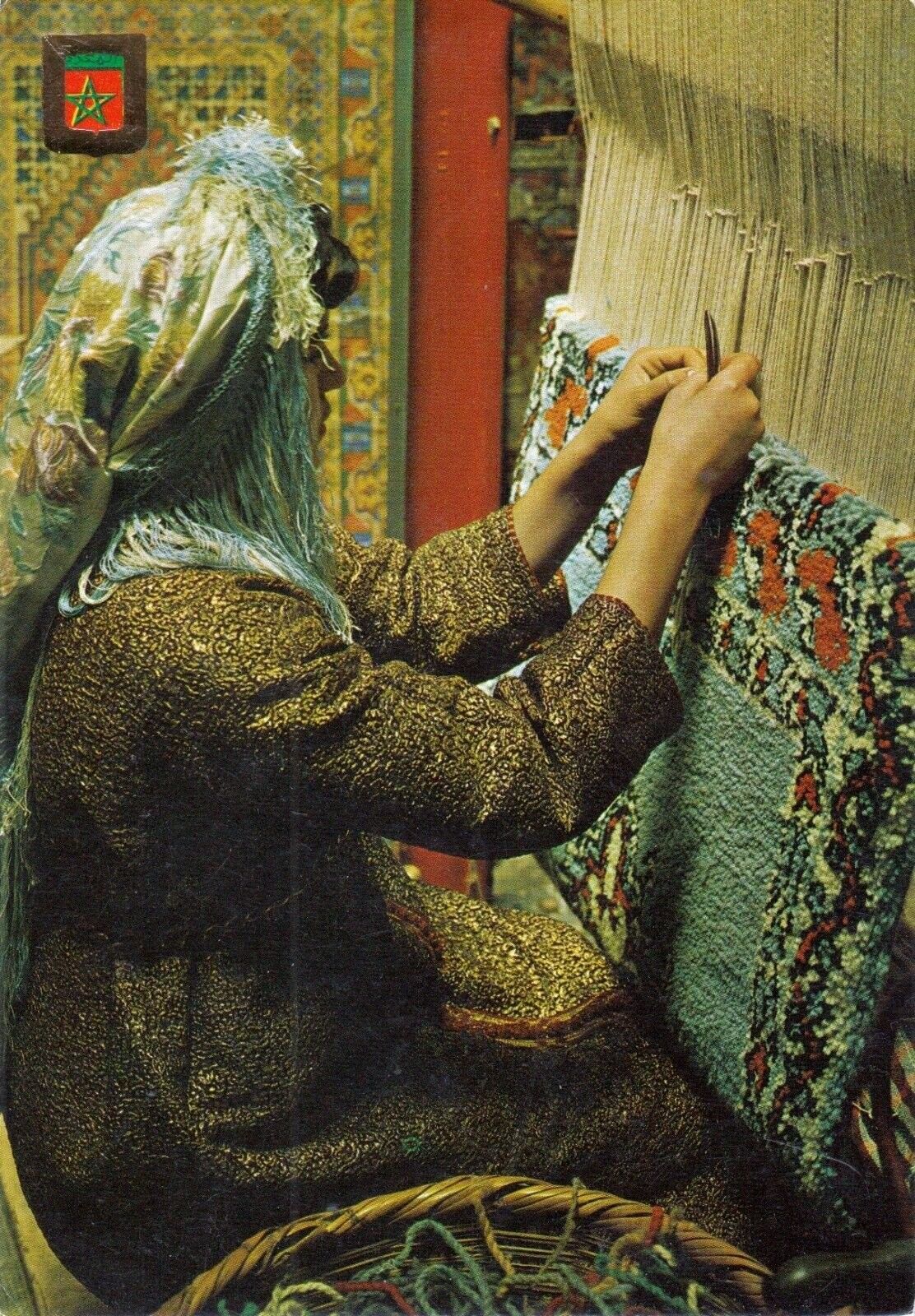
Carpets are perhaps Morocco’s most celebrated craft. Each region has its own style—the bold geometric patterns of Boucherouite, the intricate Fes carpets, the shaggy Beni Ourain of the Atlas, the colorful Kilim of the south. A handmade carpet can take months or even years to complete. Each knot is tied by hand, each pattern tells a story—of tribal identity, of spiritual protection, of the weaver’s life and hopes.
Leatherwork centres on the famous tanneries. The Chouara Tannery in Fes, dating to the 11th century, is the oldest working tannery in the world. Leather is still dyed by hand using natural pigments—saffron for yellow, poppy for red, indigo for blue, mint for green. The process is unchanged in a thousand years.
Pottery reaches its highest expression in the blue-and-white ceramics of Fes and the vivid polychrome pieces of Marrakech. The potters of Safi are renowned for their technique. Each piece is thrown on a traditional kick-wheel and painted by hand.
Silver jewellery is crafted by Amazigh silversmiths throughout the Atlas and the south. Wood carving, particularly in cedar and thuya, produces everything from decorative boxes to ornate door frames. Weaving creates not only carpets but blankets, cushions, bags and clothing—each piece a unique expression of the weaver’s skill and tradition.
DAILY LIFE & ETIQUETTE
How to move through Morocco with respect.
Understanding daily customs and etiquette deepens your experience and shows respect for the Culture Morocco lives by. Morocco is a welcoming country, but it is also one with strong traditions and social codes that visitors should be aware of.
Greetings matter. A handshake is standard, but close friends often exchange three kisses on the cheek. When greeting someone, placing your right hand over your heart shows sincerity. Salaam alaikum (peace be upon you) is the standard greeting, and wa alaikum salaam is the appropriate response. Learning these words opens doors.
Clothing is modest throughout Morocco. While the country is relatively liberal by regional standards, visitors should dress respectfully in traditional areas—covering shoulders and knees. In the medinas, the djellaba (hooded robe) and kaftan remain everyday wear for many Moroccans.
Photography etiquette is essential. Always ask permission before photographing people. Many Moroccans are happy to be photographed, but some—particularly in rural areas—may prefer not to be. In markets and souks, some shopkeepers will request a fee for photographs. Respecting these wishes avoids discomfort.
Mosque etiquette is important. Non-Muslims cannot enter most mosques in Morocco. The only exception is the Hassan II Mosque in Casablanca, which offers guided tours. When you hear the call to prayer, be respectful of those who are praying.
Bargaining is expected in souks and markets. Approach it with humour and good nature—it is a social interaction, not a confrontation. Start at roughly a third of the asking price and negotiate from there. In restaurants and shops with fixed prices, bargaining is not appropriate.
Respect for traditions extends to many small gestures. Remove your shoes when entering someone’s home. Accept the first glass of tea. Use your right hand for eating and greeting. Tipping is customary—10-15% in restaurants, small tips for guides and helpers. These gestures of awareness and respect are noticed and deeply appreciated.
FREQUENTLY ASKED QUESTIONS
Common questions about Culture Morocco.
What makes Culture Morocco unique?
The Culture Morocco offers is built on layers of Amazigh, Arab, Andalusian, African and Mediterranean influence. This blend of civilisations—shaped by geography, trade and centuries of history—creates a cultural identity found nowhere else in the world.
What languages are spoken in Morocco?
The official languages are Moroccan Arabic (Darija) and Amazigh (Tamazight). French is widely spoken in business and education, and Spanish is common in the north. English is increasingly understood in tourist areas.
Is Culture Morocco culturally diverse?
Extraordinarily so. From the Andalusian traditions of Fes to the Amazigh villages of the Atlas, from the Gnawa culture of Essaouira to the nomadic heritage of the Sahara, every region has its own character.
What customs should visitors know?
Greet people with Salaam alaikum, remove shoes when entering homes, dress modestly in traditional areas, use your right hand for eating and greeting, and always accept the first glass of mint tea.
Can tourists visit mosques?
Most mosques in Morocco are not open to non-Muslims. The Hassan II Mosque in Casablanca is the major exception, offering guided tours to all visitors.
What is Culture Morocco hospitality?
Moroccan hospitality is legendary. Guests are offered mint tea, food and warm welcomes. Family values run deep, and sharing a meal is a profound gesture of trust and friendship. Accepting invitations is one of the best ways to experience authentic Morocco.
What festivals should I experience?
The Gnaoua World Music Festival in Essaouira (June), the Festival of World Sacred Music in Fes (June), Yennayer (Amazigh New Year, 13 January) and local moussem festivals throughout the year.
What traditional foods should I try?
Tagine (slow-cooked stew), couscous (Friday staple), pastilla (sweet-savoury pastry), harira (tomato-lentil soup), mint tea, msemen (flatbread) and chebakia (honey pastries).
How should I dress in Morocco?
Modest dress is appreciated throughout the country. Cover shoulders and knees in medinas and rural areas. In coastal cities and resorts, dress is more relaxed. When visiting religious sites, dress conservatively.
Is bargaining expected?
Yes, in souks and markets. Approach it as a friendly interaction. Start at roughly a third of the asking price and negotiate with good humour. Fixed prices apply in restaurants and modern shops.
Is it respectful to photograph people?
Always ask permission first. Most Moroccans are happy to be photographed, but respecting their wishes is essential. Some souk vendors may request a small fee for photographs of their stalls.
What cultural experiences should I not miss?
Drinking mint tea in a family home, exploring an ancient medina, visiting a traditional artisan workshop, watching the sunset call to prayer, and attending a local festival or music event—all vivid expressions of Culture Morocco.
EXPERIENCE MOROCCO
Experience the Soul of Morocco.
Morocco’s greatest treasures are not only found in its landscapes, but in its people, traditions and everyday moments. Wherever you go, the Culture Morocco keeps alive will welcome you—every conversation, every shared meal, every handcrafted object tells a story that spans centuries. Begin your journey of discovery today.