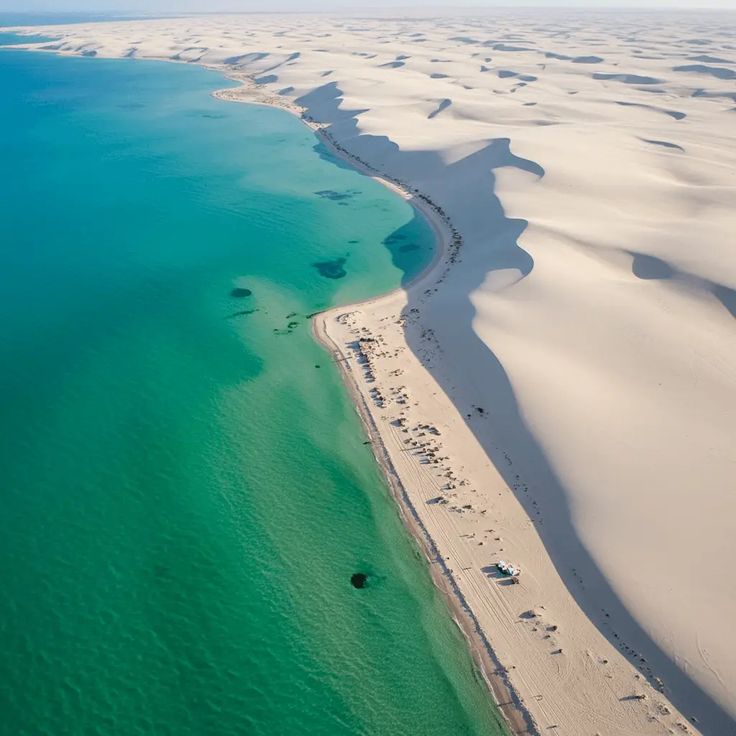
Dakhla, Morocco
On the far southern edge of Morocco, where the Sahara Desert narrows to a slender peninsula between the Atlantic Ocean and one of the most extraordinary lagoons on Earth, lies Dakhla — a place of surreal, almost impossible beauty. The Dakhla peninsula extends like a finger of sand pointing south into the Atlantic, creating a vast, shallow lagoon on its eastern side that stretches for nearly forty kilometres.
The water here is impossibly calm, turquoise and emerald in colour, and so still that it reflects the sky like a mirror — a landscape so photogenic that it has become one of the most iconic images of Morocco. But Dakhla is far more than a lagoon.
This is the undisputed kitesurfing capital of Africa, drawing riders from around the world to its reliable Atlantic winds and flat-water playground. Behind the peninsula, the Sahara stretches to the horizon in waves of sand and rock, while the Atlantic coast to the west offers wild, wind-scoured beaches and surf breaks that remain largely undiscovered.
The White Dune, a towering mound of pure white sand rising from the desert floor, is one of the most striking natural formations in southern Morocco. Dakhla is a destination that defies easy categorisation — part desert, part ocean, part lagoon, entirely captivating — and it rewards those who make the journey to Morocco’s deep south with an experience unlike anything else in the country.
Why Visit Dakhla?
A surreal lagoon, world-class kitesurfing, towering white sand dunes, and the raw edge of the Sahara meeting the Atlantic — Dakhla is one of Morocco’s most unexpected and rewarding destinations.
World-Class Kitesurfing
Dakhla is widely regarded as one of the top kitesurfing destinations on the planet. The combination of consistent Atlantic trade winds, flat shallow water in the lagoon, and uncrowded conditions draws riders of every level from across the globe. The season runs almost year-round, and the lagoon’s shallow, warm water makes it an ideal learning environment as well as a playground for advanced riders seeking freestyle and speed sessions.
Stunning Lagoon
The Dakhla lagoon is a forty-kilometre stretch of shallow, crystal-clear water that separates the peninsula from the mainland. Its extraordinary colours — shifting from turquoise to emerald to deep blue depending on the light and wind — create a landscape that looks almost digitally rendered. Windsurfers, kitesurfers, and kayakers glide across the glassy surface while flamingos wade in the shallows, producing scenes of surreal beauty.
White Dune
The Dune Blanche, or White Dune, is one of the most visually striking natural formations in southern Morocco — a towering mound of pure white sand that rises from the desert floor like a frozen wave. Located on the eastern shore of the lagoon, it offers panoramic views across the water to the Atlantic coast and the Sahara beyond. The contrast between the pristine white sand, the blue-green lagoon, and the brown desert creates a colour palette that is utterly unique.
Desert Meets Ocean
Dakhla occupies one of the most geographically dramatic settings in Africa — a narrow peninsula where the Sahara Desert meets the Atlantic Ocean. The landscape shifts from sand dunes and rocky desert plateaux to wind-sculpted coastal cliffs and vast, empty beaches within the space of a few kilometres. This collision of desert and ocean creates extraordinary light, weather patterns, and a sense of elemental grandeur that is difficult to find anywhere else.
Luxury Eco-Resorts
Dakhla’s accommodation scene has evolved to match its natural beauty, with a growing collection of luxury eco-resorts, boutique desert camps, and design-conscious guesthouses that blend seamlessly into the landscape. Many properties occupy privileged positions on the lagoon shore, offering direct water access, infinity pools that seem to merge with the lagoon, and rooftop terraces where the stars of the Saharan sky are unobscured by light pollution.
Adventure Paradise
Beyond kitesurfing, Dakhla offers an extraordinary range of outdoor activities — from sand-boarding on the White Dune and quad biking across the desert to deep-sea fishing, surfing on the Atlantic coast, and desert bivouacs under the Saharan stars. The region’s raw, undeveloped character means that many of these adventures take place in near-total solitude, with landscapes that feel entirely your own.
Dakhla at a Glance
The essentials for planning your visit to Morocco’s deep south and its extraordinary lagoon peninsula.
Top Things to Do in Dakhla
Ten experiences that capture the kitesurfing culture, the lagoon’s extraordinary beauty, and the raw landscapes of Morocco’s deep south.
Kitesurfing on the Lagoon
The Dakhla lagoon is one of the flattest, shallowest, and most consistent kitesurfing spots on the planet. The water is typically knee-to-waist deep across much of the riding area, with a smooth, glassy surface that is ideal for freestyle tricks, freeride cruising, and learning. The Atlantic trade winds blow cross-shore for most of the season, providing reliable power from March through November, and the lagoon’s orientation means that riders are always within easy reach of the shore.
Numerous kite schools and centres operate along the lagoon, offering lessons for beginners and guided sessions for advanced riders, with equipment rental, rescue boats, and beachside facilities that have made Dakhla a genuinely world-class kitesurfing destination.
Visit the White Dune
The Dune Blanche is one of the most visually arresting natural formations in southern Morocco — a towering mound of fine, pure white sand that rises sharply from the surrounding desert landscape on the eastern shore of the lagoon. The dune is accessible by 4x4 from Dakhla town, and the climb to its summit rewards you with a panoramic view that encompasses the entire lagoon, the peninsula, the Atlantic Ocean to the west, and the vast expanse of the Sahara to the east.
The contrast between the pristine white sand, the turquoise lagoon water, and the ochre desert is extraordinary — a colour palette that shifts dramatically with the time of day and the angle of the light.
Lagoon Boat Tour
A boat tour across the Dakhla lagoon is the best way to appreciate the scale and beauty of this extraordinary body of water. Traditional fishing boats and modern catamarans depart from the lagoon shore and glide across the shallow, crystal-clear water, passing through shifting zones of turquoise, emerald, and deep blue as the depth and the seabed composition change.
The tours typically include stops for swimming in the warm, sheltered water, visits to remote beaches on the peninsula, and opportunities to spot the flamingos, herons, and terns that inhabit the lagoon’s margins. The perspective from the water — looking back at the desert shore with the White Dune in the distance — is one of the most photogenic scenes in Morocco.
Flamingo Watching
The Dakhla lagoon is one of the most important wetland habitats in North Africa, and its shallow, saline waters attract significant populations of greater flamingos, particularly during the autumn and winter months. Seeing dozens of these elegant birds wading in the turquoise shallows of the lagoon, with the Saharan desert rising behind them and the Atlantic visible to the west, is one of the most unexpected and beautiful wildlife spectacles in Morocco.
The best viewing spots are along the eastern shore of the lagoon, particularly near the mouth of the Oued Dahkak stream, where the nutrient-rich water draws the largest flocks.
Desert Bivouac Experience
A night in the Sahara Desert, just beyond the lagoon peninsula, is one of the most memorable experiences Dakhla offers. Luxury desert camps and bivouac experiences transport you by 4x4 to remote locations in the rocky desert plateau east of the lagoon, where traditional Berber tents are pitched among the dunes and the night sky is so vast, so dark, and so densely populated with stars that it takes your breath away.
The experience typically includes a traditional dinner cooked over an open fire, music and storytelling around the campfire, and a sunrise that paints the desert landscape in shades of gold, pink, and deep violet. The silence of the Saharan night, broken only by the wind, is profoundly restorative.
Atlantic Surfing
While the lagoon draws kitesurfers, the Atlantic coast to the west of the peninsula offers powerful, uncrowded surf breaks that are increasingly attracting surfers seeking waves away from the more established spots further north. The beach breaks along the Dakhla coast produce consistent swells generated by Atlantic low-pressure systems, and the offshore winds created by the desert heat produce clean, well-shaped waves.
The surf scene here is small, friendly, and raw — you are more likely to share a lineup with seabirds than other surfers, and the backdrop of desert cliffs and empty beach creates a surfing experience that is as much about the landscape as the waves.
Sand-Boarding
The dunes surrounding the White Dune and the desert areas east of the lagoon offer excellent sand-boarding opportunities, with slopes ranging from gentle beginner-friendly inclines to steeper faces that challenge experienced riders. The fine, white sand of the Dune Blanche itself provides a smooth, fast surface that is ideal for carving turns and gaining speed, while the more scattered dunes further inland offer a wilder, more open landscape.
The combination of the physical thrill of riding the dunes and the visual spectacle of the surrounding desert — the lagoon glinting in the distance, the Sahara stretching to the horizon — makes this a uniquely Moroccan adventure sport experience.
Fresh Seafood on the Beach
Dakhla’s position at the confluence of the cold Canary Current and the warm Saharan waters creates one of the most productive fishing grounds off the Moroccan coast, and the local seafood is exceptional. The beachside restaurants along the lagoon serve the day’s catch — typically grilled sea bass, bream, prawns, and octopus — prepared simply with cumin, salt, lemon, and fresh bread, and served at tables set directly on the sand with the lagoon stretching before you.
The experience of eating supremely fresh fish while watching kitesurfers arc across the turquoise water and the sun descends toward the desert is one of Dakhla’s defining pleasures.
Windsurfing the Lagoon
Before kitesurfing put Dakhla on the global map, windsurfers were the first to discover the lagoon’s extraordinary conditions — and the sport remains hugely popular here.
The consistent Atlantic trade winds, the flat, shallow water, and the sheer size of the riding area make the Dakhla lagoon one of the finest windsurfing spots in the world. The lagoon’s depth of one to two metres across most of its surface is ideal for speed sailing, freestyle, and slalom, and several established windsurfing schools operate along the shore, offering instruction and equipment hire for all levels.
Day Trip to Dakhla Ocean
The Atlantic coast west of the Dakhla peninsula is a landscape of extraordinary wildness — long, empty beaches backed by low desert cliffs, powerful surf breaks, and a coastline that feels as remote and unexplored as anywhere in Morocco. A 4x4 excursion to the ocean side of the peninsula reveals a completely different character to the calm lagoon: crashing Atlantic waves, wind-sculpted rock formations, and beaches where you may walk for hours without encountering another person.
Several operators offer day trips that combine coastal exploration with surfing, fishing, or simply absorbing the raw beauty of the Atlantic coast.
Dakhla Lagoon
The Dakhla lagoon is the defining geographical feature of the region — a forty-kilometre-long, shallow body of turquoise and emerald water that lies between the sandy Dakhla peninsula and the rocky Saharan mainland. It is one of the most visually extraordinary lagoons in the world, and its combination of calm, shallow water, consistent winds, and stunning desert setting has made it a global capital for kitesurfing and windsurfing.
The lagoon was formed over millennia by the gradual accumulation of sand along the peninsula, which created a natural breakwater that shelters the eastern shore from the full force of the Atlantic.
The water depth rarely exceeds two metres across most of the lagoon, and the sandy, light-coloured seabed produces a remarkable range of colours — from the pale, milky turquoise of the shallows to the deeper blues of the channels that thread through the lagoon floor. These colours shift constantly with the wind, the time of day, and the angle of the sun, creating a visual spectacle that has made the lagoon one of the most photographed landscapes in Morocco.
The lagoon is also an ecologically rich wetland environment. Its shallow, saline waters support populations of greater flamingos, spoonbills, terns, and numerous other wading and migratory birds, making it one of the most important bird habitats in North Africa. The intersection of the Atlantic marine environment, the Saharan desert, and the sheltered lagoon ecosystem creates a biodiversity that is unexpected for such an arid region and adds a layer of natural wonder to the lagoon’s already extraordinary beauty.
- Size — approximately forty kilometres long and four kilometres wide; one of the largest and shallowest lagoons on the Moroccan Atlantic coast
- Water depth — typically one to two metres across most of the surface; shallow enough to walk across in many areas at low tide; ideal for kitesurfing, windsurfing, and kayaking
- Water colour — ranges from pale turquoise to emerald to deep blue depending on depth, wind conditions, and light; the light-coloured sandy seabed produces extraordinary colour saturation
- Wildlife — home to greater flamingos, spoonbills, herons, and terns; the lagoon is a designated Ramsar wetland of international importance for migratory birds
- Wind conditions — consistent Atlantic trade winds blow cross-shore for most of the year; the lagoon is sheltered from ocean swells, producing flat, glassy water even in strong wind
- Access — the lagoon shore is accessible from Dakhla town via paved and unpaved roads; several beaches and launching points along the eastern shore offer direct water access
Kitesurfing & Water Sports
Dakhla’s reputation as a world-class kitesurfing destination is built on a combination of natural advantages that are replicated in very few places on Earth — and it is this rare alignment of wind, water, and landscape that has transformed a small Saharan fishing town into a global magnet for wind-powered water sports.
The primary factor is the wind. Dakhla sits in the path of the Atlantic trade winds, which blow with remarkable consistency from the north-west for an average of 300 days per year. These winds are generated by the temperature differential between the cool Canary Current offshore and the superheated Saharan landmass, creating a reliable, powerful airflow that accelerates as it funnels across the flat lagoon surface. Wind speeds typically range from 15 to 30 knots during the season, with April through October providing the most reliable conditions.
The second factor is the water itself. The lagoon’s shallow depth — rarely exceeding two metres — combined with the sheltered position behind the peninsula produces flat, smooth water even in strong wind. This flat-water environment is the holy grail for kitesurfers and windsurfers: it allows for high-speed riding, effortless planing, and the execution of freestyle tricks that would be impossible in choppy ocean conditions. For beginners, the shallow, warm water provides a forgiving learning environment where mistakes are easily recovered from.
- Wind season — March through November is the primary kitesurfing season; April to October offers the most consistent conditions with average winds of 18–25 knots
- Kite sizes — typical sessions use 9–12 metre kites depending on rider weight and wind strength; the consistent wind means minimal gear changes throughout the day
- Water temperature — ranges from 16 degrees in winter to 22 degrees in summer; a short wetsuit is recommended year-round for comfort during long sessions
- Kite schools — numerous IKO-certified schools operate along the lagoon, offering beginner courses through to advanced freestyle instruction; all equipment is provided
- Windsurfing — the lagoon is equally renowned for windsurfing, with the flat water and strong wind creating ideal conditions for speed sailing, slalom, and freestyle
- Stand-up paddleboarding — the calm mornings before the wind picks up are ideal for SUP touring across the lagoon, exploring the shoreline, and observing the birdlife in the shallows
White Dune & Desert Landscapes
The White Dune — the Dune Blanche — is one of the most photographed natural landmarks in southern Morocco and a visual icon of the Dakhla region. Rising to roughly forty metres above the surrounding desert floor on the eastern shore of the lagoon, it is a towering accumulation of fine, pure white sand that has been shaped over millennia by the relentless Atlantic winds that sweep across the peninsula.
Its colour is its most striking feature: a luminous, almost blinding white that contrasts dramatically with the turquoise lagoon water below and the ochre desert plateau beyond.
The dune is best understood as a product of the unique geology of the Dakhla peninsula — a region where the Sahara Desert, the Atlantic Ocean, and the lagoon converge in a landscape of extraordinary environmental complexity. The white sand that composes the dune is derived from crushed shells and marine organisms deposited by ancient ocean currents, and its purity and fineness give the dune a texture that is almost powder-like underfoot.
The climb to the summit is physically modest but visually rewarding: from the top, the entire lagoon spreads before you in a panorama of turquoise, emerald, and blue, with the slender peninsula to the west and the vast Saharan plateau stretching to the eastern horizon.
Beyond the White Dune, the desert landscapes surrounding Dakhla offer a range of terrain that varies from flat, rocky hammada (stone desert) to rolling sand dunes, dry riverbeds (oueds), and wind-sculpted rock formations. The eastern edge of the lagoon, where the desert meets the water, is particularly dramatic — a landscape of stark contrasts where the vivid blues of the lagoon give way abruptly to the browns and ochres of the Saharan interior.
- Height — approximately forty metres above the surrounding desert floor; the summit provides a 360-degree panoramic view of the lagoon, peninsula, and Sahara
- Sand composition — composed of crushed shells and marine sediments, giving it a pure white colour and fine, powder-like texture distinct from typical desert sand
- Access — a 4x4 is required to reach the dune from Dakhla town; the drive takes approximately thirty minutes along a desert track; no entrance fee
- Best time to visit — early morning or late afternoon when the sand is cool and the light produces the most dramatic colour contrasts; midday heat can be extreme
- Desert excursions — 4x4 tours explore the broader desert landscape beyond the dune, including rocky hammada, dry riverbeds, and remote Saharan plateaux with views to the Mauritanian border
- Stargazing — the desert surrounding Dakhla has minimal light pollution, making it one of the finest stargazing locations in Morocco; the Milky Way is visible to the naked eye on clear nights
Best Time to Visit Dakhla
Dakhla’s position on the Saharan Atlantic coast creates a climate that is warm, windy, and dry for most of the year — but the conditions vary significantly between seasons, and the best time to visit depends on what you want to do.
Spring & Autumn
- March–May — the prime season for kitesurfing and windsurfing. The Atlantic trade winds are at their most consistent, blowing from the north-west at 15–25 knots on most days. Temperatures are warm but comfortable (20–28 degrees), the lagoon water is warming, and the desert wildflowers may be in bloom after winter rains. The combination of reliable wind, comfortable temperatures, and the dramatic spring light over the lagoon makes this the best overall period for a visit that combines water sports with exploration of the desert landscapes.
- September–November — the winds begin to moderate but remain reliable through October, and the summer heat has broken. Temperatures are pleasant (22–30 degrees), the lagoon water is at its warmest, and the autumn light brings extraordinary colour to the desert landscape. November marks the transition to the quieter winter season, and the lagoon is at its most peaceful, with fewer visitors, flamingos arriving from Europe, and a sense of solitude that is increasingly rare.
Summer & Winter
- June–August — the hottest period (30–40 degrees), but the persistent Atlantic breeze keeps conditions on the lagoon comfortable for water sports. This is peak kitesurfing season, with the strongest and most consistent winds of the year. The lagoon water is warm enough for board-shorts-only riding, and the long days provide extended session times. The desert excursions are best avoided during the midday heat; early morning and late afternoon are the windows for dune exploration. Accommodation books up well in advance during this period.
- December–February — the coolest and quietest period (12–22 degrees), with occasional rain and lighter, less consistent winds. The lagoon is at its most tranquil, and the cooler temperatures make desert exploration more comfortable. This is the best season for birdwatching, as migratory species arrive in significant numbers. The lower visitor numbers mean more personal attention from resorts and kite schools, and the Saharan skies are at their clearest for stargazing. Not the best season for kitesurfing, but rewarding for those seeking Dakhla’s quieter side.
Where to Stay in Dakhla
Dakhla’s accommodation scene has evolved to match the quality of its natural setting, offering everything from luxury lagoon-side resorts to traditional desert camps.
Lagoon Eco-Resorts
A handful of luxury eco-resorts occupy privileged positions along the lagoon shore, offering direct water access, infinity pools that merge visually with the lagoon, and suites designed to frame the extraordinary views. These properties combine sustainable design — solar power, locally sourced materials, minimal environmental footprint — with genuine luxury: spa facilities, gourmet dining featuring local seafood, and bespoke activity programming that includes kitesurfing lessons, desert excursions, and lagoon boat tours.
Kitesurfing Camps
Dedicated kitesurfing camps and hotels cater specifically to the wind-sports community, offering all-inclusive packages that combine accommodation, kite school access, equipment storage, and social spaces designed for riders. These properties are typically located directly on the lagoon beach, providing the shortest possible walk from room to water, and the communal atmosphere creates a social environment where riders share tips, stories, and the particular camaraderie of a wind-powered community.
Desert Camps
For a truly immersive Dakhla experience, a night in a luxury desert camp on the Saharan plateau east of the lagoon is essential. Traditional Berber tents, furnished with rugs, cushions, and lanterns, are pitched in remote locations where the only light comes from the campfire and the stars. The experience includes traditional Saharan cuisine, music, and the extraordinary silence of the desert night. Several operators offer one-night bivouacs and multi-day desert immersions that combine camping with 4x4 exploration of the surrounding landscape.
Town Hotels & Guesthouses
Dakhla town itself offers a range of budget and mid-range accommodation, from small family-run guesthouses to modern hotels with rooftop terraces and lagoon views. These properties provide a more local, less curated experience — an opportunity to engage with the daily life of the town, eat at local restaurants, and experience the unhurried pace of life in Morocco’s deep south. The town is a convenient base for visitors who plan to explore the broader region independently.
Food & Local Culture
Dakhla’s culinary identity is shaped by the ocean, the desert, and the cultural traditions of the Saharan south — producing food that is fresh, simple, and deeply connected to the landscape.
Seafood & Coastal Cuisine
- The catch — Dakhla sits at the confluence of the cold Canary Current and the warm waters of the Saharan Atlantic, creating one of the most productive fishing grounds off the Moroccan coast. The daily catch includes sea bass, bream, prawns, squid, octopus, and a variety of smaller species that are grilled, fried, or prepared in tagines at the town’s restaurants
- Beachside dining — the most memorable meals in Dakhla are eaten at simple restaurants set directly on the lagoon beach, where tables are placed on the sand and the day’s catch is grilled over charcoal while you watch kitesurfers on the water. The combination of supremely fresh fish, the sound of the wind, and the lagoon panorama is Dakhla’s signature dining experience
- Fish chermoula — the classic Moroccan preparation of fresh fish marinated in a spice paste of cumin, paprika, coriander, garlic, and lemon, then grilled or baked. Dakhla’s version is particularly good due to the freshness of the fish and the local variation on the chermoula recipe that incorporates Saharan spices
Desert & Saharan Traditions
- Saharan tea culture — the mint tea ceremony is central to Dakhla’s social life, and the preparation — the long pour, the sugar balancing, the repetition of steeping — is performed with a deliberateness that reflects the unhurried pace of desert life. Tea is offered as a gesture of hospitality in every context, from formal receptions to casual encounters on the street
- Desert cuisine — the Saharan traditions of the region produce distinctive dishes including mechoui (slow-roasted lamb), various preparations of dates and dried fruit, and bread baked in sand ovens. The desert camps that offer overnight experiences serve traditional Saharan meals cooked over open fires, providing a culinary connection to the nomadic cultures of the deep south
- Local markets — Dakhla’s weekly souk is a lively gathering of the region’s diverse communities — Saharan nomads, coastal fishermen, and the cosmopolitan mix of residents drawn by the kite industry. The market offers fresh produce, spices, leather goods, and the traditional textiles of the Saharan south, providing an authentic window into the cultural complexity of this remote region
Getting to Dakhla
Dakhla’s position deep in Morocco’s south means the journey is part of the adventure — but modern air connections have made it far more accessible than its remote location suggests.
- By air — Dakhla Airport (VIL) receives direct flights from Casablanca operated by Royal Air Maroc, with a flight time of approximately two hours. The airport is small but functional, and the approach over the lagoon and peninsula provides a dramatic introduction to the landscape. Seasonal charter flights from European cities may also be available during peak kitesurfing season
- By road from Agadir — the drive from Agadir to Dakhla covers approximately 550 kilometres along the N1 highway through the southern Moroccan desert. The journey takes six to seven hours and passes through increasingly dramatic desert landscapes, passing the towns of Tiznit, Guelmim, and Tan-Tan before reaching the vast, empty stretches of the southern Sahara. It is a spectacular drive but a long one, best broken with an overnight stop in Guelmim or Tan-Tan
- By road from Laayoune — for those already in the Western Sahara region, the drive from Laayoune to Dakhla covers approximately 340 kilometres south along the coastal highway, with a driving time of around four hours. The road is straight and well-maintained, passing through desert scenery with occasional views of the Atlantic coast
- Rental car — strongly recommended for exploring the region beyond Dakhla town. The lagoon beaches, White Dune, and Atlantic coast all require a vehicle, and a 4x4 is necessary for the more remote desert and coastal excursions. Rental agencies in Dakhla offer both standard and off-road vehicles
- By bus — CTM operates long-distance bus services connecting Dakhla with Agadir, Laayoune, and other southern Moroccan cities. The journeys are long (ten or more hours from Agadir) but comfortable, and the bus offers an affordable way to reach Dakhla without flying
- Grand taxis — shared grand taxis operate between Dakhla and Laayoune, and between Dakhla and smaller settlements in the region. They are an affordable, if less comfortable, alternative to private transport and offer a more local travel experience
Getting Around Dakhla
Dakhla’s attractions are spread across a wide area — from the lagoon beaches to the desert dunes to the Atlantic coast — making independent transport essential for a complete experience.
By Car
- Lagoon beaches — the main lagoon kitesurfing beaches are accessible from Dakhla town via a paved road that runs south along the eastern shore; the drive takes fifteen to twenty minutes and passes several resorts and launching points
- White Dune — reached by a 4x4 track from the main road; the track is sandy and rutted in places, requiring careful driving; the total drive from Dakhla town is approximately thirty minutes
- Atlantic coast — the surf breaks and wild beaches on the western side of the peninsula require a 4x4 and ideally a guide, as the coastal tracks are unmarked and the sand can be deep; several operators offer guided 4x4 excursions
Tours & Transfers
- Organised excursions — most resorts and hotels offer or can arrange excursions to the White Dune, desert camps, and coastal surfing spots; these typically include 4x4 transport, guides, and refreshments
- Kite transfers — many kitesurfing resorts provide shuttle services between the resort and the main lagoon beaches, eliminating the need for a car for those whose primary focus is water sports
- Airport transfers — pre-arranged transfers are the most convenient way to reach your accommodation from Dakhla Airport; most resorts offer this service as part of their booking package
Suggested Itineraries
Whether you are visiting for a kitesurfing holiday or a broader exploration of Morocco’s deep south, here is how to structure your time in Dakhla.
3-Day Kite Trip
- Day 1: arrive and settle in; first afternoon session on the lagoon
- Day 2: full day kitesurfing; sunset seafood dinner on the beach
- Day 3: morning session; afternoon visit to the White Dune before departure
5-Day Explorer
- Day 1: arrive; explore Dakhla town and the lagoon shore
- Day 2: kitesurfing or windsurfing lesson on the lagoon
- Day 3: 4x4 excursion to the White Dune and desert plateau
- Day 4: boat tour of the lagoon; flamingo watching at sunset
- Day 5: Atlantic coast surf trip before departure
Saharan Immersion
- Day 1: arrive in Dakhla; afternoon lagoon exploration by kayak or SUP
- Day 2: desert bivouac experience; overnight under the Saharan stars
- Day 3: sunrise in the desert; return to Dakhla for lagoon activities
- Day 4: White Dune and coastal drive before departure
Southern Morocco Circuit
- Day 1–2: Agadir & coastal drive to Dakhla via Guelmim
- Day 3–4: Dakhla lagoon & kitesurfing
- Day 5: White Dune and desert excursion
- Day 6: drive or fly north via Laayoune to continue your Moroccan journey
Destinations Across Morocco
From imperial cities to desert dunes and Atlantic coast — discover more of what Morocco has to offer.
Practical Tips for Visiting Dakhla
A remote Saharan peninsula where the desert meets the Atlantic requires particular preparation. A few essential tips to help you make the most of your time in Dakhla.
- Clothing — dress for intense sun, strong wind, and heat. Lightweight, breathable, loose-fitting clothing is essential; a windproof layer is valuable for the lagoon when the trade winds blow; a light warm layer is necessary for desert nights, which can be surprisingly cool even in summer. Swimwear is appropriate at the lagoon and beach resorts but should be covered when away from the water in town
- Sun protection — Dakhla receives some of the most intense solar radiation in Morocco. High-SPF sunscreen, a wide-brimmed hat, UV-protective sunglasses, and a long-sleeved rash guard for water sports are essential. The reflection from the lagoon water and white sand amplifies UV exposure significantly
- Cash — bring sufficient Moroccan dirhams as ATMs are limited in Dakhla town and absent from the lagoon resorts. Many resorts accept credit cards but charge a premium; local restaurants and shops are cash only
- Hydration — the Saharan climate produces rapid dehydration, particularly during physical activities like kitesurfing, sand-boarding, or desert hiking. Carry at least three litres of water per person for any outdoor excursion, and increase consumption in the heat of the day
- Safety — the desert is genuinely remote, and the lagoon, while shallow, presents risks for inexperienced water-sport participants. Always ride with a buddy, carry a means of communication, and respect the power of the Atlantic wind. For desert excursions, travel with an experienced guide and carry emergency supplies including water, fuel, and a first-aid kit
- Photography — Dakhla is one of the most photogenic locations in Morocco. The lagoon’s extraordinary colours are best captured in the early morning when the water is calm and the light is soft; the White Dune is most dramatic at sunrise or sunset when the low-angle light emphasises its form and colour contrast with the lagoon
- Family travel — Dakhla is excellent for families with children who enjoy outdoor environments. The shallow lagoon is safe for supervised paddling, the beach resorts provide structured activities, and the desert excursions are educational for older children. The heat and sun require careful management for young children, and desert trips should be carefully timed to avoid midday exposure
Related Travel Guides
Practical planning resources to help you navigate Morocco with confidence.
Frequently Asked Questions
Is Dakhla worth visiting?
Absolutely. Dakhla offers one of the most unique and visually extraordinary landscapes in Morocco — a place where the Sahara Desert meets the Atlantic Ocean in a collision of turquoise lagoon water, white sand dunes, and vast desert plateaux. Whether you come for the world-class kitesurfing, the surreal beauty of the lagoon, or simply to experience a side of Morocco that most visitors never see, Dakhla delivers an experience that is genuinely unlike anything else in the country.
How long should I spend in Dakhla?
A minimum of three days is recommended to experience the lagoon, visit the White Dune, and enjoy at least one kitesurfing or windsurfing session. Five days allows for a more relaxed pace, including a desert bivouac, an Atlantic coast excursion, and the time to appreciate the extraordinary light and landscape without rushing. Kitesurfing enthusiasts often stay for a week or more to maximise their time on the water.
Is Dakhla good for beginners at kitesurfing?
Dakhla is one of the best places in the world for learning to kitesurf. The lagoon’s shallow, flat water (rarely deeper than two metres) provides a safe, forgiving environment where beginners can stand up and recover from mistakes easily. The consistent wind means reliable practice conditions, and the numerous IKO-certified schools along the lagoon offer structured beginner courses with all equipment provided.
What is Dakhla famous for?
Dakhla is most famous for its extraordinary lagoon — a forty-kilometre stretch of shallow, turquoise water that is widely regarded as one of the finest kitesurfing and windsurfing locations on Earth. The combination of consistent Atlantic trade winds, flat shallow water, and a stunning desert setting creates conditions that are replicated in very few places. Beyond wind sports, the White Dune, the flamingo populations, and the surreal meeting of desert and ocean have made Dakhla one of Morocco’s most iconic landscapes.
Is Dakhla safe?
Dakhla is generally very safe for visitors. The town is small and welcoming, and the region has a low crime rate. The primary safety considerations relate to the natural environment: desert excursions should be undertaken with experienced guides and proper supplies; the Atlantic coast has powerful currents and should be approached with caution; and the intense sun and wind require careful hydration and sun protection. For water sports, always ride with a buddy and within your ability level.
What is the best time to visit Dakhla for kitesurfing?
The primary kitesurfing season runs from March through November, with April to October offering the most consistent and powerful winds. July and August see the strongest conditions (20–30 knots on most days) but also the highest temperatures. April, May, September, and October offer a superb combination of reliable wind and more comfortable temperatures, making them the best months for most riders.
Can I visit Dakhla without doing water sports?
Yes, though Dakhla’s primary draw is its wind-sports culture. The White Dune, desert bivouac experiences, lagoon boat tours, flamingo watching, and the sheer spectacle of the landscape are all rewarding for non-surfers. The desert excursions, the local seafood dining, and the peaceful atmosphere of the lagoon shore provide plenty of activities for visitors whose interests lie elsewhere.
How do I get to Dakhla from Casablanca?
The fastest option is a direct flight from Casablanca to Dakhla Airport (VIL), which takes approximately two hours and is operated by Royal Air Maroc with daily services. Driving from Casablanca covers approximately 950 kilometres and takes twelve to fourteen hours, typically requiring an overnight stop in Agadir or Guelmim. The drive is a spectacular journey through Morocco’s diverse landscapes but is best suited to those with time and a taste for road-tripping.
Is Dakhla family friendly?
Dakhla is good for families, particularly those with children who enjoy outdoor activities and beach environments. The shallow lagoon is safe for supervised paddling, the resorts offer structured activities, and the desert excursions are educational. The heat and intense sun require careful management for young children, and the remote location means that facilities are limited compared to more developed tourist areas. The best age range for children is roughly eight and above, when they can fully appreciate the activities and tolerate the conditions.
What should I pack for Dakhla?
Pack for intense sun, strong wind, and heat, with a layer for cooler evenings. Essential items include: high-SPF sunscreen and lip balm, a wide-brimmed hat, UV-protective sunglasses, lightweight breathable clothing, a windproof layer, a warm layer for desert nights, comfortable sandals and closed shoes for desert terrain, a reusable water bottle, and swimwear. If you plan to kitesurf or windsurf, most equipment can be rented locally, but a rash guard and board shorts are worth bringing.
Is there Wi-Fi in Dakhla?
Wi-Fi is available at most hotels and resorts, though connection speeds can be slower than in Morocco’s larger cities due to the remote location. Mobile phone coverage (Maroc Telecom and Orange) is generally reliable in Dakhla town and along the main lagoon beaches, but signal can be weak or absent in the deeper desert and on the Atlantic coast. A local SIM card is worth purchasing for data access during your stay.
Can I combine Dakhla with Merzouga or the Sahara?
Yes, and it makes a compelling combination. Dakhla offers the Saharan coast and lagoon experience, while Merzouga provides the iconic Erg Chebbi sand dunes and classic Sahara desert atmosphere. The drive between them covers approximately 800 kilometres and passes through dramatic desert landscapes, though it is a long journey best broken over two days. Alternatively, Dakhla&rsquo own desert excursions provide an authentic Saharan experience without the long drive to Merzouga.
Ready to Discover Dakhla?
From the turquoise lagoon and the towering White Dune to the wild Atlantic coast and the silence of the Saharan night — Dakhla is where Morocco’s deep south reveals its most extraordinary landscapes. Let MoroccOdyssey help you plan the rest.